
What Modern Travellers Look for in a Holiday Let and How to Win Them Over Through Automation
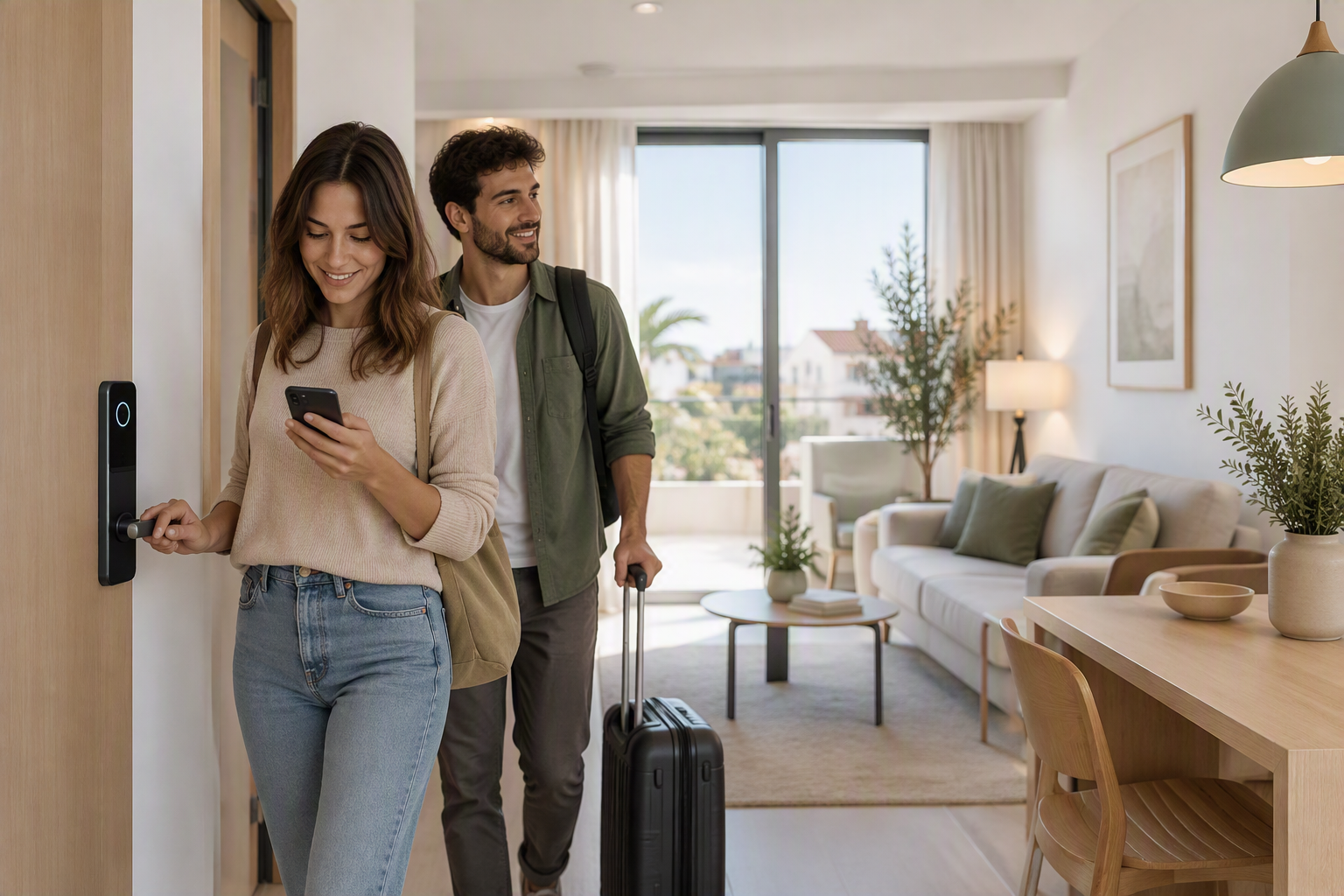
The evolution of the modern traveller: who are they and what do they expect in 2025?
The profile of travellers who choose to stay in holiday rentals has changed radically in recent years. What was once considered a courteous gesture or a luxury extra—such as a prompt response to a message or entering the property without having to coordinate an in-person meeting—has become a fundamental requirement for contemporary guests. Understanding this transformation is the first step towards ranking any holiday home at the top of search platforms such as Airbnb, Booking.com, or Vrbo.
Today’s guest is not simply looking for a bed to sleep in or a central location. They are seeking a frictionless experience. Global digitalisation has accustomed society to immediacy: we order transport on an app with a single tap, purchase products that arrive in hours, and manage our finances from the palm of our hand. When this same user plans a holiday or a business trip, they expect their interaction with their accommodation to be just as agile, intuitive, and seamless.
From traditional tourist to hyper-connected 'Guest'
The core demographic of holiday let users comprises digital nomads, 'bleisure' travellers (combining business and leisure), and millennial or Gen Z families and couples. They all share a common trait: technology is seamlessly woven into their daily routines.
This customer profile values autonomy over traditional formalities. They do not want to waste time waiting outside a flat because traffic delayed the host, nor do they wish to fill in paper forms by hand following a multi-hour flight. They demand clear processes, instant access to information on their smartphones, and prompt, effective solutions should any issue arise.
Immediacy as the new quality benchmark in hospitality
In the short-term rental industry, the perception of quality is no longer solely dictated by furniture design or TV screen size. Service immediacy largely dictates the final review score. A 30-minute delay in explaining how to turn on the heating, or vague instructions on locating keys, can completely undermine an otherwise flawless stay.
The sector's paradox is that guests demand 24/7 assistance without the host's invasive presence. They wish to feel independent yet supported. Meeting this dual expectation manually requires an immense, unsustainable effort for any owner or property manager handling several units. This is precisely where adopting technological tools becomes strategic.
The 6 key pillars guests look for in holiday accommodation
To position a holiday let competitively in today's market, one must break down travellers' genuine priorities. A detailed analysis of consumer habits reveals six fundamental pillars upon which guest satisfaction hinges.
1. Seamless arrival and flexible check-in times
The primary source of stress for travellers arriving at their accommodation is arrival logistics. Flights get delayed, traffic is unpredictable, and travel itineraries constantly change. Imposing a rigid key-collection window is one of the biggest mistakes a modern host can make.
Guests greatly value self-check-in capabilities. Having systems like smart locks, digital keypads, or key lockboxes enables guests to arrive at 2:00 pm or 3:00 am without rushing to notify anyone or feeling guilty for making the host wait. Implementing an automated check-in solution not only resolves this logistical barrier, but immediately conveys a modern, professional image.
2. Clear, seamless, real-time communication
Nothing causes more guest anxiety than radio silence after booking confirmation. Modern travellers expect immediate confirmation along with essential stay details: exact address, access instructions, Wi-Fi password, and house rules.
However, bombarding users with endless walls of text is counterproductive. The trick lies in providing information at the right time. A welcome message right after booking, a reminder 24 hours prior with access details, and a follow-up note after the first night are touchpoints that distinguish an average stay from a five-star experience.
3. Guaranteed hygiene and spotless cleaning standards
Cleanliness is no longer merely a review metric; it is a dealbreaker. A single mark on a bedsheet or a stray hair in a bathroom inevitably leads to a negative review that can harm listing visibility for months.
Travellers expect to find the accommodation immaculate, smelling fresh, with properly sanitised linens. Furthermore, they appreciate transparency in maintenance procedures. Knowing that the housekeeping team has thoroughly inspected the property prior to arrival fosters instant peace of mind and comfort.
4. Technical connectivity: fast Wi-Fi and functional workspaces
Nowadays, Wi-Fi is not viewed as an amenity; it is as essential as running water or electricity. With the rise of remote working, high-speed and reliable internet is often the primary search filter applied by thousands of remote workers.
Beyond connection speeds, guests appreciate subtle tech conveniences: accessible power sockets beside beds and desks, USB charging ports, smart TVs equipped with streaming apps, and efficient climate control that can be operated without deciphering intricate manuals.
5. Autonomy and privacy throughout the stay
While warm hospitality remains valuable, the overarching trend leans towards privacy. Modern guests want to feel at home and in control of their space. Unexpected host visits or overbearing supervision during their stay cause discomfort.
The goal is to provide an environment where guests enjoy complete control over their time and surroundings, confident that responsive support is just a message away should any issue or technical query arise.
6. Personalised local recommendations
Despite prioritising digital self-reliance, guests still crave authentic local connections. They steer clear of generic tourist flyers in favour of genuine neighbourhood gems: the locals' go-to coffee shop, the bakery with the best sourdough, or charming bistros off the beaten track.
Delivering this added value digitally—such as via an interactive digital guidebook (PDF) or a scannable QR code inside the flat—substantially elevates the overall guest review.
Automation as a value driver for your holiday rental
There is a widespread misconception that automating holiday let operations makes guest interaction cold and robotic. Reality demonstrates the exact opposite. When routine operational tasks are smartly automated, hosts free up invaluable time to focus on strategic details that truly make a difference.
Eliminating initial friction: the power of digital registration
The initial operational interaction sets the tone for the entire stay. If a guest is stranded on the street with luggage because the person handing over keys was delayed, the perception of the accommodation plummets before they even step foot inside.
With digital guest registration and keyless entry, the process becomes effortless:
- Pre-arrival identity verification: Guests submit their ID and required legal details via their smartphone prior to travelling.
- Automated legal compliance: The platform automatically transmits guest data to the relevant authorities without manual input.
- Keyless entry: A temporary access code or digital key is issued, active solely during the booking dates.
This setup not only allows smooth entry at any hour, but also eliminates lost or copied physical keys, boosting the overall security of the holiday flat.
The magic of continuous guest support without being glued to your phone
Maintaining flawless communication with dozens of guests each month demands exhausting hours. The professional solution lies in setting up automated messaging sequences. Integrating automated guest messaging ensures that every guest receives the exact information right when they need it.
An effective communication workflow can be structured into key stages:
- Instant booking confirmation: An automated thank-you note including house rules and a trip summary.
- Days before arrival: Online check-in link and estimated arrival time collection.
- Check-in day: Access codes and exact location map pin sent automatically.
- Morning after check-in: A friendly check-in message to ensure a good night's sleep and address any needs.
- Eve of departure: Check-out instructions, key drop details (if applicable), and departure time reminders.
- Post check-out: A polite thank-you message with a gentle prompt to leave a platform review.
By implementing structured messaging, guests feel attentively looked after by a professional team, dramatically upgrading their perception of service quality.
How to implement technology step-by-step without losing the human touch
Upgrading a traditional holiday rental into a smart, automated accommodation does not require hefty investments or deep tech expertise. It is a progressive journey executed with a clear strategy focused on the guest journey.
Stage 1: Map the complete customer journey
Before rolling out software or smart locks, hosts must analyse every single touchpoint with guests, from initial booking through to post-stay follow-ups.
Key questions to pinpoint friction points:
- Which questions do guests repeatedly ask via chat?
- What is the average response time to guest queries?
- What percentage of arrivals take place outside standard check-in hours?
- How often do issues occur regarding key handovers or guest registration?
Identifying these bottlenecks allows you to select targeted digital tools that resolve real operational pain points.
Stage 2: Centralise channel management and availability
Listing properties across multiple OTAs such as Airbnb, Booking.com, or Vrbo is vital to maximise occupancy. However, managing calendars manually brings a high risk of double-bookings (overbooking)—one of the worst scenarios a host can face.
A centralised channel manager that synchronises calendars, pricing, and messages in real time across all platforms ensures seamless management, avoids algorithmic penalties from cancellations, and maximises revenue per available room (RevPAR).
Stage 3: Digitise cleaning and maintenance workflows
Automation extends far beyond guest-facing interactions; back-of-house operations are equally vital. A lapse in turnover cleaning undermines even the best communication strategy.
Syncing booking calendars with cleaning staff ensures turnovers and sanitisation are automatically scheduled whenever a departure is confirmed. Assigning digital checklists with photo verification guarantees that the property consistently meets top-tier standards before each guest arrives.
Stage 4: Personalise automated messaging to preserve warmth
The secret to successful automation is making sure it never feels robotic. A frequent pitfall is relying on cold, generic templates or overly corporate wording.
Best practices for humanising automated messages:
- Use dynamic tags: Automatically insert guest names, property names, and specific reservation dates.
- Tailor tone to property style: If renting a chic city-centre studio, keep the tone warm, modern, and direct. For a luxury countryside villa, adopt a more refined style.
- Highlight genuine availability: Clarify at the end of messages that, although sent automatically for convenience, a real team member is always on hand to assist with anything they need.
Direct financial benefits of holiday let automation for hosts
Beyond enhancing the guest experience and reducing host stress, automation delivers tangible, measurable impacts on holiday rental profitability.
Higher conversion rates and superior reviews
Algorithms on leading booking portals prioritise listings that respond swiftly and maintain high ratings for communication and check-in ease. Accommodations offering self-check-in and instant responses climb search rankings rapidly.
Enhanced visibility drives more bookings, helping lift average occupancy rates and enabling gradual increases in average daily rates (ADR) without sacrificing demand.
Drastic reduction in operating costs
Time is the single most valuable resource for any property manager. Tallying up the hours spent travelling to deliver keys, answering repetitive queries about appliances, or submitting guest registration forms manually highlights a massive opportunity cost.
Delegating these routine tasks to automated systems frees hosts to scale their portfolio, acquire new properties, or simply enjoy personal freedom.
| Traditional Process (Manual) | Automated Process (Macufy) | Direct Benefit |
|---|---|---|
| Travelling in person to hand over keys (1–2 hours per booking). | Keyless self-check-in via digital code or smart lock. | Saves travel costs and provides 24/7 arrival flexibility. |
| Manually drafting messages and answering repetitive FAQs. | Scheduled delivery of personalised messages and digital guidebooks. | Instant support and fewer repetitive enquiries. |
| Manually collecting ID details and filing police guest reports. | Digital check-in with document scanning and automated submission. | 100% legal compliance with zero human error. |
| Constant phone coordination with cleaning teams. | Automatic turnover task creation upon booking confirmation or change. | Optimised turnaround times and reduced oversight risks. |
Real-world case studies: management comparison
To illustrate the impact of automation on guest perception and daily operations, let us compare two realistic scenarios managing the same central holiday flat.
Scenario A: Traditional manual management
A guest books a flat three weeks in advance. During this time, they receive no communication from the host. On travel day, the guest messages to say their flight has been delayed by two hours, pushing arrival to midnight. The host, having personal evening commitments, must either reschedule hastily or charge an unwelcome late check-in fee, causing immediate guest dissatisfaction.
Upon arriving exhausted, having to manually fill in and sign guest registration forms feels tedious. The next morning, struggling with the air conditioning controls, the guest messages the host. Being at work, the host takes three hours to respond. The guest ultimately leaves a 3-star review citing sluggish communication and inflexible arrival hours.
Scenario B: Smart automated management
The guest books and instantly receives an automated welcome message thanking them and providing a link to complete online check-in at their leisure. Two days before arrival, they submit their ID details on their mobile phone, and the platform automatically submits them to the authorities.
On arrival day, regardless of flight delays, the guest receives their digital door lock code on WhatsApp alongside clear visual directions to the entrance. They enter smoothly at 2:00 am without waiting for anyone or paying late arrival fees. The following morning, an automated check-in message asks if they slept well, including the digital guidebook with Wi-Fi details and local restaurant recommendations.
The result: a glowing 5-star review praising convenience, modern amenities, and attentive hosting. Platform algorithms push the listing to the top of city search results.
Frequently Asked Questions (FAQs) on modern travellers and automation
Does automation completely remove the human touch in holiday rentals?
No. Well-implemented automation removes friction and administrative chores, not genuine hospitality. By freeing hosts from repetitive tasks—such as requesting passport photos or sending check-out reminders—they gain more quality time to attend to special requests, troubleshoot real issues, or offer bespoke local advice when requested.
What happens if a guest prefers a traditional, in-person check-in?
Technology provides flexibility. If a guest specifically requests a personal meet-and-greet or struggles with digital tools (such as elderly travellers less accustomed to smartphones), hosts can easily adapt. Automation establishes the operational foundation, but adaptability remains paramount.
Is automating a single holiday let expensive?
No. Today, cloud-based tools like Macufy cater to both single-property owners and large property managers managing multiple units. The return on investment is virtually immediate through saved time, elimination of double-bookings, and increased revenue resulting from superior guest reviews.
How does automation ensure compliance with holiday rental guest registration laws?
Specialised platforms incorporate optical character recognition (OCR) ID scanners to parse guest details, generate official registration forms, and automatically submit reports directly to law enforcement portals (such as the SES.HOSPEDAJES system in Spain), guaranteeing strict legal compliance without manual effort.
Conclusion: the future of holiday lets belongs to digital efficiency
The modern holiday let traveller prioritises immediacy, autonomy, and seamless experiences when booking accommodation. Aligning your property's value proposition with these expectations is no longer an optional perk; it is essential to stay competitive in an increasingly professional market.
Embracing automation empowers hosts to revolutionise daily operations: eliminating arrival wait times, ensuring flawless legal compliance, streamlining cleaning workflows, and delivering prompt communication throughout the guest journey. Delivering a frictionless stay directly translates into five-star reviews, higher platform visibility, and ultimately, sustainable, long-term profitability.
To explore further industry insights and regulatory analyses, refer to trusted industry resources such as the Hosteltur Platform on tourism trends or official guidelines from the UN Tourism Organisation.