
The Ultimate Guide to Automating Check-In for Your Holiday Rental
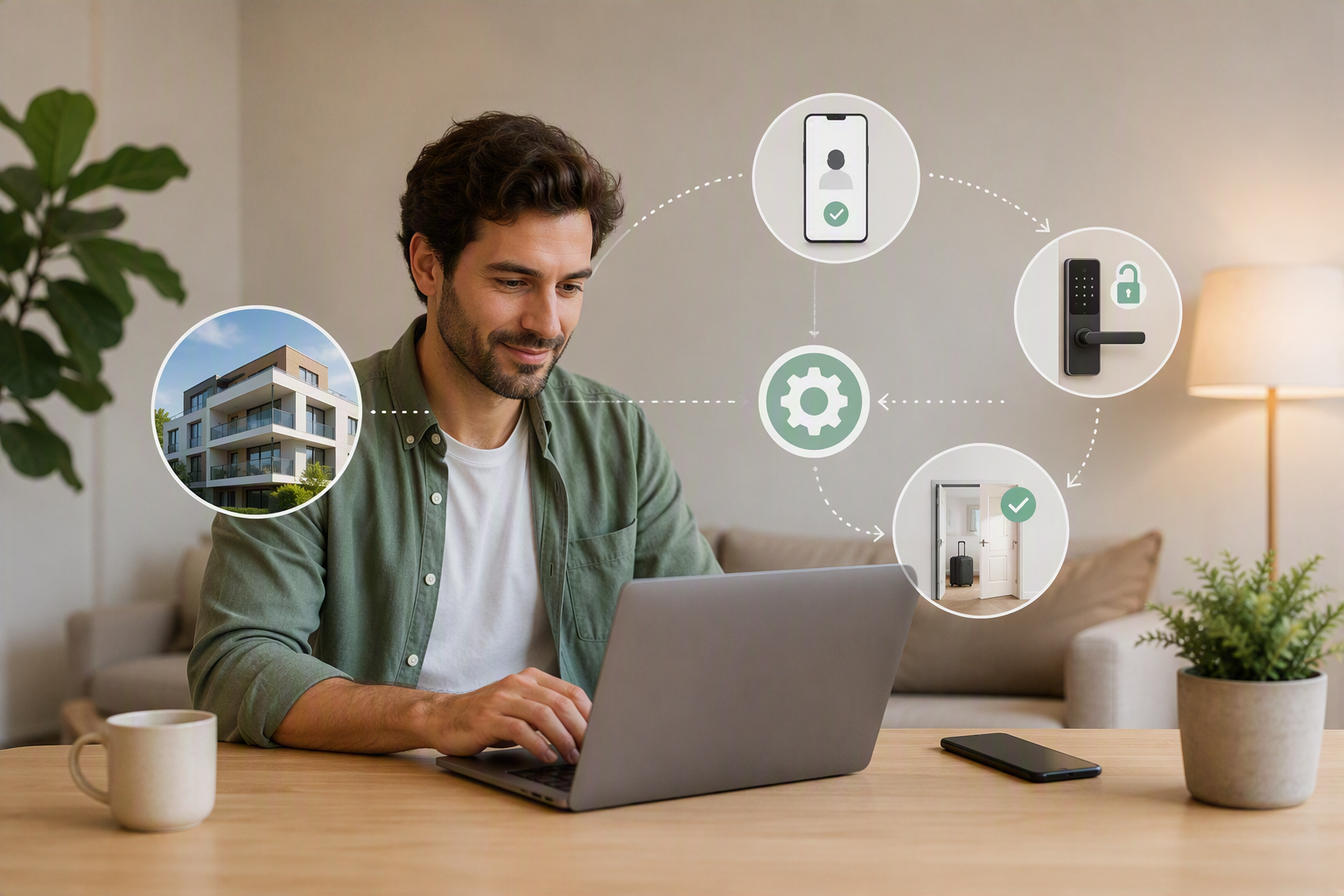
The Check-In Revolution in the Tourist Accommodation Sector
The tourist accommodation sector has undergone an unprecedented digital transformation in recent years. What used to be managed with notebooks, late-night phone calls and long waits at the property's entrance to hand over a set of physical keys is now resolved with a couple of clicks on a smartphone. Managing holiday properties demands efficiency, immediacy and 24/7 availability—something that is humanly impossible for an independent owner or a property manager with a growing portfolio if done purely manually.
In this context, technology has become the host's best ally. Digitalisation not only simplifies daily tasks but completely redefines the relationship between the manager and the traveller. Implementing modern processes at guest reception is not a technological luxury; it is an operational necessity to remain competitive on platforms such as Airbnb, Booking.com or Vrbo.
The End of Physical Keys and Midnight Waits
One of the biggest headaches for any host is coordinating the guest's arrival. Flights are delayed, road traffic is unpredictable and last-minute unforeseen events are the norm, not the exception. Traditionally, this meant that the owner or trusted staff had to wait for hours at the accommodation, wasting valuable time or charging late arrival fees that usually annoyed clients.
The progressive disappearance of physical keys eliminates this friction at its root. By replacing them with digital access systems, the guest no longer depends on anyone's physical presence to enter the property. They can arrive at three in the morning or two in the afternoon without altering the host's schedule or incurring extra operational costs. This change not only optimises the manager's time but also gives the traveller invaluable freedom and flexibility during their trip.
Why Manual Management Limits Your Business Growth
If your goal is to scale your holiday rental business, manual guest reception management is the first bottleneck you must eliminate. Coordinating cleaning schedules, performing identity registration upon arrival, drafting paper contracts and sending access instructions individually consumes a massive number of hours each week.
When you manage a single property, this model may be sustainable at the expense of your free time. However, when making the leap to three, five or ten properties, the system collapses. Administrative tasks multiply exponentially, increasing the risk of serious errors, such as forgetting a guest's legal registration or sending the wrong entry instructions. Automating these processes is the only viable path to professionalising your business and enabling sustained growth without burning out in the process.
The Four Pillars of a Fully Automated Check-In
To ensure that guest entry works autonomously, securely and efficiently, it is necessary to structure the process around four fundamental pillars. These technological components must work in perfect harmony to guarantee that the flow of information and physical access to the property take place without a hitch.
1. Smart Locks and Keyless Access Control
The first and most visible pillar is physical access control. Smart locks have revolutionised residential and tourist security, allowing doors to be opened using wireless technologies and numerical codes. There are different solutions on the market, each adapted to different types of property (flats in communal buildings, detached villas, apart-hotels, etc.).
Electronic Locks with a Keypad
These are, without a doubt, one of the most recommended and widely used options in holiday rental management. These devices are installed directly on the door and allow access by entering a unique numerical code on a physical or touch keypad. The great advantage of this system is that it does not require the guest to have a smartphone with an internet connection or battery at the time of arrival, eliminating one of the most common issues. The code is generated automatically for each booking and is deactivated immediately after the guest's check-out time.
Bluetooth and Wi-Fi Smart Locks
These systems allow the door to be opened via a mobile app installed on the guest's phone or by sending a secure, one-time-use web link. When approaching the door, the device connects via Bluetooth or Wi-Fi and unlocks the mechanism. They are ideal for a young, tech-savvy audience and offer the host an extremely detailed real-time activity log, indicating with mathematical precision exactly who accessed the property and when.
Smart Lockboxes
For those owners who cannot or do not wish to modify the main door lock (due to building association restrictions or aesthetic reasons), smart lockboxes represent the perfect alternative. These devices are anchored to the exterior wall or a secure surface and house traditional physical keys inside. The guest enters a temporary numerical code generated by the platform to open the box and retrieve the keys. It is a highly economical and quick-to-install hybrid solution.
2. Digital Identity Verification and Legal Compliance
Automating access does not mean neglecting security or legal obligations. In most countries, especially in the European Union, tourist accommodation owners are required by law to identify all adult guests and report their details to the police authorities within a very strict timeframe.
Document Scanning and Facial Recognition (OCR)
OCR (Optical Character Recognition) technology allows guests to scan their ID document or passport using their mobile phone camera before arrival. The system automatically extracts the necessary data (first name, surname, document number, date of birth, etc.) with pinpoint accuracy. To prevent identity fraud, these systems usually incorporate a biometric verification step (a real-time selfie) that compares the user's face with the photograph on the provided ID document.
Digital Signature of Short-Term Tenancy Agreements
To legally protect your property, it is highly recommended that guests sign a holiday let or short-term rental contract. In a digitalised process, this contract is generated automatically using the data extracted from the ID document and presented to the guest to sign directly on the screen of their mobile device or tablet. This digital signature has full legal validity and is securely stored in the cloud for any future reference.
Automated Guest Registration and Compliance with Spanish Law
In Spain, compliance with citizen security regulations is extremely strict, especially with the entry into force of new registration requirements. To effortlessly comply with legal guest registration regulations in Spain, integrating an automated check-in system is essential. This type of tool is responsible for collecting all required information digitally and automatically sending it to the Ministry of the Interior's platform (SES.HOSPEDAJES), the National Police or the Civil Guard within 24 hours of the guest's arrival, avoiding very severe financial penalties for the owner.
3. Automated Communication and Guest Messaging Flows
A successful self-check-in process depends directly on the clarity of the information transmitted. If the guest does not understand how to access the property, the automation system will have failed, resulting in unnecessary support calls late at night. To prevent this, it is vital to design a clear, structured and multi-channel communication flow (email, SMS, WhatsApp or internal messaging on OTAs).
The Perfect Message Sequence for a Self-Checking Guest
To guide the traveller in a friendly and stress-free manner, it is highly effective to structure the sending of information into different time phases:
- Booking confirmation message: Sent immediately after payment is confirmed. It welcomes the guest, thanks them for their trust and briefly explains that the check-in process will be completely autonomous and digital, giving them total flexibility over their arrival time.
- Pre-arrival message (3 to 5 days before): This is the time to request identity verification and contract signature. A secure and personalised link is included for the guest to complete the online registration for all occupants of the property. It is essential to remind them that the property access code will only be generated once this mandatory legal step is completed.
- Arrival day message (a few hours before check-in): Once the legal registration has been verified, the temporary access code for the smart lock is sent, along with extremely simple visual instructions (a short video or photos showing the building entrance and keypad), the exact address with a Google Maps link and the Wi-Fi network password.
- Welcome message (1 hour after entry): A short message to confirm they have accessed the property without issues and to remind them that the digital house guide, with local recommendations and house rules, is at their disposal.
To execute this strategy without having to write each message manually, automated messages to guests are an essential feature that allows you to personalise templates with dynamic variables such as the customer's name, arrival and departure dates, or the specific access code for their booking.
4. Centralised Integration via a PMS (Property Management System)
Smart locks, identity verification systems and communication channels cannot function as independent technological islands. If you have to log into three different platforms to manage a single booking, you will lose much of the efficiency you are looking for. The key to success lies in centralising all these tools under a single control panel, such as that offered by a PMS specialised in holiday rentals.
The PMS acts as the brain of the operation: it detects a new booking on any channel (such as Airbnb or Booking), blocks the dates on other calendars, initiates the automated communication flow requesting the guest's identity, validates the data, remotely generates the unique access code on the smart lock and, finally, sends the registration data to the relevant authorities. This entire flow happens in the background, without the host having to intervene manually at any point.
Tangible Benefits of Check-In Automation for Hosts and Managers
Massive Saving of Time and Operational Costs
Anyone's most valuable and limited resource is time. By eliminating the need to physically travel to hand over keys, hosts regain dozens of hours a week that they can dedicate to strategic tasks, such as price optimisation, improving property decor or searching for new properties to expand their portfolio. In addition, mileage costs, emergency travel and fees for concierge services or intermediaries dedicated to key handovers are drastically reduced.
Drastic Reduction in Incidents and Misunderstandings
Human error is inevitable when managing complex processes manually. A slip-up when noting down booking dates can mean no one is waiting for the guest upon arrival. A physical key can be lost or copied without authorisation, compromising the security of the home. With automation, the chances of error are reduced practically to zero. Access codes are created and destroyed automatically according to the exact booking dates, and standardised communication ensures that the guest always receives the precise information at the right time.
Improved Guest Satisfaction and Reviews
Modern travellers value autonomy and privacy above almost everything else. After a long journey by plane or road, the last thing a guest wants is to be forced to socialise with the owner or coordinate an exact meeting time under pressure not to be late. Being able to arrive at the accommodation, enter a numerical code and go straight inside to rest creates an unbeatable first impression. This smooth, convenient and friction-free arrival experience translates directly into five-star ratings on booking platforms, which in turn improves the listing's organic positioning and increases future bookings.
Step-by-Step Guide to Implementing Automation in Your Properties
Step 1: Audit of Access and Property Connectivity
Before buying any device, it is essential to analyse the physical characteristics of your property. You must answer key questions such as:
- Is the property a detached house with direct access from the street or a flat within a communal building?
- If it is a flat, how will the guest open the building's main communal door? (There are solutions that connect to the flat's intercom to allow remote opening of the main entrance).
- What type of lock profile does the main door have? (Euro cylinder, Swiss cylinder, mortise lock, etc.).
- Does the property have a stable, high-quality Wi-Fi connection near the entrance door to guarantee the connectivity of smart devices?
Step 2: Selection and Installation of Compatible Hardware
Once the physical needs of the property have been analysed, it is time to choose the access devices. It is extremely important to opt for well-known brands in the holiday rental sector (such as Nuki, Tedee, Yale or Salto) that offer high reliability, good battery life and, above all, direct integration with the main PMS and channel managers on the market. Installing these devices is usually simple, but if you do not have basic locksmithing knowledge, it is advisable to hire a professional to ensure the lock is perfectly aligned and the mechanism runs smoothly, avoiding mechanical jams.
Step 3: Software Configuration and Workflow Automation
With the hardware installed, the next step is to connect the devices to your booking management platform. You will need to configure the following parameters in your control panel:
- Synchronise your booking calendars with the access control software so that code generation is automatic.
- Personalise communication templates, ensuring you write the access instructions as clearly and concisely as possible.
- Configure code validity parameters: for example, define that the access code activates exactly at the official check-in time (e.g. 3:00 pm) and deactivates automatically at check-out time (e.g. 11:00 am).
- Link the digital identity verification system with the police data submission gateway to automate legal compliance.
Step 4: Pilot Testing and Experience Optimisation
Before launching the system with real guests, carry out thorough testing. Simulate being a guest: complete the online registration process on your smartphone, check that the data is read correctly, go to the property and open the door using the code generated by the system. Also check what happens if you enter an incorrect code or try to access before the permitted time. These tests will allow you to detect small configuration errors and polish the access instructions before they affect a real customer.
How to Resolve Common Issues in Automated Access
What Happens if the Guest Does Not Have a Smartphone or Is Not Tech-Savvy?
Not all travellers feel comfortable using mobile apps or scanning QR codes, especially elderly people. To solve this drawback, the best option is to have a lock with a physical numerical keypad on the door. This way, the guest only has to memorise or write down a four or six-digit code on a piece of paper—an extremely simple method that everyone knows how to use, regardless of their technological level. Furthermore, it is always advisable to offer direct telephone or instant messaging assistance to guide the guest step-by-step in case they get stuck during the process.
What to Do in the Event of an Internet Connection Failure or Power Cut?
This is one of the most common concerns among hosts starting out in automation. What happens if the power goes out in the property or the Wi-Fi connection drops? Professional-grade smart locks are designed to overcome this scenario autonomously:
- Local offline operation: Most smart locks store authorised access codes directly in their internal memory. This means that even if the lock loses the property's internet connection, it will still recognise and allow access with previously generated valid numerical codes.
- Independent battery power: Electronic locks do not depend on the property's main electricity grid; they run on long-lasting replaceable or rechargeable batteries (which usually last between 6 and 12 months). The management software will send you automatic warning notifications when the battery level drops below 20%, giving you plenty of time to replace them.
- Physical contingency plan: As a definitive safety measure, it is always advisable to install a small, secure mechanical keybox hidden near the property with an emergency physical key inside. In the highly unlikely event of a total electronic system failure, you can provide the code for this box to the guest over the phone so they can gain access immediately without delay.
Managing Expired Codes or Late Check-Outs
Occasionally, a guest may request a late check-out to make the most of their last hours in the city or due to a delay in their return flight. If the lock's access code is programmed to deactivate strictly at 11:00 am, the guest could find themselves locked out when trying to retrieve their bags at 1:00 pm. With a centralised management system, resolving this is as simple as modifying the booking's check-out time in your PMS. The system will remotely update the code's validity on the smart lock in real time, allowing the guest to enjoy their late check-out smoothly and in a fully automated manner.
The Future of Tourist Access: Trends That Are Already Here
Artificial Intelligence Applied to Identity Validation
Artificial intelligence is drastically improving digital identity verification systems. Current algorithms are capable of detecting in a matter of seconds if a passport or ID document is fake, if the photograph has been digitally manipulated, or if the guest's real-time selfie actually corresponds to the physical person making the booking. This reduces identity fraud to virtually non-existent levels, providing absolute peace of mind to owners regarding who is actually entering their properties.
Smart Home Integration for Post-Check-In Energy Efficiency
Check-in automation opens the door to the property's energy optimisation. By integrating the smart lock with the property's home automation system (climate control, lighting, etc.), you can program smart scenarios based on the guest's actual presence:
- Welcome scenario: Upon entering the access code for the first time on the day of arrival, the system automatically turns on the air conditioning or heating to an ideal comfort temperature and activates a courtesy light in the hallway.
- Energy saving scenario: When the system detects that check-out has taken place and the door has been closed for the final time, it automatically turns off all lights, TVs and climate control systems in the house, avoiding unnecessary electricity consumption that eats into the property's profitability.
Conclusion: Automation Is Not the Future, It Is the Current Standard
Fully automating check-in for your holiday rental is not just a strategy to save time; it is a high-impact business decision that professionalises your activity, substantially improves the guest experience and guarantees strict compliance with legal security regulations passively. By freeing yourself from the most repetitive and stressful administrative tasks of daily management, you will be able to focus your efforts on what truly matters: growing your business, maximising your income and offering top-tier hospitality that stands out in an increasingly competitive market. Technology is within your reach; integrating it into your daily routine is the definitive step to transforming your accommodation into a modern, efficient and highly profitable business.