
The Ultimate Guide to Access Automation for Holiday Rentals: Smart Locks, Temporary Codes and Remote Management
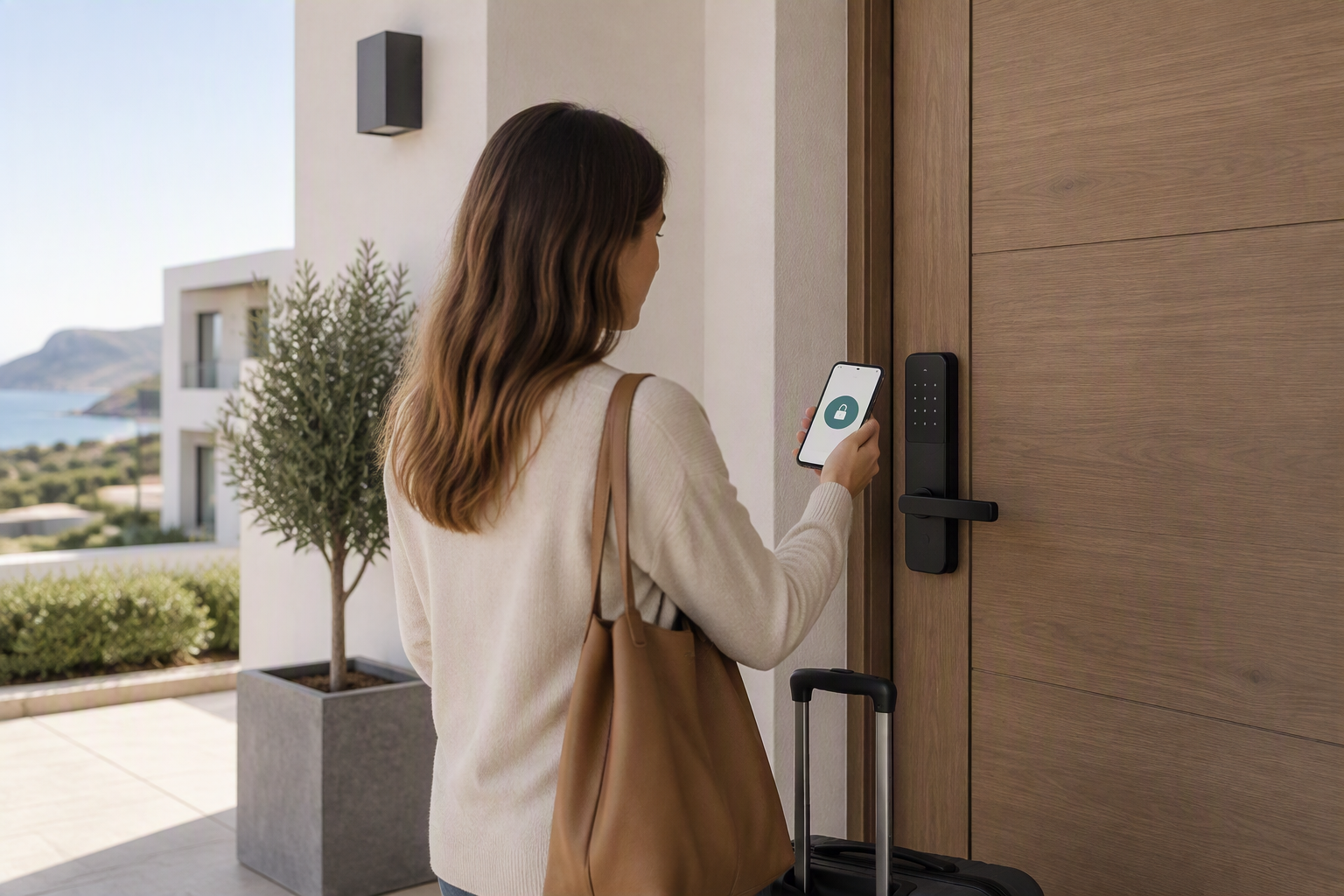
The Autonomous Check-in Revolution in the Tourist Accommodation Sector
Traditional management of tourist accommodation and holiday rentals has for decades relied on physical key handovers. Waiting for guests late into the night due to flight delays, rushing out over lost copies, or tightly coordinating schedules with cleaning staff are common scenarios that consume productive hours and create unnecessary friction. In the digital age, access automation for holiday rentals is no longer a luxury feature, but an indispensable operational standard for any professional host.
Today's traveller, accustomed to immediacy, seamless mobile experiences, and technological self-sufficiency, increasingly values privacy, speed, and flexible arrival times. Implementing autonomous access technologies eliminates the uncertainty of face-to-face check-in, allowing both owner and guest to enjoy a smooth, secure, and stress-free experience from the very first minute of the stay.
Furthermore, the competitive landscape of short-term rentals (STRs) demands operational efficiency. Property managers handling multiple units cannot scale their business if every single check-in requires a physical presence or manual coordination. By replacing traditional keys with keyless access systems, hosts eliminate operational bottlenecks, reduce staffing costs, and drastically improve guest satisfaction scores on major platforms like Airbnb, Booking.com, and Vrbo.
What Does Access Automation Entail in a Holiday Home?
Automating access means transforming traditional entry doors into smart access points, controlled via advanced electronic hardware and cloud software. This ecosystem replaces or complements mechanical keys with digital opening methods such as keypads, virtual credentials on smartphones, RFID cards, or remote control systems via Wi-Fi, Bluetooth, and cellular bridges.
Far from being a simple lock change, a comprehensive access control system synchronises directly with the life cycle of each booking. This means access is only granted during the exact dates and times booked by the guest, automatically revoking permission after check-out. The hardware interacts directly with Property Management Systems (PMS) or specialized automation platforms like Macufy, turning every booking into a self-executing workflow.
The Core Architecture of Smart Access Systems
To understand how keyless access operates in modern holiday rentals, it helps to break down the ecosystem into three primary layers:
- The Physical Layer (Hardware): Smart cylinders, electronic mortise locks, smart handles, wall keypads, or intercom relays installed directly on the property.
- The Connectivity Layer (Gateway / Bridge): Low-power wireless protocols (such as Bluetooth Low Energy, Z-Wave, or Zigbee) communicating with a local bridge that connects the door lock to the internet via Wi-Fi or cellular networks.
- The Operational Layer (Software): Cloud platforms that handle permission logic, time-based PIN code generation, PMS synchronization, guest verification, and automated guest notifications.
Smart Lock Technologies: Types, Architecture, and Features
Selecting the right technical solution depends on multiple factors: door type (wooden, reinforced, armored, aluminum profile, communal front entrance), building association restrictions, property connectivity, and allocated budget. Below, we analyse the most efficient options on the market for vacation rentals and boutique accommodations.
1. Electronic Cylinders and Retrofit Motorised Smart Locks
Motorised smart locks installed over the existing cylinder (or replacing only the internal lock cylinder with a dual-clutch European profile cylinder) are the preferred solution for hosts who wish to avoid complex alterations or changing the external appearance of the door.
- Mechanism: The internal motor turns the key or internal thumbturn upon receiving an authorised command via Bluetooth or RF signal from an external keypad, smartphone app, or cloud server.
- Advantages: Quick installation (often taking less than 15 minutes), preserves the ability to use the original physical key from the outside, and remains completely undetectable from the communal building corridor.
- Ideal Use Cases: Rented properties where door modifications are restricted, residential building apartments, and standard wooden or metal European doors.
- Leading Brands: Nuki Smart Lock 4.0, Tedee Pro/GO, Yale Linus, and Danalock V3.
2. Smart Handles and Mortise Locks with Integrated Keypads
For those managing holiday apartments with direct street access, beachfront villas, or doors requiring a robust, all-in-one solution, handles with keypads and biometric readers offer superior mechanical durability and climate resistance.
- Mechanism: They completely replace the traditional handle or lock assembly, keeping the outer handle disengaged (free-spooling) until a correct numerical code, RFID card, or fingerprint is validated.
- Advantages: Maximum resistance to continuous wear, zero dependency on guest mobile apps or phone batteries, integrated weatherproofing (IP65 ratings), and long battery life (often 12 to 18 months).
- Common Protocols & Frameworks: Systems based on TTLock, Tuya, or proprietary commercial platforms.
3. Smart Openers for Communal Main Doors (Intercom Relays)
The main operational bottleneck in multi-family residential buildings is often the main street door. Having the most sophisticated lock on the apartment door is useless if guests cannot pass through the communal main entrance without a physical fob or key.
- Mechanism: Electronic micro-controllers or relays connected internally to the apartment's intercom handset (interphone). When a guest calls the apartment or triggers an online request, the relay simulates the button press to buzz open the front door.
- Key Features: Features like "Ring to Open" temporarily allow any caller to buzz the building door during valid check-in hours, or allow guests to unlock the street door using a web button or dedicated access code.
- Notable Devices: Nuki Opener, Ring Intercom, and specialized IoT relay modules like Shelly Uni or SmartKey openers.
Technical Comparison of Access Automation Hardware
| Technology Type | Installation Complexity | Primary Access Method | Best Suited For | Key Advantage |
|---|---|---|---|---|
| Retrofit Motorised Lock | Low (No drilling required) | Keypad PIN / Mobile App | Apartments in Multi-Unit Buildings | Preserves original lock exterior |
| Smart Handle / Mortise | Medium to High | Numeric PIN / RFID Card | Villas, Direct Street Access, Hostels | Heavy-duty durability & weather resistance |
| Intercom Smart Opener | Low to Medium | Web Button / Ring-to-Open | Communal Building Entrance | Solves the building entrance bottleneck |
| Smart Lockboxes (Key safes) | Very Low | Manual or Electronic Code | Emergency Backup / Budget Setup | Low initial investment cost |
The Power of Temporary Codes: Dynamic Security
Using temporary keypad codes represents the most efficient, universally accessible, and reliable opening method for holiday rental guests. Although smartphone unlocking via Bluetooth or native apps sounds technically appealing, it frequently introduces practical hurdles in real-world scenarios:
- Guest mobile batteries dying after long flights or excursions.
- Reluctance to download third-party applications for a short two-night stay.
- Lack of active mobile data roaming upon landing in an international country.
- Compatibility issues with older smartphone operating systems.
In contrast, a physical or capacitive keypad positioned next to the door guarantees that anyone who can read numbers can gain entry seamlessly within seconds.
How Do Offline Code Algorithms Work?
Many industry-leading smart locks do not require an active internet connection at the exact moment a guest enters their PIN code. They operate using advanced offline time-based cryptographic algorithms, similar to banking TOTP (Time-based One-Time Password) security systems:
- Time Synchronization: The smart lock contains an internal real-time clock (RTC) powered by long-lasting lithium batteries and a pre-shared master cryptographic key.
- Algorithmic Generation: The host's management software mathematically calculates a numerical sequence valid exclusively for specific start and end dates and times (e.g., valid from Friday at 15:00 to Sunday at 11:00).
- Local Validation: Upon typing the code into the lock's keypad, the door checks the sequence against its internal clock and master key. If it matches, the door unlocks instantly—even if the internet gateway is down, the power is cut, or the neighborhood Wi-Fi fails.
Remote Control and Real-Time Monitoring
Adding a bridge or Wi-Fi gateway to the smart lock unlocks total remote management of the property from anywhere in the world. This feature grants hosts vital operational capabilities and peace of mind:
1. Emergency Remote Unlocking
If a confused guest struggles with their code, or if an emergency service worker, maintenance technician, plumber, or city inspector needs instant access, the property manager can retract the lock latch remotely in real time directly from their smartphone or web dashboard.
2. Detailed Audit Logs and Event History
The management platform records the exact timestamp of every event: when the door was unlocked, the exact method used (Guest PIN #1, Cleaner PIN #2, Emergency Web Command, or Physical Override Key), and whether the door was locked properly upon exit. This provides indispensable traceability for resolving booking disputes, confirming guest check-out, proving compliance for insurance policies, or monitoring staff arrival times.
3. Battery Status and Preventive Maintenance
Running out of battery power is one of the single biggest operational fears when digitising property access. Modern smart systems monitor power consumption constantly, sending automated alerts to the management platform when battery levels drop below 20%. This provides a generous buffer window of several weeks for maintenance teams to swap out batteries during routine cleaning shifts long before a lockout occurs.
Operational Advantages for Hosts and Property Managers
Implementing an autonomous access control system directly boosts business profitability for property managers and private owners, turning a labor-intensive operation into a smooth, scalable enterprise.
Drastic Savings on Operational and Staff Costs
The average market cost of hiring dedicated check-in staff or third-party key handover services ranges between €15 and €35 per check-in—rising significantly for late-night or early-morning arrivals. Eliminating this recurring cost pays off the entire hardware and software investment within just a few months of steady occupancy.
Elimination of Physical Key Duplication and Locksmith Costs
Constant key copying, lost key replacements, emergency locksmith call-outs at midnight, and the lingering security threat of past guests retaining unauthorized physical duplicates are completely eliminated. When a temporary access PIN expires, the digital access credential is permanently revoked without any physical intervention required.
Superior Search Engine and OTA Rankings
Major online travel agencies (OTAs) such as Airbnb, Booking.com, and Vrbo heavily feature Self Check-in as a key search filter. Properties offering keyless self check-in consistently achieve:
- Higher conversion rates from travelers browsing listings late at night or booking last-minute stays.
- Higher check-in sub-scores on review forms, directly boosting overall property ratings.
- Greater eligibility for preferred host programs (such as Airbnb Superhost status).
Benefits for the Guest Experience
Traveler satisfaction is the foundational engine of holiday rental success. Access automation aligns perfectly with modern expectations for convenient, frictionless travel:
- Zero Delay Stress: If a flight lands three hours late, traffic freezes, or luggage is delayed at baggage claim, guests do not face the awkward guilt or financial penalties of keeping a human host waiting at the front door.
- Complete Privacy and Independence: After hours of grueling travel, many guests prefer entering their private retreat immediately without feeling obligated to hold formal small talk or attend length key-handover tours.
- Simplified Group Logistics: For families or large groups, having a single physical key creates endless logistical headaches over who stays out late or who returns first. Shared keypad access codes allow every group member to move around freely without coordinating key handoffs.
Integrating Access Control with Macufy and Legal Compliance
Access automation should not operate as an isolated island. For self check-in to be genuinely successful, efficient, and legally compliant, releasing temporary door codes must be directly conditioned on fulfilling legal guest onboarding duties.
Legal Compliance: Mandatory Guest Registration and ID Verification
In many jurisdictions across Europe and Latin America (such as Spain's royal decrees governing SES.Hospedajes, Italy's Alloggiati Web, or mandatory police guest registries), short-term rental operators are legally obligated to verify the identity of every guest aged 14 or older and submit signed guest registration forms (traveler check-in sheets) to authorities prior to or upon arrival. Releasing access codes automatically *before* verifying guest identities constitutes a severe legal violation that can lead to massive administrative fines.
This is where an integrated management platform becomes essential. By utilizing Macufy's unified workflow, hosts can implement an end-to-end digital funnel. Guests perform their online onboarding through an automated check-in process where they scan their passports or national identity cards, take a selfie for identity verification, and sign the official traveler form on their own mobile devices before stepping foot on the property.
Communication Automation: Timely Code Delivery
Once guest verification and legal compliance conditions are fully satisfied, the automated system seamlessly triggers the next step: sending personalized arrival instructions. Manually copying PIN codes into WhatsApp or email messages defeats the entire purpose of automation.
By leveraging automated guest messaging, the platform sends tailored WhatsApp messages, SMS alerts, or emails containing the unique temporary entrance PIN, precise door instructions, step-by-step visual guides, interactive location maps, and property Wi-Fi credentials exactly when needed—such as 24 hours prior to arrival or the moment online check-in is verified.
Practical Guide: Step-by-Step to Digitalising Property Access
If you are ready to transition your traditional holiday home into a fully automated, tech-forward accommodation, follow this systematic implementation roadmap to prevent hardware mismatch and operational friction:
Step 1: Perform a Comprehensive Door Hardware Audit
Before purchasing smart locks, physically inspect every aspect of your door:
- Cylinder Measurements: Measure the exact internal and external lengths (e.g., 30/30mm, 35/45mm) of your European profile cylinder. Determine if you require an adjustable security cylinder.
- Mechanical Friction: Ensure the deadbolt and latch engage smoothly without needing to push, pull, or lift the door handle forcefully. Motorised smart locks require low mechanical friction to prevent motor strain and rapid battery drain.
- Multi-point Locking Mechanisms: If your door features multipoint hooks or top/bottom bolts, verify whether engaging those bolts requires lifting the handle manually or if turning the key keyway activates them directly.
- Intercom Handset Identification: Take note of the exact brand and model of the intercom handset in the hallway to confirm smart opener relay compatibility.
Step 2: Establish the Ideal Connectivity Architecture
Select the wireless network structure best suited for your property setup:
- Wi-Fi Gateways: Plug a low-power Bluetooth-to-Wi-Fi bridge into an electrical socket located within 3 to 5 meters of the front door lock.
- Direct Wi-Fi / Matter Locks: Suitable if robust Wi-Fi signal reaches the door directly, though battery life may require more frequent replacement compared to BLE/Gateway combinations.
- Cellular / SIM Gateways: Ideal for isolated rural properties or locations without permanent indoor fixed Wi-Fi internet connection.
Step 3: Establish Robust Backup Protocols (Redundancy Planning)
Even the most advanced technology can encounter occasional physical or environmental hiccups. Professional property managers always establish clear redundant backup systems:
- Backup Master Lockbox: Install a discrete, heavy-duty mechanical dial key safe in a hidden secondary location containing a master mechanical emergency key.
- External Emergency Power Contacts: Ensure selected electronic handles or keypads feature external 9V battery terminals or USB-C emergency jump-start ports on the outer housing to power up the lock if internal batteries drop to absolute zero.
- Visual Quick-Start Guides: Send guests short, clear 10-second video clips or illustrated guides demonstrating code entry (e.g., reminding them to press the "#" or "Checkmark" key to confirm entry).
Managing Cleaning and Maintenance Teams with Keyless Access
Access automation delivers transformative benefits far beyond guest management—it fundamentally streamlines back-of-house operations with cleaning crews, maintenance engineers, and laundry partners.
Dynamic Staff Access Management
Handing physical master keys to cleaning services presents significant security hazards if staff members leave the company, lose keys, or misplace access sets. With smart keyless entry, hosts generate dedicated, recurring staff PINs or mobile digital keys:
- Time-Restricted Permissions: Configure housekeepers' PIN codes to function strictly within official turnaround hours (e.g., active exclusively between 11:00 AM and 3:00 PM on check-out days).
- Real-time Turnaround Notifications: Receive instant automated push notifications or webhook updates when housekeepers enter and lock the property. This alerts front-desk managers immediately that the unit is ready for the next guest arrival.
- Vendor Access Protocols: Issue single-use, 30-minute window PINs for plumbers, electricians, or air conditioning technicians to conduct repairs without requiring staff to travel to the site just to open the door.
Frequently Asked Questions about Autonomous Access in Holiday Rentals
What happens during a power outage or complete Wi-Fi failure at the property?
Smart locks and door keypads run independently on internal batteries (high-grade alkaline or rechargeable lithium cells), meaning general power cuts in the building do not stop the door lock from operating. Furthermore, dynamic code validation relies on local cryptographic time matching inside the lock itself, allowing guests to enter valid PIN codes smoothly even if the indoor Wi-Fi network drops out completely.
Are smart locks legal in multi-family building associations or community developments?
Yes. On the private entrance door of the apartment, property owners hold full legal rights to install electronic lock cylinders or smart handles, provided the installation does not alter the external communal corridor's architectural aesthetic or breach specific community bylaws. For street access doors, smart intercom openers connect internally inside the private flat's handset without modifying shared wiring or building infrastructure, requiring no special community assembly approvals in most jurisdictions.
How can hosts prevent guests from sharing their access codes with unregistered third parties?
While no physical or digital lock can stop an individual from sending a text message with a PIN code, smart access management significantly minimizes risk. Pairing keyless access with external noise monitoring devices, exterior entrance cameras (fully compliant with privacy regulations), and strict digital check-in contracts creates a strong psychological and legal deterrent. Because each access code is unique and tied directly to a signed digital contract with ID verification, guests hold full legal accountability for any unauthorized entries registered during their reserved time window.
How long do batteries typically last in a vacation rental smart lock?
Under normal operational usage (averaging 10 to 15 lock cycles per day), high-quality smart locks run between 6 and 14 months on a single set of batteries. Locks utilizing Bluetooth Low Energy (BLE) linked to a nearby plug-in gateway consume far less power than locks maintaining a direct, continuous Wi-Fi connection. Integrated management software alerts hosts well in advance when battery capacity dips below 20%.
Conclusion: Scaling Your Rental Business with Macufy
The short-term rental market is evolving rapidly. Hosts relying on physical key handovers lose valuable hours every week to operational chaos—hours that could be far better spent expanding their portfolio, implementing dynamic pricing strategies, and elevating guest satisfaction.
Transitioning to smart locks, temporary offline PIN codes, and automated entry control represents the single highest-ROI operational upgrade a holiday rental host can make. When integrated with comprehensive platforms like Macufy—which handle mandatory legal guest registration, automated communication workflows, and total reservation management—hosts gain total operational freedom, robust asset protection, and the five-star modern travel experience today's guests demand.