
The Best Smart Locks for Holiday Rentals: Comparison and Complete Guide
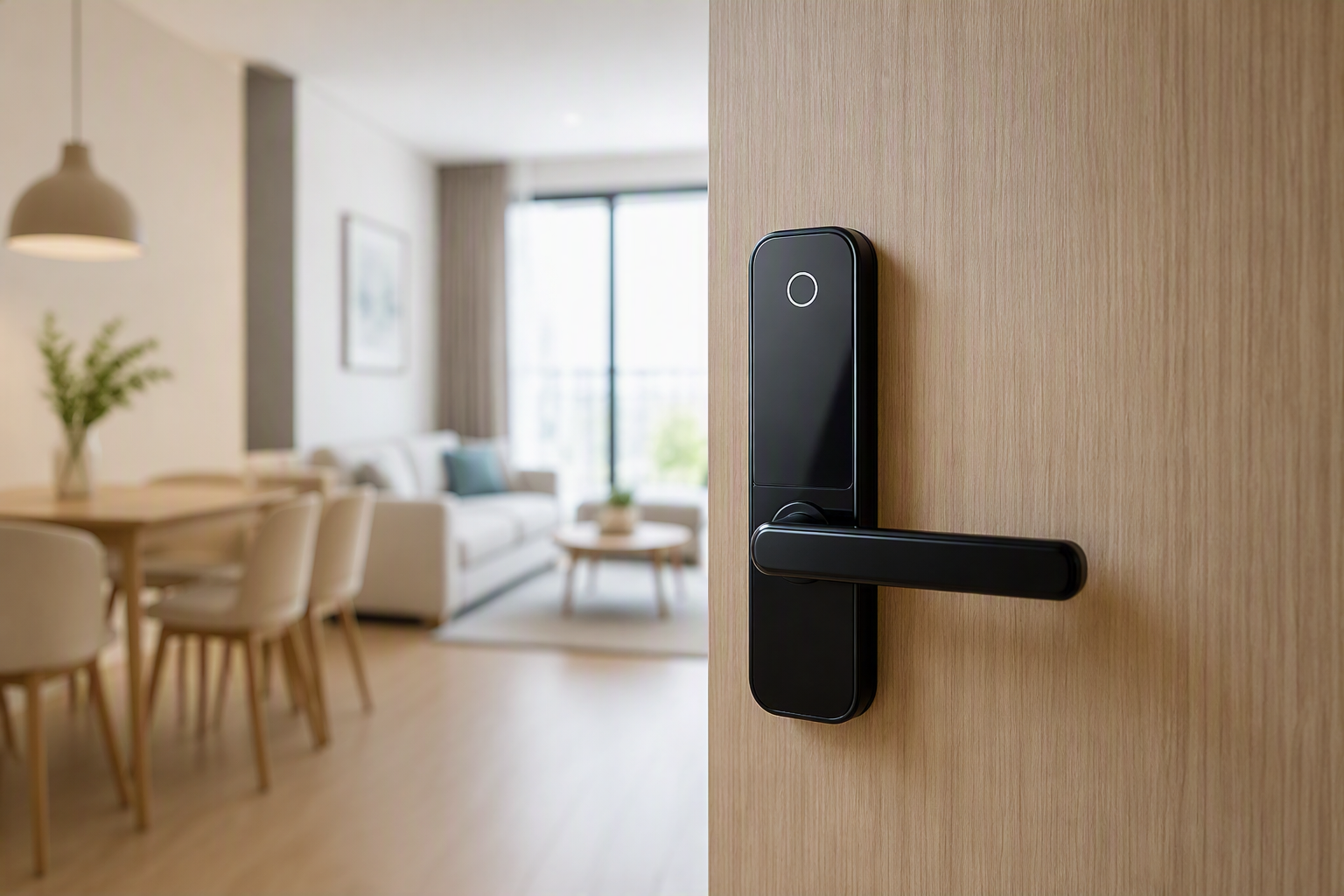
The digital access revolution in the holiday rental sector
The management of tourist accommodation has evolved at a dizzying pace in recent years. One of the most critical points, and one that generates the most friction in the relationship between host and guest, is undoubtedly the key handover. Traditionally, this process required the physical presence of the owner or a manager, which meant long waits due to flight delays, traffic, or last-minute unforeseen events. Smart locks have arrived to solve this problem at its root.
Nowadays, implementing electronic access systems is not a luxury, but an operational necessity for any owner looking to scale their business and improve their profit margins. By eliminating the need for physical keys, not only are travel and staff costs reduced, but the risk of unauthorised copies or lost keys is completely eliminated—a recurring security issue in the sector.
In this article, we will analyse in depth the best smart lock options on the market, evaluating their technical features, compatibility, security levels, and how their integration with management tools optimises the day-to-day running of your tourism business.
Types of access in smart locks: Which is best for your guests?
Not all guests have the same technological confidence or preferences when accessing accommodation. Therefore, modern locks offer multiple opening methods. Below, we detail the most common systems and their viability in holiday rentals.
Keypad and temporary PIN codes
This is, by far, the most efficient system and the one preferred by users of holiday apartments. It allows the owner to generate a unique numerical code for each booking, which automatically activates at check-in time and expires at the exact moment of check-out.
- Advantages: It does not require the guest to download any mobile application, nor does it require them to have an internet connection or battery on their phone at the time of arrival.
- Disadvantages: It requires the installation of an accessory physical keypad if the lock does not have one integrated as standard.
Opening via mobile application (Bluetooth and Wi-Fi)
This method uses the Bluetooth or Wi-Fi connection of the guest's smartphone to unlock the main door through a dedicated application.
- Advantages: It offers an advanced technological experience and allows a detailed log of who enters and leaves the property in real time.
- Disadvantages: It can cause friction if the guest does not want to download an additional app, if they run out of battery, or if they have connectivity issues in areas with poor coverage.
RFID cards and smart key fobs (Fobs)
Very similar to the systems used in conventional hotels. The guest only has to hold a plastic card or a small key fob close to the lock reader to unlock it.
- Advantages: Extremely simple to use, ideal for elderly people or children.
- Disadvantages: There is still a physical component that must be handed over and retrieved, which does not solve the 100% remote check-in problem unless an outdoor smart key box is available.
Biometric access
Allows opening via fingerprint or facial recognition. Although it is a very secure system for private residential properties, its application in holiday rentals is highly limited due to privacy regulations and the complexity of registering the fingerprints of dozens of different guests each month.
Backup physical key
Almost all quality smart locks retain the possibility of using a traditional physical key in a hidden or emergency manner. This is vital as a contingency plan in the event of extreme mechanical failures or absolute depletion of the lock's batteries.
Comparison of the best smart locks on the market
To help you make the best purchasing decision, we have selected and analysed the most reliable, secure, and popular models on today's market, detailing their pros and cons oriented specifically towards holiday rentals.
Nuki Smart Lock 4.0 Pro: The European queen of smart home automation
The Austrian brand Nuki is an absolute benchmark in Europe. Its 4.0 Pro model stands out for integrating native Wi-Fi connectivity without the need for external adapters (bridges) and for being compatible with the vast majority of European-profile locks without needing to change the existing cylinder.
- Installation: Placed over the existing key and cylinder on the inside of the door. Installation is completed in less than 5 minutes without drilling.
- Connectivity: Wi-Fi, Bluetooth, and compatibility with the Matter protocol, which guarantees technological support for years to come.
- Power supply: Includes a rechargeable battery (Nuki Power Pack) offering an autonomy of up to 6 months.
- Strengths: Direct integration with the main booking channels and PMS on the market, excellent technical support, and the option to add the Nuki Keypad 2.0 with fingerprint reader.
- Weaknesses: The motor can be somewhat noisy during the cylinder rotation process.
Yale Linus Smart Lock: Robustness and elegance
Yale, a brand with over 180 years of history in locksmithing, offers with the Linus model one of the most solid and aesthetically refined options. Designed by the prestigious designer Yves Béhar, this lock combines a premium finish with bank-grade security.
- Installation: Requires a compatible cylinder (if yours is not dual-clutch, Yale sells an adjustable high-security cylinder separately).
- Connectivity: Integrated Bluetooth. To control it remotely continuously, the Yale Connect Wi-Fi Bridge is required.
- Power supply: Runs on 4 AA batteries, providing a lifespan of between 6 and 9 months.
- Strengths: Extremely durable construction materials, a very quiet motor, and a highly mature and secure software ecosystem (Yale Home).
- Weaknesses: Requires purchasing the Wi-Fi bridge separately to get the most out of it remotely, which increases the initial cost.
Tedee PRO: The most compact and powerful design
If you are looking for a discreet lock that does not alter the aesthetics of your door, the Tedee PRO is unbeatable. Manufactured in collaboration with Gerda (Polish security experts), it is the smallest smart lock in the world, yet features a surprisingly powerful motor.
- Installation: Requires a brand-specific cylinder or a compatible adapter.
- Connectivity: Low-energy Bluetooth. Requires the Tedee Bridge for remote access via Wi-Fi.
- Power supply: Internal lithium-polymer battery rechargeable via magnetic micro-USB cable, with an estimated lifespan of up to 6 months.
- Strengths: Minimalist anodised aluminium design, virtually silent operation, and a very fast opening speed.
- Weaknesses: High price and the need to replace the door's original cylinder in most cases.
August Wi-Fi Smart Lock: The ideal option for American deadbolts
Highly popular in the American market, the August brand (also owned by the ASSA ABLOY group) offers exceptional performance for doors that use single-cylinder deadbolts.
- Installation: Only the interior part of the existing deadbolt is replaced, keeping the original exterior key intact.
- Connectivity: Integrated 2.4 GHz Wi-Fi, without the need for additional bridges.
- Power supply: Runs on 2 CR123 lithium batteries.
- Strengths: Very smooth native integration with voice assistants (Alexa, Google Assistant, Apple HomeKit) and a very modern circular design.
- Weaknesses: Battery consumption is high due to the constant integrated Wi-Fi, and its compatibility with European-profile doors is very limited without complex adaptations.
Schlage Encode: Industrial security for high traffic
For those owners who prioritise physical resistance and durability above all else, the Schlage Encode represents the industrial-grade option. It is a complete lock that replaces the entire handle and latch assembly.
- Installation: Requires a complete traditional locksmith installation, ideal for new doors or full renovations.
- Connectivity: High-stability integrated Wi-Fi.
- Power supply: 4 AA batteries with excellent power management.
- Strengths: Built-in alarm against intrusion or tampering attempts, ultra-wear-resistant capacitive keypad, and unmatched physical solidity.
- Weaknesses: Robust but unsubtle aesthetics, and a more complex installation process requiring wood or metal drilling tools.
Technical features comparison table
| Model | Connectivity | Power Supply | Installation Type | External Keypad |
|---|---|---|---|---|
| Nuki Smart Lock 4.0 Pro | Wi-Fi, Bluetooth, Matter | Rechargeable battery (included) | Over existing cylinder | Yes (Optional) |
| Yale Linus | Bluetooth (Wi-Fi with Bridge) | 4 AA batteries | Over compatible cylinder | Yes (Optional) |
| Tedee PRO | Bluetooth (Wi-Fi with Bridge) | USB rechargeable battery | Requires cylinder/adapter | Yes (Optional) |
| August Wi-Fi | Wi-Fi, Bluetooth | 2 CR123 batteries | Over interior deadbolt | Yes (Optional) |
| Schlage Encode | Integrated Wi-Fi | 4 AA batteries | Complete replacement | Integrated as standard |
Key advantages of installing smart locks in your holiday apartment
The investment in a smart lock pays off quickly thanks to the direct impact it has on optimising owner resources and final customer satisfaction.
Full automation of key handover
By synchronising your smart lock with your property management software (PMS), you can fully automate guest access. To guarantee a flawless automated check-in process, the system automatically generates access credentials once the guest has completed the legal traveller registration and signed the digital rental agreement. The guest arrives directly at the property, enters their code, and gains access without waits or intermediaries.
Substantial increase in property security
Traditional physical keys are easy to duplicate, lose, or steal. With an electronic lock, access codes only work during the exact period of the booked stay. Once the guest checks out, the code is immediately deactivated, preventing any unauthorised re-entry. Furthermore, the owner receives a detailed log on their smartphone with the exact times of entry and exit, which is extremely useful for coordinating cleaning and maintenance teams.
Drastic reduction in operational costs and time
No more wasted hours waiting for a guest whose flight has been delayed by three hours, or having to pay emergency locksmith fees at three in the morning because a client has left their keys inside the apartment. Everything is managed remotely, reducing staff costs and unnecessary travel to virtually zero.
Improvement in the guest experience
Modern travellers value autonomy and speed above all else. Being able to arrive at accommodation at any time of the night, without having to coordinate physical key handover appointments, and knowing that access is secure and private, significantly boosts positive ratings on platforms like Airbnb or Booking.com, which in turn improves the organic positioning of your listing.
How to manage the most common issues with electronic locks
It is natural for doubts to arise about the reliability of these technological devices in an environment of such intensive use as holiday rentals. However, most potential problems have simple solutions if configured correctly beforehand.
What happens if the apartment loses its Wi-Fi connection?
This is one of the biggest concerns for hosts. The good news is that the vast majority of quality smart locks (such as Nuki, Yale, or Schlage) store the access code database locally in the device's internal memory. This means that, even if the property's Wi-Fi connection drops completely, previously generated PIN codes will still work perfectly for guests at the door.
Managing depleted batteries
Smart locks are designed to warn you weeks in advance when the batteries start to run low. The device will send push notifications to the owner's phone and emit visual or audible alerts on the lock itself when the door is opened. In the event that they run out completely due to neglect, most models feature external terminals at the bottom where a 9V battery or a power bank can be temporarily connected via USB to provide enough power to the system to enter the access code.
Guests forgetting access codes
To prevent a guest from being locked out due to forgetting their code, it is essential to have efficient communication channels. This can be excellently combined with sending automated messages to guests, sending an interactive reminder with detailed entry instructions and the PIN code a few hours before arrival, and periodically during their stay. This way, the client will always have the information directly accessible on their preferred messaging channel.
Buying guide: What factors to analyse before choosing your smart lock
Before purchasing a specific model, it is essential to carefully analyse the physical characteristics of your property and the operational needs of your business.
1. Compatibility with the existing cylinder and lock
In Europe, the vast majority of doors use European-profile cylinders. It is crucial to check whether your current cylinder has a dual-clutch function (which allows the door to be opened with a key from the outside even if there is another key inserted on the inside). If not, you will need to replace the cylinder with a compatible one to avoid being locked out if a physical key is left inside as a backup for the smart lock.
2. Type of connectivity and range
If you want to be able to generate codes on the go, change booking dates remotely, or open the door for a maintenance technician from your own home, you need a lock with Wi-Fi connectivity (either integrated or via a bridge). If you only need it to work locally via Bluetooth, your real-time remote management options will be highly limited.
3. Battery life and power supply type
Evaluate whether you prefer the convenience of rechargeable lithium batteries (which usually last less but are more eco-friendly and easier to recharge) or the long-term reliability of traditional AA or CR123 alkaline batteries. In accommodations with a very high occupancy rate, it is recommended to opt for models with optimised energy efficiency and to perform preventive battery replacement maintenance systematically every 6 months.
4. Hardware robustness and weather resistance
If the door of your holiday accommodation leads directly onto the street and is exposed to rain, sea humidity, or direct sunlight, you must ensure that the device or the external keypad has an adequate protection rating (such as IP54 or higher) to prevent failures due to water ingress or extreme temperatures.
Conclusion: Optimise your tourism business with the right access technology
The implementation of a smart lock is one of the most profitable and transformative steps you can take in the management of your tourist accommodation. Not only does it free you from the time constraints of physical key handovers, but it exponentially raises the standard of security and professionalism of your business—something your guests will appreciate and rate highly in their reviews.
Models like the Nuki Smart Lock 4.0 Pro or the Yale Linus represent highly reliable and easy-to-install solutions that perfectly adapt to the operational needs of any host. By combining these hardware devices with an all-in-one management platform like Macufy, you will succeed in automating the entire workflow of your bookings, from initial confirmation to check-out, allowing you to focus your efforts on what truly matters: growing your business and maximising the profitability of your properties.