
Smart Security in Holiday Rentals: The Ultimate Guide to Protecting Your Property
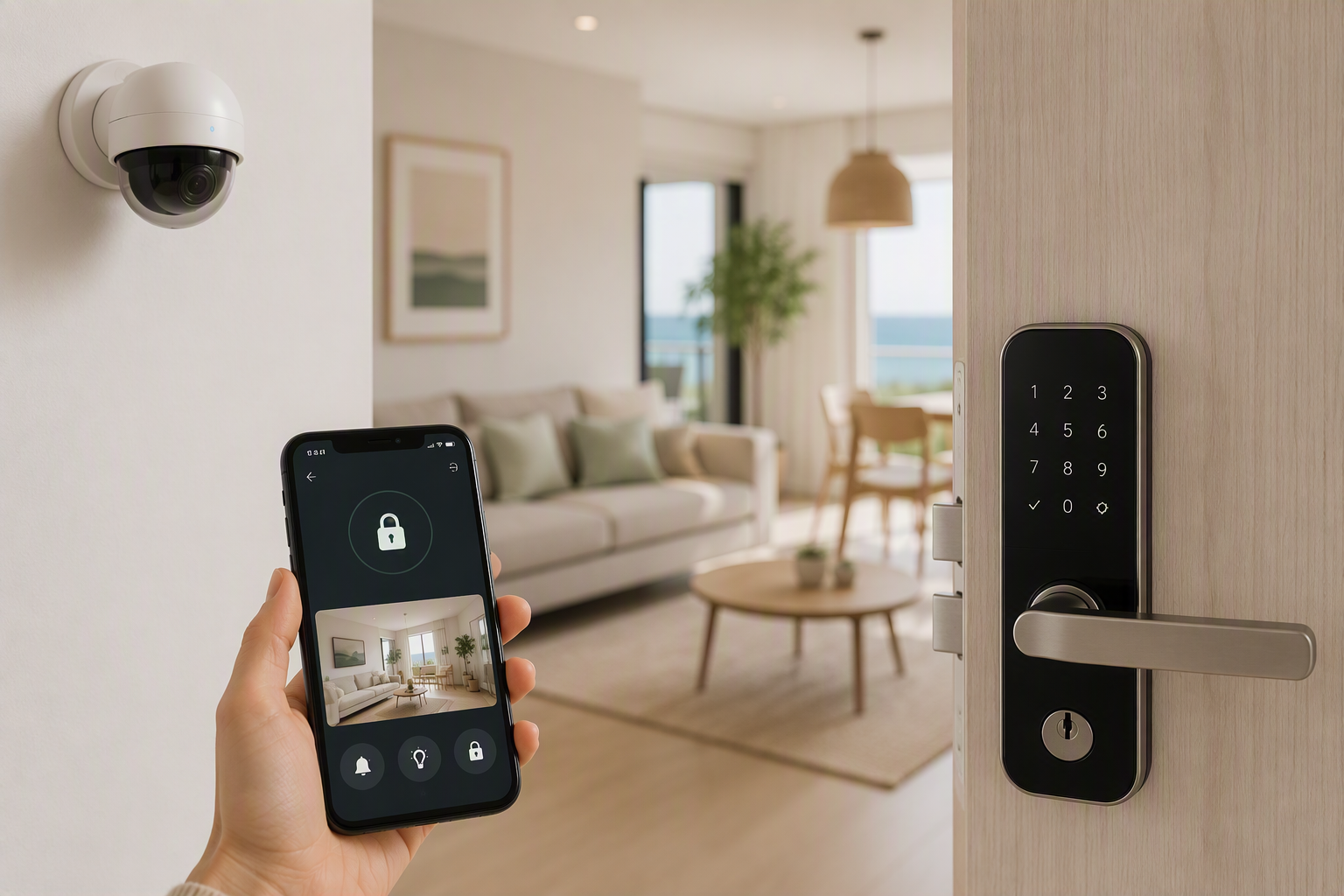
The Evolution of Security in the Tourist Accommodation Sector
The holiday rental market has experienced unprecedented growth over the last decade. This boom has transformed not only how travellers book their stays, but also how owners manage and protect their assets. Traditionally, the security of tourist accommodation depended on a set of physical keys and the trust placed in guests. However, this analogue model presents serious vulnerabilities today.
Key loss, unauthorised duplicates, mechanical lock wear, and a lack of control over who enters and leaves the property are constant risks. Furthermore, the rise of self check-in has turned key lockboxes with numerical combinations into easy targets for criminals, as they are simple to manipulate or force open. Given this scenario, technology applied to security stands as the only viable, efficient, and scalable solution to protect holiday apartments.
Implementing digital systems not only safeguards the property against theft or illegal occupation but also optimises the owner's daily operations and drastically improves the guest experience. Secure and technologically advanced accommodation inspires trust, translating into better reviews on booking platforms and, ultimately, higher profitability.
Smart Locks: The First Line of Digital Defence
Smart locks represent the cornerstone of any modern security system for properties used as holiday lets. These devices replace or complement traditional mechanical cylinders, allowing doors to be locked and unlocked using wireless connectivity technologies.
Types of Smart Locks Based on Connectivity
Not all smart locks work in the same way. Depending on your accommodation's infrastructure and your operational needs, you can opt for different technologies:
- Wi-Fi connected locks: These connect directly to the apartment's router. They allow full real-time control from anywhere in the world. You can unlock the door remotely, change codes instantly, and receive activity notifications on your smartphone immediately.
- Bluetooth locks: These require the user to be within a few metres of the door to open it via a mobile app. They are highly secure and consume very little battery, but managing them remotely usually requires a bridge or "gateway" connected to the apartment's Wi-Fi network.
- Independent keypads: These are the most versatile and accessible option for all types of guests, especially those unfamiliar with smartphones or travelling with a flat battery. They allow access by entering a unique, temporary numerical code.
- Z-Wave or Zigbee systems: Ideal for owners integrating the lock into a broader smart home system. They require a central hub but offer superior network stability and security.
Operational Benefits of Eliminating Physical Keys
The transition to a keyless system brings immediate advantages for both the property manager and travellers:
- Elimination of unauthorised copies: Virtual keys and numerical codes cannot be duplicated at a hardware shop.
- Time-limited validity control: Access is programmed to work exclusively during the contracted hours of the stay, automatically deactivating after checkout time.
- Reduced operating costs: No more emergency trips in the middle of the night because a guest has left their keys inside the apartment or lost them during their trip.
Integrating the Smart Lock with the Reception Process
To maximise the potential of these devices, it is essential that they are perfectly synchronised with the guest registration flow. By automating arrivals, the system can automatically generate and send the access code once the guest has completed their legal registration. This process is greatly simplified by implementing an automated check-in system, which ensures that guests only receive their entry code after signing the traveller report and verifying their identity, strictly complying with the police regulations in force in each country.
Remote Access Control: Efficient Management of Temporary Credentials
Security is not just about preventing unauthorised entry, but also about facilitating controlled, secure, and recorded access for those who should enter the property. Remote access control allows you to centrally manage entry permissions for different user profiles.
Automating Codes for Guests
Synchronisation between your property management system (PMS) and the smart lock allows each booking to generate a unique, random access code. This code is activated exactly at check-in time and expires at check-out. This prevents former guests from accessing the property once their stay has ended???a very common risk when using physical keys or static codes in manual lockboxes.
Access Management for Cleaning and Maintenance Staff
A holiday apartment requires a constant rotation of cleaning staff, inspectors, and maintenance technicians. Giving them physical keys or the same code as guests poses a critical security risk. With a remote access control system, you can assign specific credentials for your work team:
- Recurring codes with limited schedules: These allow access only on specific days and times (for example, Mondays and Thursdays from 11:00 to 15:00).
- One-time PINs: Ideal for maintenance technicians who need to carry out a one-off repair.
- Real-time access audit: The system precisely records which code was used and at what exact time, making it easier to monitor productivity. To further optimise this process, access management can be combined with digital control forms, allowing you to verify that staff have completed cleaning and security inspection tasks before enabling access for the next guest.
Digital Monitoring: Smart Sensors to Protect the Property Interior
The security of a holiday apartment is not limited to preventing external intrusions; it also involves protecting the interior of the property against inappropriate guest behaviour or domestic incidents that can cause costly damage.
Noise Sensors: Preventing Parties and Neighbour Disputes
One of the biggest fears of any holiday rental owner is that their property will be used to host unauthorised parties. This can not only cause serious material damage but also harm relations with the neighbourhood community and lead to severe council fines.
Smart noise sensors (such as Minut or NoiseAware) are devices specifically designed to solve this problem while scrupulously respecting guest privacy:
- Decibel measurement without audio recording: These devices do not record conversations or capture direct sound, making them 100% legal and compliant with the General Data Protection Regulation (GDPR).
- Automatic alerts for excessive noise: If the noise level exceeds a preset threshold for a certain period of time (for example, over 80 dB for 10 minutes at night), the system sends a silent alert to the owner or property manager.
- Active deterrence: Many of these systems can automatically send a friendly text message to the guest requesting they lower the volume before the situation escalates and disturbs neighbours.
Occupancy and Motion Sensors
In addition to noise, controlling occupancy is essential. Occupancy sensors based on analysing ambient Wi-Fi or Bluetooth signals can estimate the number of mobile devices present in the property. If an unusually high number of devices is detected compared to the number of guests registered in the booking, the system alerts you to a potential party or over-occupancy.
On the other hand, motion sensors installed in strategic areas (such as the entrance hall) let you know if the property is empty. This is extremely useful for optimising energy consumption, allowing you to turn off heating and cooling systems if no human presence is detected for several hours.
Environmental Sensors and Disaster Prevention
Smart home technology applied to security also prevents domestic incidents that could ruin your business for weeks:
- Flood detectors: Small sensors placed under the sink, washing machines, or boilers that send an immediate alert if they detect water leaks, allowing you to shut off the main water supply before major damage occurs.
- Smart smoke and carbon monoxide detectors: These send push notifications to both the owner's and the guest's phones simultaneously in an emergency, allowing for rapid evacuation and calls to emergency services.
- Smart thermostats: These allow you to limit maximum and minimum temperatures to prevent excessive heating or air conditioning use, as well as turning off automatically when windows are open if integrated with contact sensors.
Legal Video Surveillance in Holiday Apartments: Regulations and Limits
Installing security cameras is an effective measure to prevent theft and vandalism, but in the holiday rental sector, it is subject to strict legal regulations that every owner must know and respect to avoid astronomical financial penalties.
Where Can Security Cameras Be Installed?
Data protection legislation (such as the GDPR in Europe) is very clear regarding the guests' right to privacy:
- Prohibited areas: It is strictly forbidden to install any type of camera (including those that are switched off or decorative) inside the property. This includes living rooms, kitchens, hallways, bedrooms, and, of course, bathrooms.
- Permitted areas: Cameras can only be installed in common outdoor access areas, such as the main entrance door, porch, or garden, always positioned so that they do not record the public highway or neighbouring properties.
Essential Legal Requirements for Video Surveillance
If you decide to install cameras in authorised outdoor access areas, you must comply with the following requirements:
- Clearly state in the listing: You must explicitly specify in your listing description on Airbnb, Booking.com, or any other platform the presence and exact location of outdoor security cameras.
- Display approved warning signs: At the entrance to the monitored area, there must be a visible sign informing of the presence of cameras, the data controller, and where guests can exercise their rights to access, rectification, or erasure.
- Data retention limits: Security recordings must not be stored for longer than 30 days, unless they have captured a criminal or civil offence that must be made available to judicial or police authorities.
Cybersecurity: Protecting Your Property's Digital Infrastructure
As we incorporate more physical technology into our holiday apartments, the need to protect these networks against virtual threats increases. A cybercriminal could compromise the property's Wi-Fi network to access smart home devices, alter access codes, or, worse still, steal guests' sensitive information.
Recommendations for Securing the Apartment's Wi-Fi Network
Your property's internet network should not be managed like that of an ordinary home. Follow these guidelines to secure it:
- Create a guest network: Configure your router so guests connect to an isolated virtual network. This prevents them from accessing the main network where smart locks, noise sensors, and video surveillance systems communicate.
- Change default passwords: Always modify the admin password of the router and all IoT (Internet of Things) devices installed in the property. Factory passwords are easily found online by hackers.
- Hide the admin network SSID: Configure your security devices' internal network so it is not publicly visible when searching for available Wi-Fi networks in the area.
- Update device firmware: Keep the internal software of your locks, sensors, and routers up to date to ensure they have the latest security patches against known vulnerabilities.
Complementary Physical Security Measures
Technology is an extraordinary tool, but its effectiveness is multiplied when combined with high-quality traditional physical security measures. A comprehensive security approach must consider both worlds.
Reinforcing Physical Access Points
There is no point in having the most advanced smart lock on the market if the apartment door is thin or the frame is weak. Consider making the following structural improvements:
- Reinforced or armoured doors: These offer very high mechanical resistance against prying or drilling attempts.
- Security escutcheons for cylinders: These protect the physical cylinder of the smart lock against destructive entry techniques like drilling or twisting.
- Reinforced security strike plates: These ensure that the latch and lock bolts anchor firmly into the wall frame, preventing the door from being forced open by pressure or lateral prying.
Indoor Security Features for Guests
Offering additional security tools inside the apartment significantly improves the perceived value of your accommodation:
- Digital safe: Allows guests to store their valuables, passports, or cash with peace of mind while enjoying the city.
- Internal privacy bolt: A manual mechanical latch that can only be operated from inside the property. This guarantees guests that no one (not even the owner with an emergency code) can enter while they are sleeping or resting inside the apartment.
How to Design and Implement a Smart Security Plan Step by Step
If you have decided to take the step and digitise your holiday apartment's security, it is advisable to follow a structured plan to ensure that the investment is efficient and does not negatively affect your daily operations.
Step 1: Vulnerability and Needs Audit
Analyse the specific characteristics of your property. Is it a flat in a residential block or a detached villa? What type of door does it have? Do you have a stable, high-speed internet connection? Identify your main weak points (neighbour complaints about noise, frequent loss of keys, risk of burglaries in the area) to prioritise investments.
Step 2: Device Selection and Compatibility
Choose established brands in the holiday rental market that offer quality technical support and, above all, open integrations (APIs). It is vital that your smart lock, noise sensors, and property management system (PMS) can communicate with each other to automate sending access credentials and security alerts without requiring constant manual intervention.
Step 3: Professional Installation and Thorough Testing
Although many IoT devices are marketed as easy to install, for smart locks and access control systems, it is advisable to hire a professional locksmith or a specialised technician. Poor lock alignment can cause mechanical jams and malfunctions that leave guests locked out of the property. Carry out thorough locking and unlocking tests simulating power cuts or internet connection losses to verify backup systems.
Step 4: Writing Clear Instructions for Guests
Technology should make the traveller's life easier, not more complicated. Create simple visual guides, preferably with short videos or screenshots, explaining in detail how to use the smart lock or keypad. Send this information well in advance of the arrival day to reduce travel anxiety and ensure a smooth, friction-free self check-in process.
Conclusion: The Value of Digital Peace of Mind in Holiday Rentals
Investing in smart security for your holiday apartment should not be seen as an expense, but as a strategic decision that protects your assets, drastically reduces your operational workload, and elevates the quality of service you offer your guests. The combination of smart locks, remote access control, and environmental monitoring sensors creates a robust ecosystem that allows you to manage your properties with absolute peace of mind, no matter where in the world you are.
By adopting these cutting-edge technologies, you position your accommodation one step ahead of the competition, responding to the demands of a modern traveller who values autonomy, immediacy, and, above all, safety during their stay.