
Smart Locks: The Definitive Guide to Eliminating Access Problems in Your Holiday Rental
The great challenge of access management in tourist accommodation
Managing a holiday rental or a boutique hotel involves co-ordinating dozens of operational variables. However, if you ask any owner or manager what their biggest daily point of friction is, the answer is usually unanimous: the handover and collection of physical keys. This process, which seems simple at first glance, is the source of the vast majority of operational incidents, last-minute extra costs, and negative reviews on platforms like Airbnb or Booking.com.
The traditional model of hand-to-hand key handover requires perfect synchronisation between the guest and the host. In an ideal world, flights are never delayed, traffic flows smoothly, and travellers arrive exactly at the agreed time. In the real world, delays are the norm rather than the exception. This forces owners to spend hours waiting at the property or to hire expensive concierge services to perform the physical reception.
Furthermore, the use of traditional metal keys carries a series of inherent security vulnerabilities. There is no real control over who has access to the property, how many unauthorised copies have been made, or if a previous guest has decided to keep a duplicate. To solve these problems at their root, the proptech sector has developed keyless access control solutions, where electronic locks and smart systems have become the gold standard of the industry.
The nightmare of lost keys: costs and headaches
Losing house keys is annoying for anyone, but in the context of tourist accommodation, it is a top-tier operational and financial disaster. When a guest loses their keys during their stay, a series of high-tension events is triggered:
- Late-night emergency calls: The guest is locked out of the accommodation and needs an immediate solution, which disrupts the sleep of the owner or the management team.
- High emergency locksmith costs: Calling an emergency locksmith at a weekend or during the night can easily cost between 150 and 400 euros, an expense that directly eats into the profit margin of that booking.
- Replacing locks for security: If the lost key is not recovered, it is imperative to change the door cylinder to guarantee the safety of future guests, which further increases costs and property downtime.
- Friction and poor customer experience: A guest who spends hours waiting in the street to get into their temporary accommodation will almost certainly leave a negative review, affecting the listing's ranking on OTAs.
Time co-ordination issues between guests and hosts
Time co-ordination is another major time sink in holiday property management. Guests travelling for leisure or business often have unpredictable itineraries. A cancelled flight, a missed train connection, or a traffic jam on the road can delay arrival by several hours.
For the host, this means constantly checking their mobile phone, rescheduling their personal agenda, or paying overtime to cleaning or reception staff responsible for the welcome. This lack of time flexibility limits property managers' ability to scale: it is physically impossible to efficiently manage more than three or four simultaneous in-person check-ins in different parts of a city if they all occur in the same time slot.
The security risk of unauthorised copies
The physical security of the property is a fundamental pillar for maintaining your business reputation. With traditional keys, the risk of unauthorised duplication is extremely high. Any guest, external cleaning staff, or temporary maintenance provider can go to a local hardware shop and make a copy of the entrance key in a matter of minutes.
Even if you use patented keys with a property card (which theoretically restrict duplication), the risk of losing control over access still exists. Not knowing for sure how many copies of your property's keys are circulating in the world is a critical vulnerability that can compromise not only your belongings but also the physical safety of your future guests.
What is a smart lock and how does it transform your holiday rental?
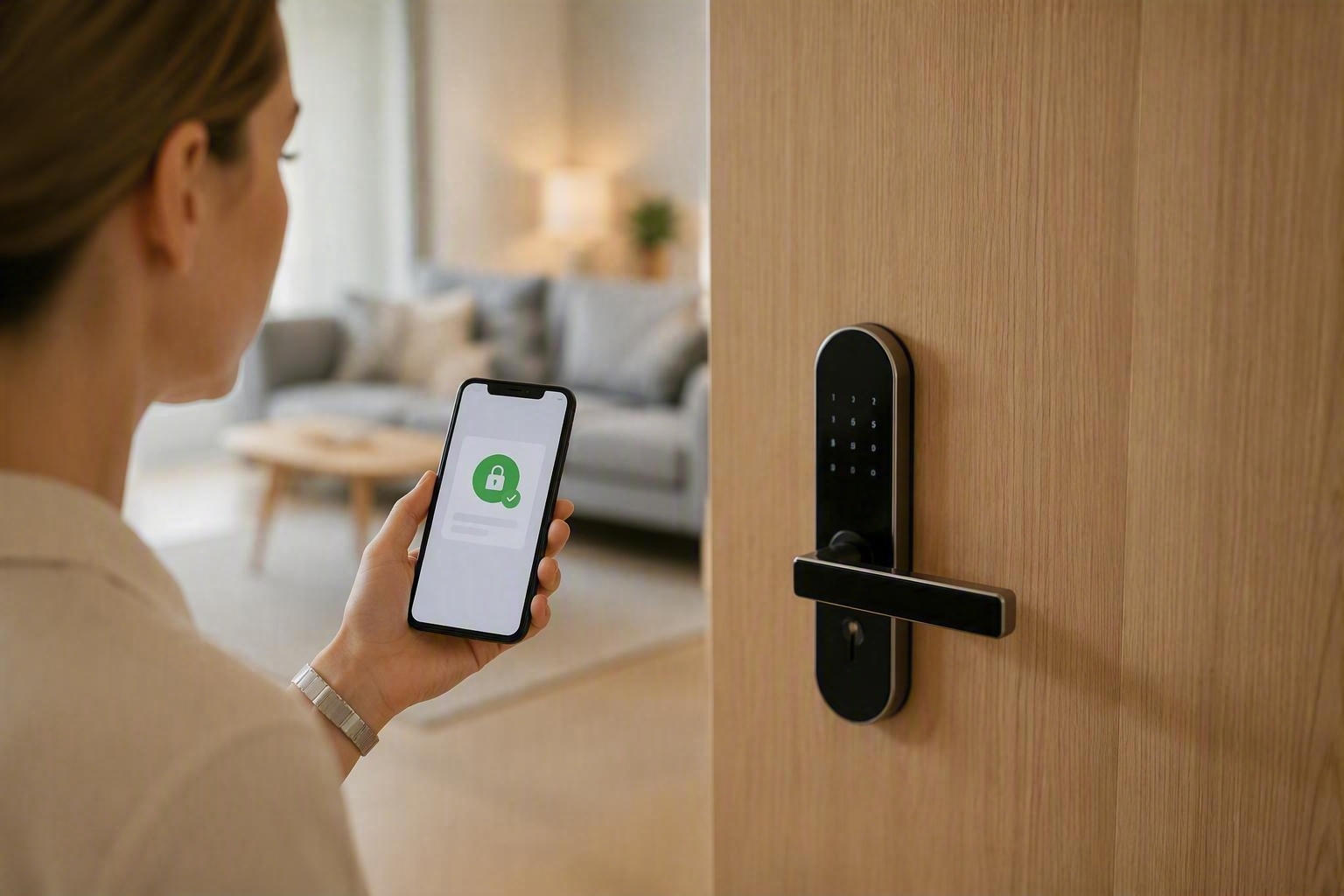
A smart lock is an electromechanical device that allows a door to be locked and unlocked using instructions transmitted wirelessly from an authorised device, such as a smartphone, a keypad, or a proximity card reader. Unlike traditional locks, these systems completely eliminate the need for a physical metal key for daily use.
Adopting this technology radically transforms the operations of tourist accommodation by digitalising access. By converting the key into a temporary software code, the owner gains total, remote, and instant control over who enters and leaves the property, when they do so, and for exactly how long they are allowed access.
Basic operation of electronic access systems
The operation of a smart lock is based on communication between the hardware installed on the door and management software (usually a mobile app or a cloud platform). When an opening command is sent (either by pressing a button in an app, entering a PIN, or holding up an RFID card), the lock's receiver verifies the cryptographic credentials.
If the credentials are valid and fall within the authorised date and time range, the lock's internal motor is activated, turning the latch or cylinder mechanism to unlock the door. This entire process happens in fractions of a second and is digitally recorded in an event log that the owner can consult from anywhere in the world.
Types of smart locks according to their technology
In the current market, there are various technological solutions adapted to different needs, budgets, and door types. Knowing the differences between them is key to making the right purchase decision.
Keypad locks (PIN code)
They are, without a doubt, one of the most popular and recommended options for holiday rentals. They allow guests to access the property simply by entering a personalised numerical code on a physical or touch keypad installed on the door or adjacent wall.
The main advantage of this system is its universality and ease of use. It does not require the guest to have a state-of-the-art smartphone, download any additional application, or have an internet connection or battery on their phone upon arrival. It is an inclusive solution that works perfectly for people of all ages, including less tech-savvy profiles or the elderly.
Wi-Fi and Bluetooth locks
These locks use wireless communication protocols to connect directly with the user's smartphone or the property's router. Locks with Bluetooth technology require the user to be physically close to the door to open it, which greatly optimises the device's battery consumption.
On the other hand, locks with native Wi-Fi connectivity (or those that connect to an intermediate bridge or gateway) allow full remote management in real time. This means you can open the door for a guest from your own mobile phone while in another city, modify access codes instantly, or receive push notifications the exact moment someone enters the property.
Locks opened via Smartphone and App
This system turns the guest's mobile phone into their digital key. Through a specific mobile application (or a web-app accessible via a link), the guest can unlock the main door and their flat door with a single tap on their mobile device screen. To guarantee security, digital keys are transmitted in encrypted form and expire automatically at the exact moment of check-out.
Invisible or retrofitted smart locks
This type of lock is installed on the inside of the door, over the existing cylinder, leaving the external appearance of the door completely unaltered. Well-known brands like Nuki or Tedee use this system. Its main advantage is that they do not attract attention from the outside (which reduces the risk of vandalism) and allow the traditional physical key to still be used from the outside in an emergency, providing an extra layer of reassurance for more conservative owners.
Key benefits of implementing smart locks in your property
The transition from a physical key system to smart access control is not just an expense on technology; it is a strategic investment that optimises the profitability and operational efficiency of your hospitality business.
Total automation of the check-in and check-out process
Automation is the pillar of growth in the property management sector. By integrating smart locks, you can design a workflow with minimal or no human intervention. The system automatically generates the unique access code for each booking and sends it to the guest before arrival. On the day of check-out, this code is automatically deactivated at the set time, ensuring the guest cannot re-enter the property once their stay has ended.
Drastic reduction in incidents and midnight emergency calls
By eliminating the physical key, you instantly remove the risk of the guest losing it inside the property, forgetting it in a restaurant, or leaving it in the lock on the inside (a classic problem that blocks external access). If a guest forgets their access code, you can simply send it to them again by text message or perform a remote opening from the management app in a matter of seconds, without needing to travel to the location or call an emergency locksmith.
Time and operational cost savings for the owner
Calculate the time and money you spend each month travelling to deliver keys, waiting for delayed guests, or co-ordinating with cleaning staff. By digitalising access, you free up dozens of working hours per month that you can devote to higher-value tasks, such as improving your listings' marketing, sourcing new properties to manage, or enhancing personalised customer service.
Exponential improvement of the guest experience (Guest Experience)
Modern travellers value autonomy, speed, and flexibility above almost everything else. Arriving at accommodation after a long journey and being able to enter immediately, without having to wait for anyone or go through a slow, bureaucratic key handover process, creates an excellent first impression. El self check-in or autonomous entry is one of the most sought-after and highly rated features by users on booking platforms.
Greater control and real-time audit log
Would you like to know for sure what time the cleaning staff enter to prepare the flat and what time they finish? Do you want to verify if a guest has checked out at the agreed time? Smart locks record every opening and closing event with the date, time, and specific user. This gives you absolute control over activity in your property, facilitating the auditing of external cleaning and maintenance services.
How to integrate smart locks with your Automated Check-in strategy
To maximise the potential of smart locks, it is essential that they do not function as isolated technological islands, but are fully integrated within your digital booking management ecosystem.
The real power of automation is unlocked when you connect your smart lock with an automated check-in system like the one offered by Macufy. This integrated process works as follows:
- Booking confirmation: The guest makes a booking through any channel (Airbnb, Booking.com, direct website).
- Legal registration of travellers: The system automatically requests the guest to complete their identity details, upload a photo of their ID card or passport, and sign the digital guest registration form from their own device, strictly complying with current police regulations.
- Access code generation: Once the legal registration has been successfully completed and validated, the system automatically generates a unique and temporary access code on the property's smart lock, valid only for the dates of the booking.
- Automated sending of credentials: The system automatically sends detailed access instructions to the guest.
Synchronisation with the sending of temporary codes
The security of your property depends on access codes being dynamic and temporary. Using a single static code for all guests is a serious security error that negates the advantages of digital technology. Modern smart locks allow the creation of codes that automatically activate on the day of arrival at check-in time (for example, at 15:00) and are irrevocably deleted on the day of departure at check-out time (for example, at 11:00).
The importance of automated messages to guests
Clear and timely communication is essential to prevent guests from feeling lost when arriving at accommodation with digital access. Setting up a flow of automated messages to guests ensures they receive all the necessary information at the right time.
It is advisable to structure this communication flow into three key phases:
- Registration confirmation message: Sent immediately after booking, explaining that access is autonomous and that they will receive their codes once the legal traveller registration is complete.
- Access instructions message (24 hours before arrival): Contains the numerical code for the lock, precise directions on how to reach the property, detailed photos of the main entrance and the front door, and an assistance telephone number in case any technical doubts arise.
- Welcome and rules reminder message (arrival day): Sent shortly after the scheduled entry time, wishing them a happy stay and reminding them of basic house rules and how the accommodation services work.
Technical and installation aspects you should consider
Before purchasing and installing a smart lock in your holiday rental, it is essential to analyse a series of technical factors to ensure device compatibility and avoid operating issues in the future.
Lock compatibility with your current door (Europrofile vs. Rim)
Not all smart locks adapt to all door types. In Europe, the vast majority of doors use European profile cylinders (Europrofile). Devices like Nuki Smart Lock or Tedee are specifically designed to fit onto these types of cylinders easily, often without needing to change the original cylinder, provided it has a double-clutch system (which allows the door to be opened with a key from the outside even if there is another key inside).
In other markets or on older doors, rim locks or complex multi-point lock systems are used. In these cases, you may need to make a minor carpentry adjustment or completely replace the door's mortise mechanism to install the electronic system.
Power supply and battery management (What happens if it runs out of batteries?)
One of the most frequent questions from owners is: What happens if the smart lock runs out of battery or if there is a power cut in the property?
The vast majority of smart locks on the market run on independent batteries (AA, AAA, or rechargeable lithium batteries), so a power cut in the property will not affect their basic opening operation at all. Furthermore, these devices have very efficient power management systems that optimise consumption, making batteries last between 6 and 12 months depending on the volume of use.
To avoid unforeseen events, manufacturers incorporate preventive safety measures:
- Low battery alerts: The system sends push notifications to both the administrator and the guest when the battery level drops below a critical threshold (for example, 20%).
- Emergency external power supply: Many keypad locks have external terminals at the bottom where a 9V battery can be connected to temporarily power the keypad and allow opening in the event of complete discharge.
- Backup physical key: It is highly recommended to choose a system that allows you to keep a cylinder with a hidden or backup physical security key so that, in a catastrophic electronic system failure, a traditional mechanical opening can still be performed.
Connectivity and network bridges (Gateways)
To control your smart lock remotely and receive real-time status updates, you will need a network bridge or gateway. This small device plugs into a socket near the door and acts as a translator between the lock (which uses low-energy Bluetooth or Zigbee to save battery) and the property's Wi-Fi router. Make sure the Wi-Fi signal reaches the entrance door area with sufficient strength to guarantee a stable and fast connection.
Security and legal compliance in access control
Compliance with traveller registration regulations in Spain
In Spain, Royal Decree 933/2021 and citizen security legislation oblige all tourist accommodation operators to register the identity of all guests over 14 years of age and to transmit this data to the police authorities (National Police, Civil Guard, or Mossos d'Esquadra) within 24 hours of the start of the stay.
The use of smart locks greatly facilitates this compliance. By integrating the access system with a management platform that automates legal check-in, you can make the delivery of the opening code conditional upon the prior and correct completion of the traveller registration. This way, you ensure 100% that no guest enters your property without having been previously identified and registered in accordance with the law.
Cybersecurity and access data encryption
When digitalising your property keys, cybersecurity becomes an absolute priority. Leading smart lock brands use military-grade encryption protocols (such as 256-bit AES), similar to those used by banks to protect online financial transactions. This makes it extremely difficult for an attacker to intercept or clone the digital access signal.
Home insurance and theft cover with electronic locks
It is a common myth that insurance companies do not cover thefts in properties using smart locks. Currently, most insurers recognise and validate the use of electronic locks approved by internationally prestigious brands. In fact, many companies view these systems positively, as the digital access log allows them to clarify with total accuracy whether a forced entry has occurred or if an authorised access code was used, facilitating the resolution of claims.
Return on Investment (ROI) Analysis: Is it worth the investment?
To determine if installing smart locks is a financially sound decision for your business, it is necessary to perform a detailed return on investment (ROI) analysis, comparing the initial implementation costs against the operational savings and the increase in income generated in the medium and long term.
| Cost / Saving Concept | Traditional Model (Physical Keys) | Smart Model (Keyless) |
|---|---|---|
| Key delivery cost (time/staff) | 15€ - 30€ per in-person check-in | 0€ (Automated) |
| Lost keys and emergency locksmith | 150€ - 300€ per incident | 0€ (Remote opening/code) |
| Management and booking co-ordination time | High daily time commitment | Minimal (Automated processes) |
| Guest rating (Reviews) | Variable (affected by delays) | Excellent (Highly valued self check-in) |
Initial acquisition cost vs. Recurring physical management costs
Purchasing a professional-quality smart lock, along with its gateway and installation by a qualified technician, usually ranges between 250 and 500 euros per door. Although this initial cost may seem high compared to a traditional cylinder, the return on investment is achieved quickly.
If you calculate the cost of the time you spend travelling to hand over keys, the cost of lost physical copies, and occasional emergency locksmith services, the investment in a smart lock pays for itself completely within the first 3 to 6 months of activity, especially in properties with high guest turnover.
Increased ratings on platforms like Airbnb and Booking
The impact of smart locks on your accommodation's turnover goes beyond direct cost savings. Properties offering the "Self check-in" option via smart lock achieve better positioning in search algorithms on Airbnb and Booking.com, as it is a widely used filter by business travellers and tourists seeking total flexibility.
Furthermore, eliminating friction at check-in directly translates into an increase in 5-star ratings in the "Arrival" category, which improves the overall reputation of your listing, allows you to apply higher nightly rates, and increases the overall occupancy rate of your property.
Conclusion: The future of tourist accommodation management is Keyless
The digitalisation of the tourist accommodation sector is an unstoppable process, and eliminating physical keys is one of the most logical and profitable steps any property owner or manager can take today. Smart locks are not just a trendy tech accessory; they are an essential business management tool that solves historic issues of access, lost keys, and time co-ordination between guests and hosts at their root.
By implementing an electronic access system integrated with management tools that automate communication and the legal registration of travellers, you transform your property into a modern, highly efficient, secure, and scalable business. Free up your time, reduce your operational costs, and offer your guests the smooth, autonomous arrival experience they expect in the 21st century.