
Online Check-in for Holiday Rentals: Technical Comparison of Top International Platforms
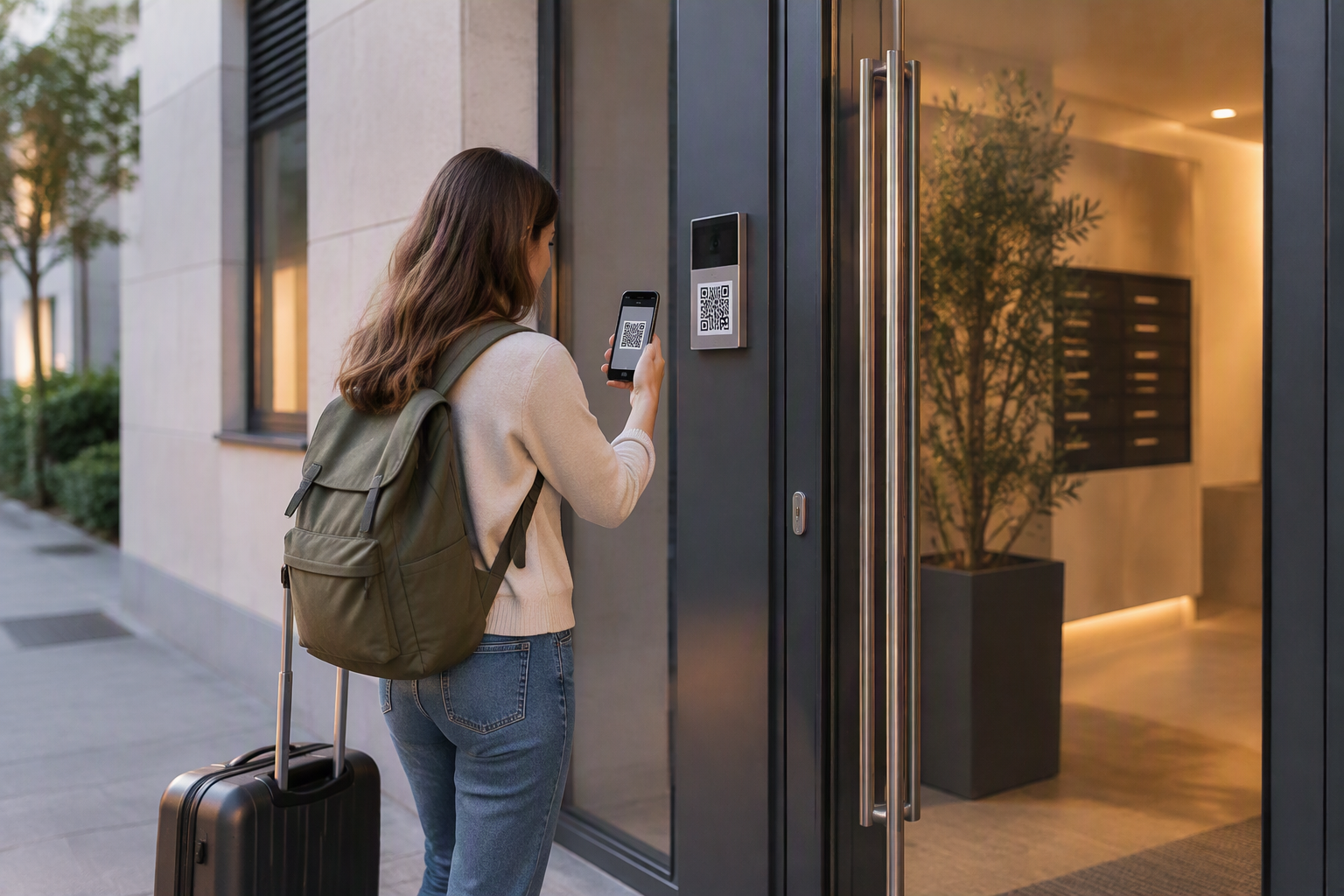
Digital Transformation in Guest Reception: From Paper Forms to Biometric Registration
The tourist accommodation sector has undergone a rapid metamorphosis in its daily operations. Traditional key handovers combined with manual completion of paper entry forms on a dining table are no longer viable in a competitive, professionalised, and strictly regulated market. Today's global traveller expects a seamless, immediate, and independent experience, similar to what the airline industry offers with digital boarding passes.
In parallel, owners and managers of holiday lets and independent hotel establishments face unprecedented regulatory pressure. Accurate collection of identity data is not merely an administrative courtesy; it is a public safety imperative demanded by international law enforcement agencies. The transition to specialised digital tools simultaneously solves the logistical friction of physical key handovers and ensures strict compliance with government reporting regulations.
To efficiently optimise these operations, having an automated check-in system adapted to traveller registration regulations such as SES.HOSPEDAJES in Spain is essential to avoid penalties and save hundreds of hours of administrative work per year.
Legal Framework and Legal Certainty: Why is the Identification Process Critical?
Identity registration in tourist accommodation is backed by strictly enforced national and international legal frameworks. In Spain, the entry into force of Royal Decree 933/2021 establishes far more comprehensive documentary and registration obligations for accommodation and vehicle rental activities, requiring the collection of over twenty information fields per booking.
Registration Requirements for Police Authorities
Historically, entry forms were signed on paper and sent via email or bulk telematic upload to the web portals of the National Police (Webpol) or the Guardia Civil (Hospederías). Modern online check-in applications must guarantee the reliable capture of this data and its encrypted transmission via secure protocols (such as REST APIs or certified web services) directly to government servers within statutory deadlines (usually within 24 hours of the start of the stay).
GDPR Compliance and Secure Processing of Personal Data
Digitising guest registration does not exempt hosts from strictly complying with the European Union's General Data Protection Regulation (GDPR). The software used must act as a Data Processor, ensuring:
- Data encryption at rest and in transit: Implementation of robust algorithms (such as AES-256 and TLS 1.3).
- Data minimisation: Capturing only information required by law, without storing sensitive documents in the long term unnecessarily.
- Scheduled deletion: Automated purging policies for identity document images once the guest is verified and the legal obligation is fulfilled.
- Explicit consent: Transparent digital forms informing users about the purpose of data processing and the recipient entities (state security authorities).
Strategic Advantages of Digitising the Arrival Process
Beyond strict legal compliance, automating remote guest reception redefines operational margins for holiday rental businesses.
1. Radical Optimisation of Operational Costs
In-person coordination for key handovers incurs direct costs (staff travel, hourly pay for check-in agents, or third-party keyholding fees) and indirect costs arising from flight delays, traffic breakdowns, or changing guest plans. Automating advance check-in transforms these variable costs into a predictable, marginal fixed cost per booking.
2. Drastic Reduction in Fraud and Unauthorised Occupancy
OTA platforms often do not provide the host with the guest's actual identity document until they appear in person. Advanced software verification systems detect fake documents, expired IDs, or identity discrepancies before access to the property is authorised, protecting the real estate asset from illicit parties, identity theft, or intentional non-payment.
3. Frictionless User Experience
After exhausting multi-hour journeys, the last thing travellers want is a long wait to enter and rest. Completing the process conveniently from their smartphone before boarding their flight allows them, upon arrival, to simply enter a code into an electronic lock or open the door from their phone, resulting in significantly higher ratings in subsequent reviews.
4. Increased Average Revenue per Booking (Upselling)
The pre-check-in portal or link captures maximum guest attention prior to travel. Integrating personalised offers here (late check-out, mid-stay cleaning, sports equipment rental, airport transfers, or welcome hampers) yields conversion rates significantly higher than isolated marketing messages.
Technical Criteria for Evaluating Identity Registration Software
When selecting a solution for a holiday rental portfolio, not all market tools offer the same technical guarantees. It is essential to evaluate the following architecture and software parameters:
Scanning Technology: Optical Character Recognition (OCR) and MRZ Reading
The heart of a good digital check-in system is its OCR engine. It must process images taken under varying lighting conditions and angles, identifying the Machine Readable Zone (MRZ) present in standard international passports and IDs specified by ICAO (International Civil Aviation Organization). A high-precision engine minimises typographical errors in complex names, serial numbers, and expiry dates.
Biometric Verification and Liveness Detection
Advanced tools go beyond scanning documents by requesting a real-time selfie from the guest. Using facial biometric matching algorithms, the software verifies whether the person holding the phone matches the photo on the official ID. To prevent fraud using static photos of third parties, systems implement active or passive liveness detection tests (blinking, minor facial movements, or skin texture analysis via computer vision).
Legally Binding Digital Signature
The validity of hospitality contracts and registration forms requires a signature complying with standards like eIDAS (EU Regulation on Electronic Identification and Trust Services). The system must log signature metadata (IP address, qualified timestamp, device model, and approximate geolocation) to guarantee the immutability of the signed document.
Payment Integration and Security Deposit Holds
Managing security deposits is often a friction point. Software should integrate with payment gateways (like Stripe or Redsys) allowing hold authorisations (pre-authorisations) without actually charging the guest's card, releasing automatically post-check-out if no property issues are reported.
Connectivity Ecosystem (APIs, Smart Locks, and PMS)
A check-in application operating in isolation provides little real efficiency. It must connect bi-directionally with Property Management Software (PMS), direct booking channels, and major smart locks on the market (Nuki, Yale, Tedee, TTLock, Salto). Once registration is complete and identity is validated, the system should automatically generate and transmit temporary access codes to the guest via automated guest messaging without manual host intervention.
Detailed Comparison of Top International Online Check-in Platforms
Below, we analyse the most established applications and platforms in the international market for automating reception in tourist accommodations, evaluating their strengths, drawbacks, and monetisation models.
1. Chekin.com
Founded in Spain and expanded globally, Chekin is one of the most established solutions exclusively focused on check-in, legal compliance, and access control.
Technical and Functional Features
- OCR Reading and Biometrics: Features comparative facial recognition and MRZ code reading for documents from over 150 countries.
- Regulatory Compliance: Excellent connectivity with police authorities in Spain (including SES.HOSPEDAJES), Portugal (SEF), Italy (Alloggiati Web), Dubai, and several Latin American countries.
- Contracts and Signatures: Automated generation of customisable holiday rental contracts with integrated on-screen digital signature.
- Smart Locks: Multiple direct integrations with smart locks for conditional access release based on identity verification.
Costs and Usability
Pricing is structured as monthly or annual plans per property, typically starting at a base cost between €5 and €9 per property/month on standard plans, with extra charges if advanced biometric verification is required. The guest interface is clear, works via mobile browser without downloading apps, and is available in multiple languages.
Drawbacks
Technical support during police server downtime can experience delays during peak periods, and total costs can escalate quickly when managing medium or large portfolios requiring biometric checks per booking.
2. Duve
Duve (formerly Wishbox) is an end-to-end Guest Experience Platform that includes a sophisticated online check-in module alongside advanced communication and upselling tools.
Technical and Functional Features
- Workflow Customisation: Allows designing conditional forms requesting different information depending on guest origin, booking OTA, or accommodation type.
- Cross-selling (Upselling): A market leader in monetising ancillary services during the check-in process (early check-in, luggage storage, local tours, etc.).
- Deposit Management: Seamless integration with payment processors for collecting security deposits and local City Taxes.
Costs and Usability
Duve does not position itself as a low-cost option. Pricing is set per accommodation unit per month, typically starting above €12 to €18 per property/month depending on volume and selected modules. The guest user experience is among the most visually appealing on the market, operating through an intuitive and refined WebApp.
Drawbacks
Technical depth for country-specific legal compliance in certain decentralised markets may be lower than hyper-specialised tools, occasionally requiring manual configurations or middleware for complex police reporting.
3. Civitfun
With deep roots in the traditional hotel sector and large corporate apartment operators, Civitfun is an enterprise-grade technology solution designed to digitise reception at scale.
Technical and Functional Features
- Deep PMS Integrations: Its core strength is low-level bi-directional integration with top-tier hotel PMS systems (Oracle Opera, Protel, Mews, Sihot, etc.).
- Biometric and Advanced Signatures: Robust legal compliance tailored for corporate security audits and high-end hotels.
- Mobile Key: Direct integration with Mobile Key solutions (unlocking doors via Bluetooth or NFC directly from smartphones without keycodes).
Costs and Usability
The pricing structure is tailored to medium and large hotel chains or managers with hundreds of tourist units. It usually requires initial set-up fees and annual corporate contracts, making it unsuitable for individual hosts or small portfolio managers.
Drawbacks
Steep learning curve, cost-prohibitive for private hosts, and lower agility when implementing small custom tweaks without technical support team assistance.
4. Enso Connect
Enso Connect is a North American platform with a strong European presence, distinguished by its focus on AI-driven automation and omnichannel conversational interaction.
Technical and Functional Features
- Interactive Boarding Pass: Offers travellers an interactive digital boarding pass grouping check-in, property guides, keyless lock access, and check-out.
- Messaging Channels: Registration workflows are initiated and monitored organically via WhatsApp, SMS, and email through intelligent automations.
- Guest Verification (Trust & Safety): Partnerships and integrations with risk assessment tools and guest background checks to prevent severe property damage and fraud.
Costs and Usability
Pricing ranges between $10 and $15 per property/month, subject to tiered plans and property volume. The interface is modern, minimalist, and provides detailed analytics tracking guest interaction with the check-in form.
Drawbacks
Transmitting guest data to security forces in European countries such as Spain or Italy is not its native primary focus, often requiring complementary tools or third-party plugins for specific police requirements.
5. Vikey
Originating in Italy, Vikey sets itself apart by offering a hybrid solution combining proprietary hardware for opening communal building doors and apartment locks alongside an online check-in and home automation software platform.
Technical and Functional Features
- Remote Communal Entrance Opening: Installs control devices on intercoms, enabling guests to unlock street doors from their mobile after verifying identity.
- Automated Police Reporting: Exhaustive compliance with Italian registration regulations (Alloggiati Web) and active operations adapted for Spain.
- Energy Saving: Integrated sensors automatically turn off air conditioning/heating when guests leave after check-in.
Costs and Usability
Vikey's model involves both purchasing or leasing access hardware and paying a recurring monthly software subscription (typically from €8 to €15 per month per apartment, plus equipment costs).
Drawbacks
Heavy reliance on physical hardware ecosystem. Opting solely for their software without access hardware significantly diminishes their competitive edge over purely digital platforms.
6. Macufy: The Unified Management and Legal Registration Solution
For hosts and management companies seeking to avoid tool fragmentation (paying for a PMS, a check-in tool, and messaging software separately), Macufy integrates the full operational cycle into a single accessible, specialized platform.
Technical and Functional Features
- Native SES.HOSPEDAJES Sync: Specifically built to provide direct compliance, without intermediaries or extra fees per dispatch, with the current Spanish regulatory framework (RD 933/2021).
- Intuitive Document Capture: Lightweight forms mobile-optimised to allow data entry and digital signature with minimal steps for the guest.
- Full Booking Sync: Direct synchronization with Airbnb, Booking.com, VRBO, and PMS calendars, avoiding timing delays in data retrieval.
- End-to-End Automation: Automatic triggering of check-in requests upon booking confirmation and subsequent delivery of access details without human intervention.
Costs and Usability
Macufy stands out for its transparent, competitive pricing structure free of enterprise packaging surcharges. Configuration is immediate, catering both to owners of single properties and managers with dozens of units seeking operational simplicity and profitability.
Technical and Functional Platform Comparison Table
The following table synthesises the key attributes determining the technical suitability of each analysed solution:
| Platform | Primary Focus | OCR / MRZ Engine | Biometrics | Spain Legal (SES.Hospedajes) | Smart Lock Integration | Approx. Cost / Property |
|---|---|---|---|---|---|---|
| Chekin | Legal compliance and access | Yes (Advanced) | Yes (Optional/Paid) | Native and direct | Extensive | €5 - €10 / month |
| Duve | Guest experience and upselling | Yes (Standard) | Non-native advanced | Indirect / Limited | Medium | €12 - €20 / month |
| Civitfun | Enterprise Hotels and chains | Yes (Advanced) | Yes (Certified) | Enterprise configuration | Advanced (Mobile Key) | Custom plan (High) |
| Enso Connect | Omnichannel communication and AI | Yes (Standard) | Integrated via 3rd party | Requires connectors | Medium | $10 - $15 / month |
| Vikey | Opening hardware and software | Yes (Standard) | Basic | Yes (Italy/Spain) | Proprietary/3rd party | €8 - €15 / month + Hardware |
| Macufy | Comprehensive management, bookings & legal | Yes (Optimised) | Flow-integrated | Native direct RD 933/2021 | Direct via APIs | Competitive unified |
Key Factors for Practical Operational Implementation
Adopting a remote check-in system requires structured planning to ensure guest completion rates reach 90-95% prior to travel day.
Communication Schedule Strategy
Sending the check-in form at the wrong time leads to guest oversight or stress. The optimal communication schedule follows this structure:
- Booking confirmation: Welcome message briefly noting that the property operates a smart check-in system and that prior identity registration is required by law.
- 3 to 5 days prior to arrival: Sending the interactive online check-in link highlighting benefits (saving time, immediate receipt of entry code).
- 24 hours before check-in: Automated urgent reminder if companion details remain incomplete.
- Day of arrival: Once documentation and security deposits are verified, automatic release of arrival instructions and smart lock codes.
Contingency Protocol for Technical Failures
No software solution is completely infallible. Establishing clear protocols for unexpected scenarios is essential:
- Severely damaged documents: Allow manual data entry if the OCR reader fails to reach a 95% confidence threshold, triggering a quick manual review in the host dashboard.
- Elderly guests or digital divide: Provide direct phone or instant messaging support to assist them or supply a simplified assisted form.
- Police server downtime: Software should feature asynchronous processing queues that securely hold requests and automatically retry submissions periodically as soon as official servers return online.
Frequently Asked Questions about Online Check-in for Holiday Rentals
Is it legal to retain or request copies of identity documents online?
Yes, provided the request is backed by a applicable national legal obligation for tourist accommodation (such as public security and traveller registration laws) and strictly complies with the GDPR. Information not required by regulations must not be requested, and copies must be stored securely and encrypted, blocking access to unauthorised personnel.
What happens if a guest refuses to check in online prior to arrival?
Guest registration is a public policy requirement. If a guest refuses to provide documentation, the host has not only the right but the duty to deny entry, as accommodating unidentified individuals constitutes a severe legal violation subject to hefty administrative fines. Explicitly stating this requirement in house rules on sales channels prevents subsequent claims or disputes.
How are local tourist taxes handled during digital check-in?
Advanced platforms calculate the exact tourist tax amount based on adult guest count, length of stay, and specific regional regulations (e.g., Catalonia, Balearic Islands, Portugal, or Italian cities). Payment is securely processed via credit/debit card within the digital registration workflow, recorded on the corresponding invoice or receipt.
Does online check-in replace the physical handover of a signed guest entry form?
Yes. When using a platform with digital signatures compliant with electronic identification standards, the resulting document holds full legal validity before police and judicial authorities, eliminating the need to store paper folders of pen-signed forms for years.
Conclusion: Digital Registration as the Foundation of Hospitality Professionalisation
Online check-in across holiday rentals and non-hotel accommodation has evolved from an optional innovation into an indispensable operational requirement. Choosing the right platform depends on portfolio volume, technical infrastructure, and operational priorities.
For properties prioritising holistic management without duplicate costs and focused on fulfilling strict legal requirements flawlessly, integrated solutions like those provided by Macufy deliver an optimal balance between technical reliability, booking automation, and profitability per reservation.