
New way to present the Short-term rental information model: N2Multi online
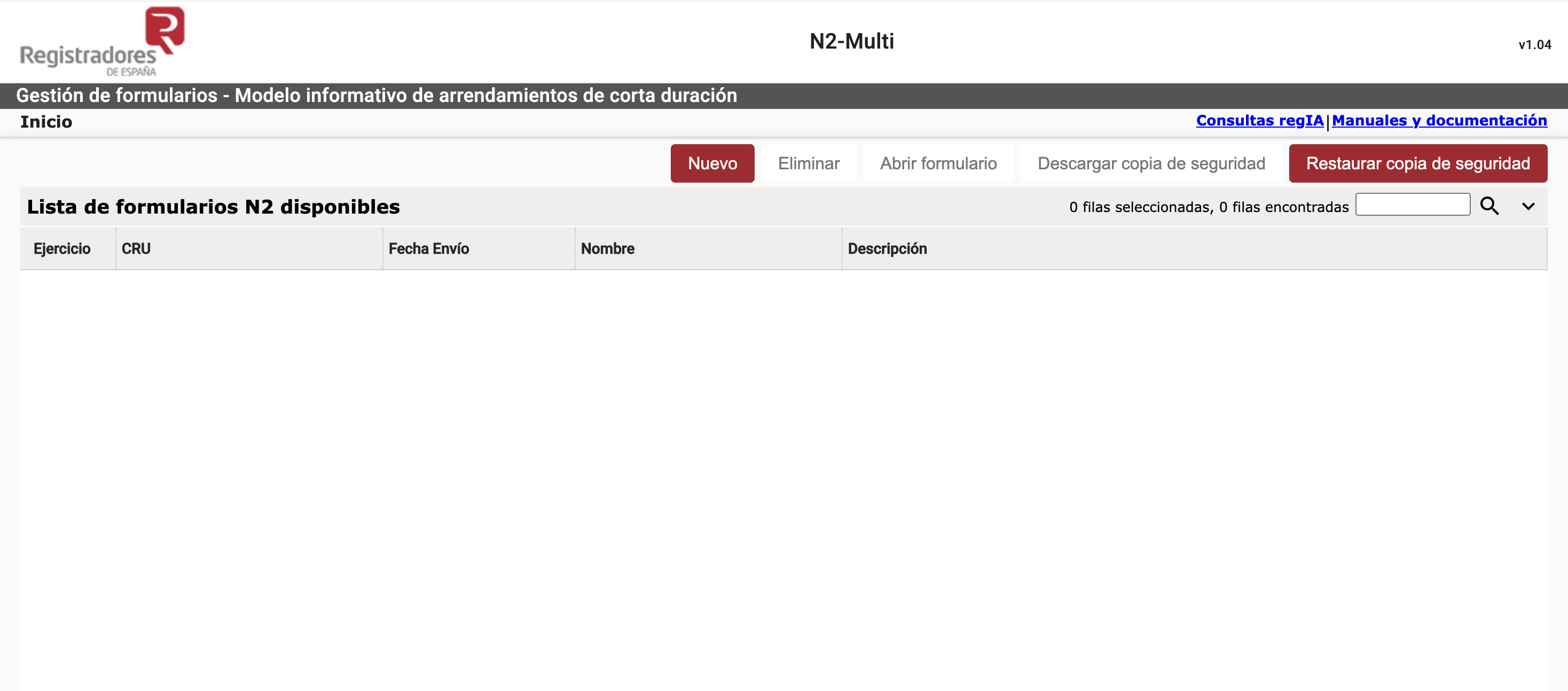
The dynamic world of short-term rentals in Spain is constantly evolving, presenting both exciting opportunities and specific regulatory challenges for landlords and property managers. Staying compliant with local and national regulations is not just a legal obligation; it's a cornerstone for sustainable and successful operation. Among these crucial obligations is the Short-term rental information model, an annual declaration that often posed a significant hurdle due to its technical requirements.
However, from February 2026, a significant advancement has simplified this process. Landlords and managers of short-term rentals in Spain now have a new, user-friendly method to comply with the obligation to present this vital information model. This innovation means you no longer need to install specific programs or depend on a particular operating system, liberating you from previous technical constraints.
The College of Registrars of Spain, the official body responsible for maintaining public registries, has launched N2Multi, an intuitive online tool. This web-based application allows you to create the information model directly from your browser, dramatically streamlining the process for users across Windows, Mac, and Linux platforms. This article will provide a comprehensive guide to understanding this model, navigating N2Multi, and ensuring your compliance with Spanish regulations, offering peace of mind for your vacation rental business.
Understanding the Regulatory Landscape for Short-Term Rentals in Spain
Spain, a global leader in tourism, has seen an exponential rise in the popularity of short-term rentals, often referred to as vacation rentals or tourist accommodations. This growth, while boosting local economies, has also necessitated a robust regulatory framework to ensure fair competition, protect consumers, and maintain urban harmony. For any property owner or manager operating in this sector, understanding and adhering to these regulations is paramount.
The regulatory environment for vacation rentals in Spain is complex, often involving a patchwork of national, regional (Autonomous Communities), and municipal laws. Key aspects typically include:
- Licensing and Registration: Obtaining a specific license or registration number (like the Unique Rental Registration Number - NRUA) from the relevant tourism authority.
- Tax Obligations: Adhering to income tax, VAT (in some cases), and potentially local tourist taxes.
- Police Registration: Reporting guests to the police (Guardia Civil or Policía Nacional).
- Community Rules: Complying with rules set by homeowners' associations if the property is part of a community.
- Informative Declarations: Submitting data to various government bodies, which is where the Short-term rental information model comes into play.
The Short-term rental information model is a critical component of this regulatory framework, designed to provide transparency and statistical data to the authorities regarding the activities of tourist accommodations. It's a non-tax declaration, meaning it doesn't involve payment, but its accurate and timely submission is a mandatory legal requirement for all eligible operators.
Deep Dive into the Short-Term Rental Information Model: Your Annual Obligation
The Short-term rental information model (known in Spanish as Modelo de Declaración Informativa de Arrendamientos Turísticos) is an essential annual declaration for anyone involved in managing short-term rentals in Spain. It's more than just a bureaucratic step; it's a mechanism for the authorities to gain insight into the tourist accommodation market, ensuring compliance and contributing to effective tourism planning.
What Exactly is the Short-Term Rental Information Model?
At its core, this model is an obligatory annual declaration. It's a formal report you submit to the College of Registrars of Spain, detailing the rental activities of your licensed tourist accommodation during the previous calendar year. Crucially, it is not a tax or an economic settlement. Its purpose is purely informative, collecting anonymized data to paint a clear picture of the sector.
The information collected helps governmental bodies monitor the market, identify unregistered properties, and ensure that all legitimate operators are contributing to a regulated and fair tourism industry. For you, the landlord or manager, it's about demonstrating transparency and adherence to legal requirements.
Who Must Present This Declaration?
The obligation to present the Short-term rental information model falls upon:
- Owners of properties that have obtained a Unique Rental Registration Number (NRUA) and have carried out short-term rentals during the previous year.
- Managers or intermediaries acting on behalf of owners, such as property management companies or platforms that facilitate bookings, provided they are legally recognized as the declarant.
Essentially, if your property is officially registered as a tourist accommodation and has hosted guests for short stays in the preceding year, you are required to submit this model. The NRUA is your unique identifier and a prerequisite for operating legally, making it central to this declaration.
What Data Does the Model Collect?
The model gathers specific, anonymized data points for each rental stay. This includes:
- Unique Rental Registration Number (NRUA): The official identifier for your tourist accommodation.
- Type or purpose of the rental: Confirming its use as a short-term or tourist rental.
- Number of guests: The total number of individuals staying at the property for each booking.
- Entry and exit dates: The exact check-in and check-out dates for every rental period.
- Property identification data: Basic details about the property itself, ensuring it matches the NRUA.
- Declarant's identification data: Information about the person or entity submitting the declaration.
It's important to note that, as specified, this data is anonymized regarding guest identities. The focus is on the aggregate activity of the property rather than individual guest details, which are handled separately for police registration purposes.
Why is This Declaration Mandatory? The Objectives Behind the Model
The mandatory nature of this declaration serves several key objectives for the Spanish authorities:
- Market Transparency: It provides a clearer picture of the actual volume and characteristics of the short-term rental market, distinguishing legal operations from illegal ones.
- Combating Illegal Rentals: By requiring declarations from registered properties, it helps identify those operating without proper licenses, leading to a fairer market for compliant businesses.
- Statistical Data for Tourism Planning: The aggregated data is invaluable for local and regional tourism boards to understand trends, plan infrastructure, and develop effective tourism policies.
- Consumer Protection: A regulated market often translates to better standards and protections for tourists.
- Tax Compliance Support: While not a tax itself, the information gathered can be cross-referenced with tax declarations (e.g., VAT or income tax on rental earnings) to ensure consistency and prevent tax evasion.
When is the Short-Term Rental Information Model Due?
The presentation of this model must be made every February, with the information corresponding to the previous calendar year. For example, in February 2026, you would submit the declaration for all rental activities that occurred throughout 2025. Missing this deadline can lead to penalties, so it's crucial to mark it on your calendar and prepare your data in advance.
Consequences of Non-Compliance
Failing to submit the Short-term rental information model, or submitting it with errors or outside the established deadline, can result in sanctions. These penalties can vary depending on the severity of the infraction and the specific regulations of the Autonomous Community, but they often involve monetary fines. Ensuring timely and accurate submission is therefore not just good practice, but a critical aspect of risk management for your rental business.
Introducing N2Multi: The New Online Software for Effortless Compliance
For years, the process of preparing the Short-term rental information model was often a source of frustration for many. It typically involved desktop applications that were operating system-dependent, sometimes buggy, and required installation and updates. This created a barrier, especially for non-technical users or those operating on Mac or Linux systems.
The Problem N2Multi Solves
Before N2Multi, landlords and managers faced:
- Operating System Limitations: Many official tools were primarily designed for Windows, leaving Mac and Linux users with compatibility issues or the need for virtual machines.
- Software Installation Headaches: Downloading, installing, and maintaining specific desktop applications could be cumbersome and prone to technical glitches.
- Version Control: Ensuring you had the latest version of the software was crucial but often overlooked.
- Technical Support Needs: Frequent calls to support lines for installation or compatibility problems.
These issues often added unnecessary stress and time to an already mandatory administrative task, distracting from the core business of managing properties.
N2Multi: The Solution for Modern Vacation Rental Management
N2Multi is the innovative new official web application provided by the Spanish Registrars, specifically designed for creating the short-term rental information model form. Its launch from February 17, 2026, marked a pivotal shift towards a more accessible and efficient compliance process.
This tool is a game-changer because it:
- Allows completing the model fully online: No downloads, no installations. Everything is done within your web browser.
- Provides access from any operating system: Whether you're on Windows, Mac, Linux, or even a tablet, you can access and use N2Multi seamlessly.
- Avoids the installation of software on your computer: This eliminates compatibility issues, system conflicts, and the need for IT support for basic setup.
- Reduces technical errors and compatibility problems: A standardized web interface means a more consistent experience for all users.
- Simplifies the process for non-technical users: The intuitive design aims to make data entry straightforward.
The primary function of N2Multi is to create the official form and generate the necessary file for its presentation before the corresponding Registry. It acts as a digital assistant, guiding you through the data input and ensuring the output is in the correct format for official submission.
How N2Multi Works: A Step-by-Step Guide to Creating Your Information Model
Understanding the functionalities of N2Multi is crucial for landlords and managers of short-term rentals in Spain. This tool is designed to simplify the data compilation and formatting process, ensuring your declaration is ready for official submission.
Accessing N2Multi
The first step is to access the official N2Multi platform. You can do this by navigating to the designated URL provided by the College of Registrars of Spain. Here is the direct link:
https://www.registradores.org/N2Multi/
Once you access the link, you will be presented with an online interface designed for data entry.
Understanding the N2Multi Interface and Data Entry Process
The N2Multi interface is typically structured to guide you through the required sections for the Short-term rental information model. You will generally encounter sections for:
1. Declarant Identification
This section requires information about the person or entity making the declaration. This could be the individual owner, a company, or a designated manager. You will need to provide:
- Tax Identification Number (NIF/CIF): Your official Spanish tax ID.
- Full Name or Company Name: As registered with the authorities.
- Contact Information: Address, phone number, and email for official communications.
2. Property Details
Here, you will input the specific details of your short-term rental property:
- Unique Rental Registration Number (NRUA): This is paramount. Ensure it is accurate and matches your official registration.
- Property Address: Full street address, postal code, municipality, and province.
- Type of Rental: Confirming it is a tourist or short-term rental.
3. Rental Operation Details (Per Stay)
This is the most detailed section, where you will input information for each individual short-term rental booking that occurred during the previous year. For each stay, you will need to provide:
- Entry Date: The precise check-in date of the guests.
- Exit Date: The precise check-out date of the guests.
- Number of Guests: The total count of individuals who stayed during that specific rental period.
N2Multi typically provides options to add multiple entries, allowing you to systematically input all your bookings for the year. This is where robust property management software like Macufy.com can significantly streamline your process, as it centralizes all this booking data, making it easy to extract and input into N2Multi.
Validation of Information
One of the key advantages of N2Multi is its built-in validation system. As you input data, the tool will check it against the official format and requirements. For example:
- It will ensure dates are logically ordered (entry before exit).
- It might check the format of the NRUA or NIF.
- It can flag missing mandatory fields.
This real-time validation helps to significantly reduce errors that could lead to rejection of your declaration or potential fines, ensuring that the information you submit is accurate and compliant.
Generating the Official File
Once all the required data has been entered and validated, N2Multi will allow you to generate the official output file. This file is typically a compressed file (.zip), containing the structured data in a format specifically designed for electronic submission to the Registrars. It's crucial to save this file in a secure and easily accessible location on your computer, as it is the very document you will need for the final presentation step.
What N2Multi Does Exactly (and What It Does Not)
It is essential for every landlord and property manager to clearly understand the scope of N2Multi to avoid any confusion or missteps in the compliance process.
What N2Multi Does: The Core Functionalities
- Allows introducing the information model data: It provides a user-friendly interface to input all the required details about your property and rental activities.
- Validates the information according to the official format: It performs checks to ensure that the data entered meets the structural and content requirements set by the College of Registrars.
- Generates the model form: It compiles your data into the official declaration format.
- Creates a compressed file (.zip) ready for presentation: This is the final output from N2Multi, a digitally prepared file containing your declaration, formatted for electronic submission.
What N2Multi Does Not Do: Crucial Distinctions
This is where many users can get confused. N2Multi is a powerful *preparation* tool, but it has distinct limitations:
- Does not present the model in the Registry: N2Multi does not submit your declaration to the College of Registrars. It merely prepares the file for you.
- Does not replace the Electronic Headquarters of Registrars: The actual submission platform is a separate entity, the Electronic Headquarters of Registrars, where you will upload the file generated by N2Multi.
- Does not perform the signature or telematic sending: Digital signing and the final act of sending the declaration are functionalities of the Electronic Headquarters, requiring specific digital identification.
In essence, N2Multi is the tool to create the model, but not to present it. Think of it as preparing a meticulously formatted letter and sealing it in an envelope; you still need to take it to the post office (the Electronic Headquarters) to mail it.
The Two Phases of Compliance: Creation vs. Presentation
Successfully complying with the Short-term rental information model involves two clearly distinct and equally important phases. Understanding this division is fundamental to avoiding errors and ensuring your declaration is correctly submitted.
Phase 1: Creation of the Model with N2Multi
This initial phase is all about data entry, validation, and file generation. It's the preparatory stage where N2Multi shines. During this phase, you will:
- Fill out the information model form: Input all the required details about your property, your identity as the declarant, and every rental operation from the previous year.
- Benefit from N2Multi's validation: The tool will help you catch potential errors in data formatting or completeness.
- Generate the official .zip file: This is the tangible output of this phase, the digital document ready for submission.
A significant advantage of this phase is its accessibility:
- Does not require a digital certificate: You can create the file without needing your electronic ID or digital signature.
- Does not require being a subscribed user: You don't need a special account with the Registrars to use N2Multi.
- Can be done from any device: As it's web-based, you can work on it from your computer, tablet, or even smartphone, as long as you have an internet connection and a browser.
This flexibility makes the initial data preparation much more convenient for landlords and property managers, regardless of their technical setup.
Phase 2: Presentation of the Model in the Electronic Headquarters of Registrars
Once you have successfully generated the `.zip` file with N2Multi, the next step is the actual presentation of the model. This phase involves formally submitting the prepared file to the College of Registrars, which requires a higher level of security and authentication.
Why a Separate Submission Step?
The separation of creation and presentation ensures:
- Legal Validity: The submission process includes digital signing, which provides legal proof of who submitted the declaration and when.
- Security: It protects the integrity of the submitted data and prevents unauthorized alterations.
- Official Record-Keeping: The Electronic Headquarters is the official gateway for all legal submissions to the Registrars.
Requirements for Telematic Presentation
To present the model telematically (online), it is mandatory to fulfill specific requirements:
-
To be registered as a subscribed user: You must have an account with the Electronic Headquarters of Registrars. This registration is generally free but is an essential prerequisite for electronic submissions. It involves providing your identification details and setting up your user profile.
-
To have a digital certificate or Cl@ve system: This is your electronic identification, equivalent to your physical signature for official documents. You will need one of the following:
- Digital Certificate: An electronic certificate (e.g., FNMT certificate) installed on your computer, which verifies your identity.
- Cl@ve System: Spain's common platform for electronic identification, which allows users to identify themselves to public administrations through username/password plus a one-time code (Cl@ve PIN) or a permanent password (Cl@ve Permanente).
-
To access the Electronic Headquarters of Registrars: Navigate to the official online portal for submissions. This is where you will initiate the declaration process.
-
To attach the .zip file generated with N2Multi: During the submission process, you will be prompted to upload the compressed file you created in Phase 1. Ensure you select the correct, validated file.
The registration as a subscriber is free, but it is essential for online presentation. It's advisable to complete this registration and ensure your digital certificate or Cl@ve system is operational well in advance of the February deadline to avoid last-minute technical difficulties.
Confirmation of Submission
After successfully uploading and digitally signing your declaration through the Electronic Headquarters, you will typically receive a confirmation of submission. This might be a receipt, a timestamped document, or an email confirmation. It is crucial to save this proof of submission, as it serves as your official record of compliance.
Face-to-Face Presentation as an Alternative for Short-Term Rental Owners
While the telematic presentation through the Electronic Headquarters offers convenience and speed, not all landlords or managers of short-term rentals in Spain may be equipped or prefer to use digital certificates or the Cl@ve system. Recognizing this, the College of Registrars provides an alternative: face-to-face presentation.
Who is the Face-to-Face Option For?
This alternative is particularly suitable for:
- Individuals who do not possess a digital certificate or have difficulty using electronic identification systems.
- Those who prefer a traditional, in-person method for submitting official documents.
- Users who encounter technical issues with the online submission portal and need a reliable backup.
The Process for Face-to-Face Submission
Even if you choose to present your declaration in person, the initial step with N2Multi remains mandatory:
-
Generate the Form with N2Multi: You must first use N2Multi to accurately input all your rental data and generate the official form. While N2Multi creates a .zip file for online submission, it also typically provides an option to generate a printable version of the declaration.
-
Print the Generated Instance: Once the form is generated by N2Multi, print the entire document. Ensure all pages are printed clearly and completely.
-
Present at the Corresponding Registry: Take the printed form to the relevant Property or Movable Property Registry. The specific Registry will depend on the location of your short-term rental property.
In this scenario, it is not necessary to be registered as a subscriber to the Electronic Headquarters, nor do you need a digital certificate. However, the use of the official N2Multi tool for generating the accurate, formatted declaration is still mandatory. You cannot simply fill out a generic form; it must be the one produced by N2Multi.
Advantages and Disadvantages of Face-to-Face Presentation
Advantages:
- Accessibility: No need for digital certificates or complex online authentication.
- Personalized Assistance: You might be able to ask questions directly to Registry staff (though their role is typically to receive, not to advise on content).
- Tangible Proof: You receive a stamped copy as immediate proof of submission.
Disadvantages:
- Time-Consuming: Requires travel to the Registry and potentially waiting in queues.
- Geographical Limitations: Only feasible if a Registry office is conveniently located.
- Less Efficient: Generally slower than electronic submission, especially for multiple properties.
The face-to-face option provides a valuable safety net for those unable or unwilling to engage with the digital submission process. However, for efficiency and convenience, particularly for property managers handling multiple vacation rentals in Spain, the telematic route remains the preferred method.
Maximizing Efficiency: How Macufy.com Can Complement N2Multi for Landlords
As a landlord or manager of short-term rentals in Spain, you understand that compliance is just one piece of the puzzle. Efficient property management involves juggling bookings, guest communications, cleaning schedules, financial tracking, and much more. This is where a robust platform like Macufy.com becomes an invaluable asset, not just for daily operations, but also for simplifying your compliance with declarations like the Short-term rental information model.
Macufy.com: Your Central Hub for Rental Data
While Macufy.com does not directly submit your N2Multi declaration, it acts as the perfect preparatory tool by centralizing and organizing all the data you need. Think of Macufy as the intelligent backend that makes filling out N2Multi a breeze. Here's how:
-
Guest Information Management: Macufy allows you to meticulously record all guest details for each booking. While N2Multi requires only the *number* of guests, having this information readily available helps you accurately count and verify figures for each stay.
-
Automated Booking Date Tracking: Every booking managed through Macufy comes with precise check-in (entry) and check-out (exit) dates. This is exactly the core data N2Multi needs for each rental operation. Instead of sifting through calendars or disparate booking platforms, Macufy provides a consolidated view.
-
Property NRUA Management: Macufy allows you to associate each property with its unique registration number (NRUA). This ensures that when you're preparing your declaration, you're always using the correct identifier for each rental unit.
-
Reporting Features for Consolidated Data: Macufy can generate reports that consolidate booking data over specific periods, such as an entire calendar year. These reports can be customized to show precisely the information required by N2Multi – NRUA, entry/exit dates, and number of guests per booking. This significantly reduces manual data extraction and the risk of human error.
-
Streamlined Data Collection: By using Macufy for all your bookings, you ensure that the data required for the Short-term rental information model is consistently collected and stored in one secure place from the moment a reservation is made.
How Macufy Simplifies the N2Multi Process
Consider the typical workflow for a Macufy user preparing for the N2Multi declaration:
- Run a Yearly Report on Macufy: At the end of the year, or in early February, generate a report within Macufy that lists all confirmed bookings for the previous year, including check-in/check-out dates and guest counts for each property.
- Verify NRUA: Confirm the correct NRUA for each property is associated with the bookings in your report.
- Input Data into N2Multi: With the Macufy report open, systematically transfer the required information (NRUA, entry date, exit date, number of guests) into the N2Multi online form. The organized nature of Macufy's data makes this a quick copy-paste or direct entry task.
- Generate and Submit: Proceed with N2Multi's validation, file generation, and subsequent submission via the Electronic Headquarters.
By leveraging Macufy.com, landlords and managers can transform what might otherwise be a tedious, error-prone data compilation task into a swift and accurate process. It positions Macufy not just as a booking and management tool, but as an integral part of your overall compliance strategy for vacation rentals in Spain.
In essence, Macufy handles the day-to-day data capture and organization, providing you with a clean, ready-to-use dataset that makes your interaction with N2Multi significantly more efficient and less stressful. This synergy ensures you stay compliant, save time, and focus more on delivering exceptional guest experiences.
Key Advantages of Using N2Multi for the Information Model
The introduction of N2Multi represents a significant leap forward in simplifying compliance for short-term rental owners in Spain. Its benefits extend beyond mere convenience, offering tangible improvements in efficiency, accessibility, and accuracy for managing the Short-term rental information model.
1. Universal Accessibility and OS Independence
One of the most profound advantages is N2Multi's web-based nature. This eliminates the long-standing problem of software compatibility. Regardless of whether you use:
- Windows: The traditional platform for many official tools.
- Mac: Previously a challenging environment for specific Spanish governmental software.
- Linux: Often completely unsupported by proprietary desktop applications.
N2Multi works seamlessly across all these operating systems, as long as you have a modern web browser and an internet connection. This democratic access ensures that no landlord or manager is left struggling due to their choice of computing environment.
2. Simplified User Experience and No Software Installation
The hassle of downloading, installing, and updating desktop software is completely removed. This translates to:
- No IT headaches: You don't need to troubleshoot installation issues or compatibility conflicts.
- Always up-to-date: As an online application, N2Multi is always the latest version, without you needing to manually check for updates.
- Intuitive interface: Web applications are often designed with a focus on user experience, making data entry more straightforward, even for non-technical users.
3. Reduced Error Margin with Built-in Validation
Manual data compilation or using generic spreadsheets can introduce errors. N2Multi's built-in validation system actively helps prevent common mistakes:
- It checks for correct data formats (e.g., dates, NRUA structure).
- It ensures all mandatory fields are completed.
- This proactive error checking significantly improves the accuracy of your declaration, reducing the likelihood of rejection or requests for correction from the Registrars.
4. Cost-Effectiveness and Time Savings
N2Multi is a free official tool, meaning there are no direct costs associated with its use. Beyond that, the efficiencies it introduces lead to significant time savings:
- Less time spent on technical setup or troubleshooting.
- Faster data entry due to a streamlined interface and, especially, when coupled with tools like Macufy.com for data organization.
- Reduced risk of fines due to incorrect or late submissions, thanks to improved accuracy and ease of use.
This allows landlords and managers to allocate more time and resources to revenue-generating activities and guest satisfaction, rather than administrative overhead.
5. Empowerment for Landlords: Direct Control Over Compliance
By providing an accessible and user-friendly tool, N2Multi empowers individual property owners and small management companies to handle their compliance directly. This reduces reliance on third-party accountants or consultants for the data preparation phase, potentially saving costs and giving you greater control and understanding of your obligations.
6. Contribution to Regulatory Transparency
By simplifying the submission process, N2Multi encourages higher rates of compliance. This, in turn, contributes to the overall goal of the College of Registrars and tourism authorities: fostering a more transparent, regulated, and fair market for short-term rentals in Spain. Your compliance helps to legitimize the industry and ensures accurate data for future policy-making.
In summary, the implementation of N2Multi represents a significant improvement in the management of the short-term rental information model. It makes compliance more accessible, less prone to errors, and more efficient for all involved, ultimately benefiting the entire ecosystem of vacation rentals in Spain.
Common Pitfalls and How to Avoid Them When Using N2Multi and Submitting the Model
Even with the advancements brought by N2Multi, navigating regulatory compliance can still present challenges. Being aware of common pitfalls can help landlords and managers of short-term rentals in Spain avoid delays, errors, and potential penalties when dealing with the Short-term rental information model.
1. Missing the Submission Deadline
Pitfall: Forgetting or delaying the submission until after the February deadline for the previous year's data. Penalties for late submission can apply even if the data is correct.
How to Avoid:
- Calendar Reminders: Set multiple reminders in your digital and physical calendars for early February.
- Early Preparation: Start compiling your data in January, or even continuously throughout the year if using a property management system like Macufy.com.
- Proof of Submission: Always ensure you receive and save the official confirmation of submission from the Electronic Headquarters.
2. Confusing Creation with Presentation
Pitfall: Believing that simply generating the `.zip` file with N2Multi completes the obligation. As discussed, N2Multi *creates* the file, but it does *not submit* it.
How to Avoid:
- Understand the Two Phases: Clearly differentiate between Phase 1 (Creation with N2Multi) and Phase 2 (Presentation at the Electronic Headquarters).
- Checklist: Create a simple checklist for yourself: 1) Generate file with N2Multi. 2) Log into Electronic Headquarters. 3) Upload file. 4) Digitally sign. 5) Receive confirmation.
3. Incorrect or Incomplete Data Entry
Pitfall: Submitting declarations with erroneous NRUAs, incorrect entry/exit dates, or inaccurate guest counts. Even minor errors can lead to the declaration being rejected or questions from the authorities.
How to Avoid:
- Data Verification: Double-check all data entered into N2Multi against your original booking records.
- Leverage Macufy.com: Use Macufy's detailed booking logs and reporting features to ensure accuracy and consistency.
- N2Multi's Validation: Pay attention to any warnings or error messages provided by N2Multi during the data input phase.
4. Lack of Digital Certificate or Subscriber Registration for Telematic Submission
Pitfall: Waiting until the last minute to discover you don't have a valid digital certificate, your Cl@ve system isn't set up, or you haven't registered as a subscriber to the Electronic Headquarters.
How to Avoid:
- Early Setup: If you plan to submit online, ensure your digital certificate is valid and installed, or your Cl@ve system is fully functional, well before the February deadline.
- Subscriber Registration: Complete the free registration process for the Electronic Headquarters in advance.
- Test Your Setup: Try logging into the Electronic Headquarters a few weeks before the deadline to ensure your digital identification works correctly.
5. Not Using the Official Tool (N2Multi) for Form Generation
Pitfall: Attempting to create the declaration using outdated software, non-official templates, or simply filling out a generic form. The Registrars require the declaration to be generated by N2Multi.
How to Avoid:
- Always Use N2Multi: Bookmark the official N2Multi link and ensure you are using it for all declarations.
- Stay Updated: Trust that the online N2Multi tool is always the most current and compliant version.
6. Not Keeping Adequate Records
Pitfall: Failing to maintain detailed records of bookings, guest numbers, and property NRUAs throughout the year, making data compilation for N2Multi difficult and prone to errors.
How to Avoid:
- Implement a PMS: Utilize a property management system like Macufy.com to automatically log and organize all necessary booking data.
- Regular Review: Periodically review your booking records to ensure they are complete and accurate.
By being proactive and mindful of these common issues, landlords and managers can ensure a smooth and compliant submission of their Short-term rental information model, safeguarding their operations and providing peace of mind.
Future Outlook: The Evolution of Short-Term Rental Regulations in Spain
The regulatory landscape for short-term rentals in Spain is not static; it's a dynamic environment that continues to evolve in response to market changes, technological advancements, and public policy objectives. For landlords and property managers, staying abreast of these developments is crucial for long-term operational success.
The Trend Towards Greater Transparency and Digitalization
The introduction of N2Multi is a clear indicator of a broader trend: the push towards greater transparency and digitalization in regulatory compliance. Governments and local authorities are increasingly leveraging technology to streamline processes, improve data collection, and enhance oversight of the tourism sector. We can expect to see:
- More Online Tools: Further development and integration of online platforms for various compliance requirements, making it easier for operators to interact with public administrations.
- Enhanced Data Sharing: Increased cross-referencing of data between different governmental bodies (e.g., tourism registries, tax authorities, police) to ensure comprehensive compliance.
- Standardization: Efforts to harmonize regulations across different regions, though local variations will likely persist due to Spain's decentralized administrative structure.
Focus on Sustainability and Local Impact
Beyond administrative declarations, future regulations are likely to place an increasing emphasis on the sustainable operation of vacation rentals in Spain. This includes:
- Environmental Considerations: Promoting energy efficiency, waste reduction, and responsible resource management in tourist accommodations.
- Community Impact: Addressing concerns related to noise, waste, and the availability of long-term housing for residents. Some municipalities may introduce stricter zoning laws or quotas for tourist rentals.
- Fair Taxation: Continued efforts to ensure that the short-term rental sector contributes fairly to local economies and public services, potentially through new tourist taxes or adjustments to existing ones.
The Role of Property Management Platforms
Platforms like Macufy.com will play an increasingly vital role in helping landlords navigate this evolving landscape. By centralizing data, automating tasks, and offering reporting capabilities, these platforms become indispensable for:
- Staying Organized: Ensuring all required information for compliance is readily available and accurate.
- Adapting to Changes: Quickly adjusting to new data requirements or reporting formats.
- Operational Efficiency: Freeing up landlords' time to focus on strategic decisions rather than manual administrative tasks.
The future of short-term rentals in Spain will demand agility and a proactive approach to compliance. Tools like N2Multi and comprehensive property management systems like Macufy.com are not just conveniences; they are essential components for any landlord or manager aiming for long-term success and peace of mind in this dynamic industry.
Conclusion: Simplifying Compliance for Your Short-Term Rentals in Spain
The arrival of N2Multi online marks a pivotal moment in the administration of short-term rentals in Spain. It signifies a clear commitment from the College of Registrars to simplify what was once a complex and often frustrating regulatory hurdle. For landlords and property managers, this browser-based tool is a welcome development, offering unparalleled accessibility and ease of use for creating the Short-term rental information model.
We've explored how N2Multi effectively addresses the previous challenges of software dependency and operating system limitations, making the initial data preparation phase straightforward and virtually error-free thanks to its built-in validation. However, it's crucial to remember the two distinct phases of compliance: the creation of the model with N2Multi and its subsequent presentation at the Electronic Headquarters of Registrars. While N2Multi generates the necessary `.zip` file, the actual submission, requiring subscriber registration and a digital certificate or Cl@ve system, remains a separate and essential step for telematic compliance.
For those who prefer or require an alternative, the option of face-to-face presentation at the corresponding Registry, using the N2Multi-generated printed form, still provides a viable path to compliance. Regardless of your chosen submission method, N2Multi is now the mandatory and most efficient tool for preparing your declaration.
Furthermore, we highlighted how platforms like Macufy.com seamlessly integrate into this new compliance ecosystem. By serving as your central hub for booking data, guest information, and property details, Macufy significantly streamlines the process of gathering the necessary information for N2Multi. This synergy between Macufy's robust management capabilities and N2Multi's user-friendly interface means less time spent on administrative tasks and more time focusing on what you do best: providing exceptional experiences for your guests in your vacation rentals in Spain.
Understanding the difference between creating the model and presenting it is key to avoiding errors and correctly complying with current regulations. Embrace N2Multi as your ally in compliance, and leverage Macufy.com to keep your operations organized and your data ready. By doing so, you ensure your short-term rental business in Spain remains compliant, efficient, and poised for continued success.