
How to Avoid Parties and Community Fines in Your Holiday Rental
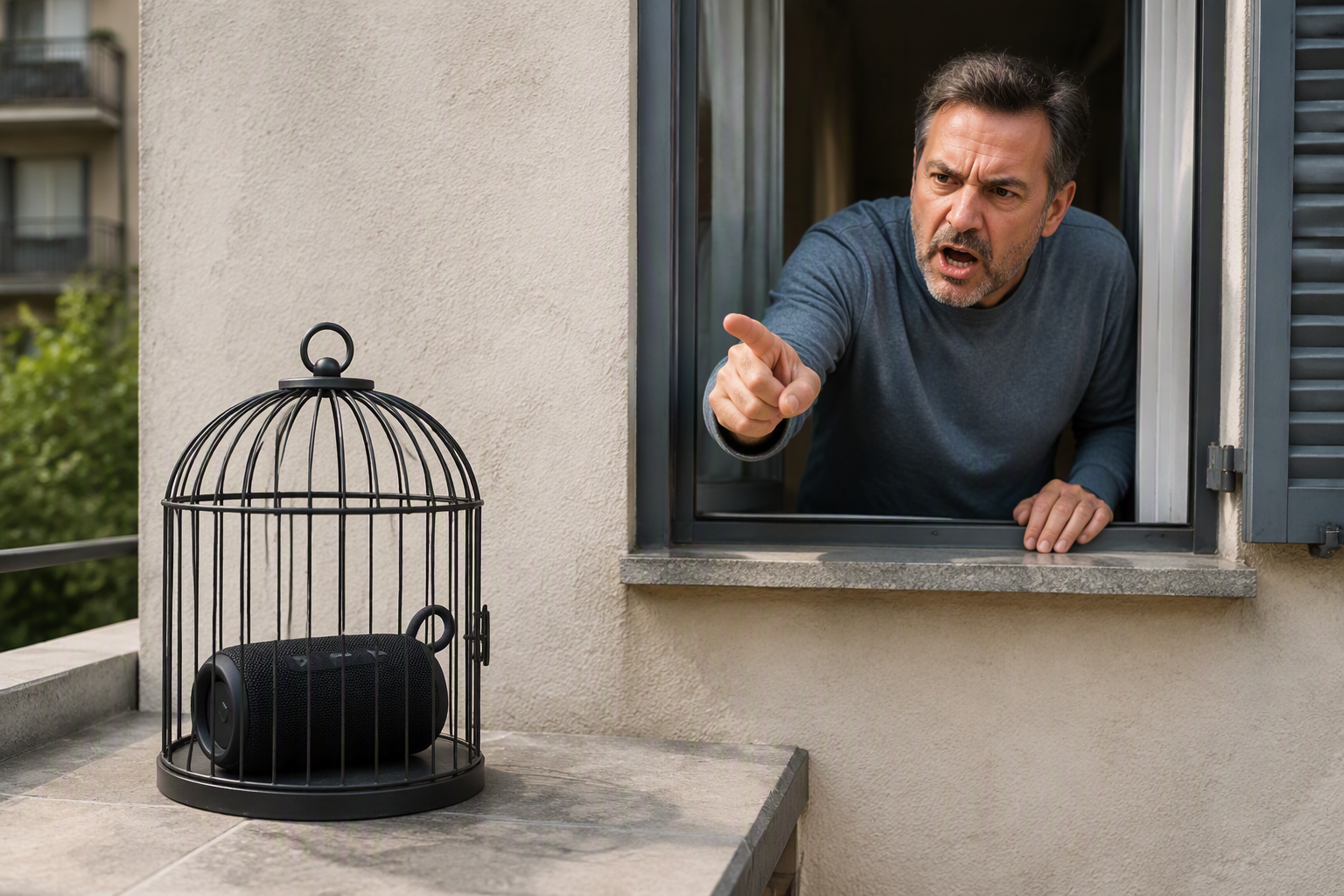
The Great Challenge of Coexistence in Tourist Accommodation
The boom in holiday rentals has completely transformed the tourism sector, allowing thousands of owners to monetise their properties directly. However, this type of hosting is not without its challenges. One of the biggest headaches for any host is the behaviour of guests who decide to ignore the community's house rules, organising parties, generating disruptive noise at unreasonable hours, and causing legitimate complaints from neighbours.
This type of incident not only damages relations with the owners' association but can also lead to severe financial consequences. Municipal fines for noise pollution or for carrying out disruptive activities in the property can amount to thousands of pounds. Furthermore, the community of neighbours, backed by regulations such as the Horizontal Property Act in Spain, can even take legal action to demand the cessation of tourist activity in the property.
To protect your investment, your tourist licence, and harmony with your surroundings, it is essential to move from reactive management to an active prevention strategy. Throughout this detailed guide, we will analyse how using advanced technology such as noise monitors (Minut) and implementing strict legal processes, such as the prior signing of house rules, can completely safeguard your holiday rental business.
The Real Consequences of Parties and Uncontrolled Noise
Before addressing the solutions, it is crucial to understand what a property owner faces when a group of problematic guests decides to turn their holiday apartment into an impromptu party venue. The repercussions go far beyond a simple warning.
Financial Penalties and Administrative Fines
Municipal ordinances on civil behaviour and acoustic environmental protection are becoming increasingly strict in major tourist cities. If local police attend your property due to noise complaints and certify that the permitted decibel levels are being exceeded during night hours (usually from 10:00 pm or 11:00 pm), the fine will be directed straight to the property owner or the holder of the activity licence.
- Minor offences: These can range between €100 and €750, depending on the local municipality.
- Serious offences: Recurring parties, obstructing police work, or blatantly exceeding noise limits can lead to fines of between €751 and €1,500.
- Very serious offences: In extreme cases, penalties can reach €3,000 or more, accompanied by the temporary or permanent revocation of the property's tourist licence.
Property Damage
An unauthorised party is usually synonymous with overcrowding. When more people than permitted enter the property, the risk of accidents and vandalism multiplies exponentially. Stained sofas, dented walls, broken crockery, damaged appliances, and extreme dirt are the typical aftermath of a night out of control. Deep cleaning and repair costs can far exceed any security deposit you may have requested from guests.
Reputational Damage and Community Bans
Neighbourly coexistence is a fundamental pillar. If building residents associate your tourist flat with constant noise, lack of sleep, and disorder, tension will escalate rapidly. The president of the owners' association can call extraordinary meetings to amend the bylaws and ban holiday rentals in the building (provided the legal majorities required by current legislation are met). Additionally, booking platforms like Airbnb or Booking.com severely penalise hosts who receive noise complaints, sometimes suspending or permanently removing listings from their portal.
Prevention Strategy 1: The Rental Contract and Signing House Rules
Incident prevention begins long before the guest sets foot in the accommodation. Relying solely on the good faith of travellers is a tactical mistake that can prove very costly. It is mandatory to establish a clear and binding legal framework that precisely defines what is and is not allowed within the property.
What Should the House Rules Document Include?
This document should be drafted in a simple, direct manner and be available in several languages (at least Spanish and English). By signing it, the guest expressly accepts the legal and financial consequences of non-compliance. The key points that must not be missing are:
- Strict quiet hours: Clearly define the hours during which loud noise is prohibited (for example, from 10:00 pm to 8:00 am).
- Absolute ban on parties and events: Make it clear that any gathering exceeding the maximum contracted capacity will be considered an unauthorised party and will be grounds for immediate eviction.
- Occupancy limit: Specify the maximum number of people allowed in the property. Anyone not registered in the booking is prohibited from entering and staying at the property.
- Correct use of communal areas: Remind them that respect extends to the entrance hall, landings, lift, swimming pool, and communal terraces. Consuming alcohol or generating noise in these areas is prohibited.
- Explicit financial penalties: Establish that failure to comply with these rules will entail the total loss of the security deposit, the charging of extraordinary cleaning costs, and the assumption of any administrative fine received by the owner due to their fault.
- Contract termination clause: Express authorisation for the owner or accommodation manager to terminate the accommodation agreement and immediately evict guests in the event of violating noise regulations.
How to Automate This Legal Process Before Handing Over the Keys
For this strategy to be truly effective, signing the house rules must be an indispensable requirement for accessing the property. Carrying out this process manually can be tedious and time-consuming. Fortunately, today you can delegate this task entirely.
Through an automated check-in system, you can schedule the digital sending of contracts and house rules. The guest receives a link on their mobile phone before arrival, where they must complete their guest registration (mandatory by law in many countries), upload their ID document, and digitally sign the conditions of the stay. Until this process is successfully completed, the system will not provide the access codes or key collection instructions. This way, you ensure 100% legal backing before the booking begins.
Prevention Strategy 2: Noise Monitoring Technology (The Minut Case)
Although a signed contract gives you the legal upper hand, it does not prevent noise from happening in real time. To find out about a problem before a neighbour calls the police, you need digital eyes and ears in your property. This is where environmental noise monitoring technology comes into play, with Minut being the undisputed leader in the sector.
How Does a Noise Monitor Like Minut Work?
There is a common fear among guests that these devices violate their privacy. It is fundamental to clarify that devices like Minut do not record conversations or store audio. They are not spy microphones. Their operation is completely respectful of privacy and strictly complies with the General Data Protection Regulation (GDPR).
The sensor continuously measures sound pressure levels (decibels - dB) in the environment. If the noise level exceeds the threshold you have previously configured (for example, 70 dB for more than 10 consecutive minutes), the device detects an anomaly and triggers a series of automated actions.
In addition to noise, advanced Minut models offer other key features for holiday accommodation management:
- Occupancy detection: It analyses the number of mobile devices with active Wi-Fi or Bluetooth connections in the property, which helps to indirectly identify if there are more people than allowed (potential party).
- Cigarette smoke detection: It alerts you instantly if a guest is smoking inside the property, preventing bad odours and burn damage.
- Temperature and humidity control: It allows you to monitor whether they have left the air conditioning or heating on at maximum power with the windows open, optimising energy consumption.
- Security alarm: It functions as a basic alarm system when the property is empty, detecting unauthorised movements or the sound of breaking glass.
Benefits of Integrating Minut into Your Daily Management
The main advantage of having an intelligent noise monitor is the ability to intervene preventively and automatically. Instead of waking up at 3:00 am to an angry phone call from a neighbour or the police, the system acts autonomously.
When the sensor detects that the permitted noise limit has been exceeded, it can automatically send a text message (SMS) or make a pre-recorded phone call to the guest, politely requesting that they turn down the volume. In 94% of cases, this first automated warning is enough for guests to correct their behaviour immediately, without the host having to intervene manually.
Step-by-Step Action Protocol for Noise Alerts
To guarantee the success of this technology, it is vital to structure a clear and scalable action protocol. It is not enough to receive the alert; you must know exactly what to do with each passing minute.
Phase 1: The Initial Alert (Minutes 0 to 5)
The Minut sensor detects that the noise has exceeded 75 dB for more than 5 minutes during night hours. The system sends an automatic warning to the guest via SMS: "Hi [Guest Name], we have detected that the noise level in the accommodation exceeds the permitted limits to guarantee the neighbours' rest. Please, we ask you to lower the volume. Thank you very much for your cooperation." At the same time, you receive a notification on your dashboard or mobile phone to be aware of the situation.
Phase 2: The Second Warning (Minute 10)
If the noise level does not decrease after the first message, the system makes an automated phone call to the primary guest's phone. If the system does not integrate automatically, you or your customer service team must make the call manually. The tone should be polite but firm, reminding them that signing the house rules strictly prohibits disturbing neighbours and that persisting in this attitude may result in the immediate cancellation of the stay without the right to a refund.
Phase 3: On-Site Intervention (Minute 20)
If the noise persists after digital and telephone warnings, it is time to act physically. If you do not reside near the accommodation, it is highly recommended to hire the services of a local security company or a concierge service that offers a rapid response to emergencies. An agent will travel to the property to knock on the door, visually assess the situation, and demand the immediate cessation of the noise or the departure of unregistered guests.
Phase 4: Eviction and Reporting (Over 30 Minutes of Conflict)
If the guests show a hostile attitude, refuse to cooperate, or the party continues blatantly, immediate eviction is carried out for material breach of the signed contract. At this point, law enforcement (local police) should be called to file a report of the incident, which will serve as irrefutable evidence in the event of potential claims on booking platforms or legal disputes over the security deposit. Subsequently, the incident must be reported in detail to the platform where the booking was made (Airbnb, Booking, etc.) to protect your account from potential retaliatory negative reviews by the problematic guests.
How to Win Over the Owners' Association and Avoid Complaints
Your relationship with your neighbours does not have to be adversarial. In fact, turning them into your allies is one of the best ways to ensure the long-term viability of your holiday rental business. A neighbour who feels respected and listened to will be much more likely to call you directly in the event of any inconvenience, rather than calling the police straight away or filing a formal complaint with the local council.
The Introduction Letter and 24/7 Emergency Contact
When you start operating a tourist property, or if you want to rebuild the current relationship with the community, proactively take the following actions:
- Introduce yourself to the president of the owners' association: Explain that you are a responsible owner, that your goal is to maintain a family-friendly and quiet environment, and that you have strict technological measures in place to prevent any disruption.
- Provide a 24-hour helpline: Give adjacent neighbours and the president an exclusive emergency phone number that is operational 24 hours a day, 7 days a week. Assure them that if they detect any disruptive noise, they can call you at any time and that you will resolve the issue in less than 20 minutes.
- Inform them about your control systems: Let them know that you have installed an approved Minut noise monitor and that guests have signed a very strict house rules agreement that allows for their immediate eviction if they do not respect the building's quiet hours. This will convey a great sense of security and control.
Visible Signage Inside the Accommodation
Do not rely on guests remembering everything they signed digitally before arrival. It is essential to place physical and visual reminders at strategic points in the property:
- Information plaque next to the noise monitor: Place a small adhesive sign below the Minut sensor clearly stating: "This accommodation is equipped with a smart noise monitor (it does not record conversations). For the peace of our neighbours, please keep noise below the permitted limits, especially from 22:00 to 08:00. Thank you." This has a massive deterrent effect.
- Rules poster on the entrance door: A clean and elegant design that visually summarises the 4 basic rules: no parties, no smoking, respect communal areas, and respect quiet hours.
Post-Stay Control and Maintenance: Securing the State of the Property
Once the guests have left the accommodation, the monitoring work is not over. Especially if you have had suspicions or minor noise alerts during the stay, it is vital to carry out a meticulous inspection of the property immediately, before the next group of travellers enters.
To systematise this process and ensure that your cleaning or management team does not overlook any detail, it is highly recommended to use digital verification tools. Through custom control checklists, cleaning staff can follow a detailed checklist from their own smartphone:
- Check the condition of the walls and doors (ensure there are no new dents or stains).
- Inspect the main furniture (sofas, tables, chairs) for structural damage or cigarette burns.
- Check the correct operation of appliances and the Wi-Fi connection (necessary for the Minut monitor to remain connected).
- Take photographs of the general condition of each room and upload them directly to the system as visual proof.
- Report any incident or damage immediately in order to retain the corresponding part of the security deposit before the legal refund period expires.
Conclusion: A Secure, Profitable Business in Harmony with the Surroundings
Successfully managing a holiday rental today requires staying one step ahead of potential problems. The era of informal management is over; professionalisation is the only way to guarantee the profitability and sustainability of your investment.
La combinación de un marco legal sólido —through the mandatory signing of house rules integrated into your guest registration process— along with the technological protection offered by noise monitors like Minut, constitutes the ultimate solution against parties and dreaded community fines. By automating these processes, you not only physically protect your property and your tourist licence, but you also regain your peace of mind, knowing that your business operates autonomously, securely, and respectfully towards the community of neighbours surrounding it.