
Unlock Success: Key Languages for Your Holiday Rental in Spain
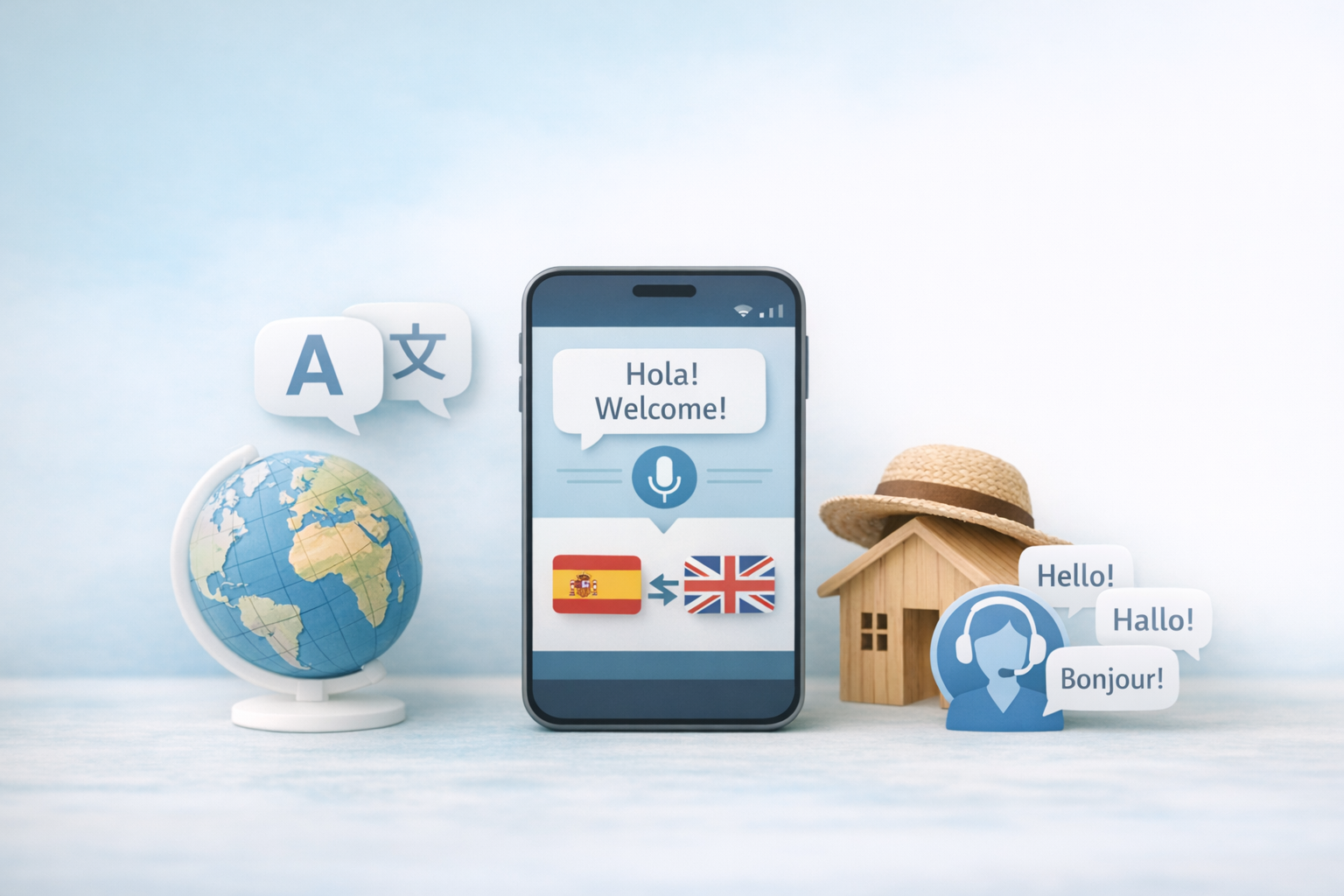
The Vital Importance of Languages in the Spanish Holiday Rental Market
Spain is, without a doubt, one of the most coveted tourist destinations on the planet. Its sun-drenched beaches, rich history, vibrant culture, and exquisite gastronomy attract millions of visitors every year. For holiday accommodation owners and rental managers, this constant flow of tourists represents a golden opportunity. However, to fully capitalise on this opportunity and maximise profitability, it is essential to go beyond offering quality accommodation: effective communication is the cornerstone of success.
In an increasingly globalised world, where travellers come from every corner of the planet, the language barrier can become a significant obstacle or, conversely, a powerful tool to set you apart from the competition. Understanding and speaking the key languages for holiday rentals in Spain is not just a courtesy; it is a smart business strategy that directly impacts your bookings, guest satisfaction, and ultimately, your revenue. Are you ready to discover how to master this essential aspect and take your business to the next level?
Why is Multilingualism Essential for Your Holiday Rental?
The ability to communicate in several languages goes far beyond simple translation. It involves cultural understanding, personal connection, and a substantial improvement in the overall guest experience. Here, we break down the main reasons why investing in multilingual capabilities is a wise decision for any holiday rental in Spain.
1. Significant Increase in Bookings and Profitability
- Expanding the Potential Market: By offering your information in multiple languages, you open the doors to a much wider segment of international travellers. A tourist is more likely to book accommodation where information is available in their mother tongue, which gives them confidence and security.
- Reducing Friction in the Booking Process: When guests can clearly understand your property description, cancellation policies, prices, and services, the booking process becomes smoother and less stressful, resulting in a higher conversion rate.
- Competitive Differentiation: In a saturated market, a multilingual offering sets you apart. Many competitors still limit themselves to Spanish and English. You can go one step further and offer a more personalised experience from the very first contact.
2. Exponential Improvement of the Guest Experience
- Barrier-Free Pre-Stay Communication: From the initial enquiry to arrival instructions, clear communication in the guest's language sets a positive tone. This minimises anxiety and ensures the guest feels valued and well-informed before even setting foot on your property.
- Effective Problem Solving During the Stay: Imagine a guest has an issue with the air conditioning or needs a medical recommendation. Being able to communicate without misunderstandings in times of need is crucial for a stress-free stay and for creating a sense of security.
- Personalised Recommendations: Offering suggestions for local restaurants, tourist attractions, or events in the guest's language demonstrates a level of attention to detail that few can match. This enriches their trip and creates unforgettable memories.
3. Building Trust and an Impeccable Reputation
- Positive Ratings and 5-Star Reviews: Exceptional communication is one of the most frequently cited factors in positive reviews. Guests appreciate the effort and convenience of being assisted in their own language, which translates into better scores and comments.
- Customer Loyalty and Repeat Bookings: A guest who feels understood and well looked after is a guest who will return. Customer loyalty is an invaluable asset in the holiday rental business.
- Avoiding Costly Misunderstandings: Language barriers can lead to confusion regarding house rules, appliance usage, or check-in/check-out times. Clear, multilingual communication drastically reduces these risks.
The Linguistic Pillars: Essential Languages for Your Holiday Rental in Spain
While the ideal goal would be to speak every language, the reality is that we must be strategic. Here are the key languages for holiday rentals in Spain, those that will allow you to cover the vast majority of the international tourism market and that you cannot afford to ignore.
1. Spanish: The Undisputed Base and Soul of the Country
It is obvious, but it deserves to be highlighted. Even if you are targeting an international audience, Spanish remains fundamental. It is the official language of the country, which will allow you to interact with local suppliers, neighbours, and in emergency situations. Furthermore, many international tourists value cultural immersion and appreciate it when a host makes the effort to speak to them in Spanish, even if they themselves are not fluent.
- Connection with the Local Environment: For dealings with cleaning services, maintenance, or simply to live the local experience.
- Catering to Domestic Tourists: Do not forget that domestic tourism is a vital part of the Spanish market.
- Authenticity: Offering an authentic experience also involves linguistic immersion.
2. English: The Universal Bridge for the Global Tourist
English is, without argument, the lingua franca of world tourism. Practically any international traveller, regardless of their origin, will have at least a basic knowledge of English. Ignoring English means closing the door to a huge portion of the market.
- Primary Markets: United Kingdom, United States, Canada, Australia, Ireland.
- Key Secondary Markets: Nordic countries (Sweden, Norway, Denmark, Finland), the Netherlands, Germany (many Germans use English to travel), and a large percentage of travellers from other nationalities who use it as their second language.
- Communication on Online Platforms: Most booking platforms (Airbnb, Booking.com, Vrbo) operate primarily in English. Your descriptions and communications must be flawless in this language.
3. German: The Precision and Purchasing Power of Central Europe
German tourists are a fundamental pillar of Spanish tourism. They are known for their meticulousness, planning, and considerable purchasing power. Many invest in longer stays, especially on the islands and coasts. Speaking German can be a deciding factor in attracting this segment.
- Preferred Destinations: Balearic Islands (Mallorca is almost a second home), Canary Islands, Costa del Sol, Costa Blanca.
- Characteristics of German Tourists: They value cleanliness, organisation, clear and detailed information, and good customer service.
- Impact on the Booking Decision: An advertisement in German conveys professionalism and a warm welcome that many appreciate.
4. French: The Elegance of the Nearby Neighbour
France is a neighbouring country with strong cultural and economic ties to Spain. French tourists represent a constant flow, especially in border regions and cultural cities. Geographical proximity facilitates frequent travel and stays of varying durations.
- Popular Destinations: Catalonia, Basque Country, Madrid, Andalusia, Valencia.
- Travel Motivations: Cultural tourism, city breaks, family holidays on the coast.
- Appreciation of the Language: French people usually greatly appreciate it when they are spoken to in their own language, which can strengthen the relationship with the guest.
Beyond the Big Four: Languages that Make a Difference in Holiday Rentals
While Spanish, English, German, and French are the pillars, there are other languages that, depending on your location and type of accommodation, can offer a significant competitive advantage and open you up to highly interesting markets.
5. Italian: Mediterranean Charm and Passion for Spain
Italy shares a similar Mediterranean culture with Spain, which translates into a steady flow of tourists looking for sun, gastronomy, and culture. They are enthusiastic travellers and appreciate cultural and linguistic proximity.
- Key Destinations: Barcelona, Madrid, Valencia, Balearic Islands.
- Type of Trip: City breaks, beach holidays, gastronomic trips.
- Ease of Communication: Given the similarity between Spanish and Italian, it is relatively easier for Spanish speakers to acquire basic notions of Italian to communicate with guests.
6. Portuguese: The Rising Peninsular Brother
Tourism from Portugal has been on the rise, especially in border regions and beach destinations. Geographical proximity and historical ties make this a natural market for holiday rentals in Spain.
- Regions of Interest: Galicia, Extremadura, western Andalusia.
- Market Growth: An expanding market that values comfort and proximity.
7. Dutch: The Loyalty of Northern Europe
Tourists from the Netherlands are frequent visitors to Spain, often seeking extended stays, especially during the winter months. They are a stable market with good purchasing power.
- Popular Areas: Costa Blanca, Costa Brava, Canary Islands.
- Loyalty: Once they find a place they like, they tend to return.
8. Nordic Languages (Swedish, Norwegian, Danish, Finnish): The Value of Exclusivity
Although the number of Nordic tourists may be smaller than that of other countries, their purchasing power is high, and they often seek quality experiences and longer stays. Many speak English fluently, but a welcome in their native language will always be a plus.
- Preferred Destinations: Canary Islands, Costa del Sol, Costa Blanca.
- Premium Service: Addressing them in their own language reinforces the perception of high-level service.
9. Mandarin Chinese and Russian: Emerging Markets with Great Potential
These languages represent markets with immense growth potential, although also with cultural and linguistic peculiarities that require a more significant investment. Travellers from China and Russia often seek luxury experiences, shopping, and iconic destinations.
- Long-Term Investment: It requires a more specific strategy but can yield very high returns.
- Cultural Considerations: Beyond the language, understanding their customs and expectations is crucial.
Practical Strategies for Effective Multilingual Management of Your Holiday Rental
Once we have identified the key languages for holiday rentals in Spain, the next step is to implement effective strategies to integrate them into your daily operation. It is not just about translating, but about adapting and optimising every touchpoint with the guest.
1. Your Online Presence: The First Multilingual Impression
Your website, listings on booking platforms (OTAs), and social media profiles are your window to the world. Make sure they are flawless in the relevant languages.
- Professional Translations for Listings and Web: Avoid low-quality automatic translations at all costs. Investing in professional translators is crucial to convey credibility and accuracy. A poorly translated description can confuse guests and make them lose trust.
- Multilingual SEO Optimisation: If you have your own website, research relevant keywords in each language. For example, a German tourist will search for 'Ferienwohnung Spanien', not 'holiday rental Spain'.
- Clear and Complete Information: Ensure all important details – property description, amenities, house rules, prices, availability – are correctly translated.
2. Communication with Guests: The Heart of the Experience
Communication before, during, and after the stay is where multilingualism truly shines.
- Automated Messages to Guests: Use tools like Macufy to schedule automated messages in multiple languages. This is ideal for:
- Welcome and booking confirmation messages.
- Arrival instructions (check-in, codes, keys).
- Reminders of house rules.
- Useful information during the stay (where to find the nearest chemist, restaurant recommendations).
- Farewell messages and review requests.
- Response Templates in Multiple Languages: Prepare standardised responses for the most frequently asked questions in the languages you support. This speeds up communication and ensures consistency.
- Flexible Communication Channels: Offer the option to communicate through different channels (email, WhatsApp, in-platform chat) and ensure your team can respond in the key languages.
3. In-Accommodation Materials: Information at Guests' Fingertips
Once the guests are at your property, it is still essential to provide them with useful information in their language.
- Multilingual Welcome Guide: A small manual with information about the property, how to use appliances, the Wi-Fi password, emergency numbers, and local recommendations (restaurants, supermarkets, public transport) is a highly valued detail.
- Clear Signage: If you have multiple properties or common areas, make sure important signs are in several languages.
- Local Tourist Information: Offer brochures or maps of the area in different languages, if available.
4. Your Team and Staff: The Multilingual Human Factor
The staff who interact directly with guests are your first line of defence against the language barrier.
- Hiring Multilingual Staff: If possible, look for cleaning, maintenance, or guest-facing staff who speak the key languages.
- Basic Language Training: Encourage your team to learn basic phrases in the most common languages. A simple “Hello, how are you?” in the guest's language can make a big difference.
- External Translation Services: For more complex situations, consider having a professional translation service or a contact person who can assist you on hand.
5. Technological Tools at Your Disposal
Technology has advanced in leaps and bounds and can be your best ally in multilingual management.
- Property Management Platforms (PMS) like Macufy: A robust PMS like Macufy allows you to centralise the management of your bookings and communications. This facilitates the synchronisation of bookings from multiple channels, ensuring your availability and prices are consistent across all OTAs, which in turn display the information in the user's language. Furthermore, Macufy helps you manage message templates in different languages, ensuring your guests receive the correct information in their tongue.
- Online Translators and Apps: Tools like Google Translate, DeepL, or instant translation apps are useful for quick communications or understanding specific points, but always with caution and checking for coherence.
- Keyboards with Translation Functionality: Some smartphone keyboards offer real-time translation, which can be useful for face-to-face conversations.
Macufy: Your Strategic Ally in Multilingual Expansion and Comprehensive Management
At Macufy, we understand that managing a holiday rental goes beyond having good accommodation. It involves a complex orchestration of bookings, communications, cleaning, and maintenance. By freeing up your time from repetitive administrative tasks, Macufy allows you to focus on what really matters: offering an exceptional experience to your guests, which includes multilingual care.
Our platform is designed to simplify your life as an owner or manager. With Macufy, you can:
- Centralise All Your Bookings: Thanks to our booking synchronisation, you avoid overbookings and manage your availability efficiently across all platforms, reaching a global audience effortlessly.
- Automate Communication: With automated guest messages, you can schedule dispatches in different languages, ensuring that every traveller receives the information they need in their own tongue, from arrival instructions to local tips.
- Optimise Daily Operations: By having a clear view of all your properties and tasks, you can dedicate more resources and energy to personalising the guest experience, including multilingual communication.
Macufy not only helps you manage, but empowers you to compete at a higher level, allowing you to expand your reach to international markets and offer impeccable service in the key languages for holiday rentals in Spain.
Overcoming Common Obstacles in Multilingual Management
Addressing linguistic diversity can seem overwhelming at first, but with proper planning, challenges become opportunities.
1. The Cost of Professional Translation
It is true that high-quality translations require an investment. However, consider this an investment in your brand and customer satisfaction. A poor translation can cost you much more in terms of reputation and lost bookings. Prioritise the most important content (descriptions, policies, key messages) for professional translation and use tools for the rest.
2. Maintaining Consistency and Quality
Ensure that the tone and information are consistent across all languages. Create a glossary of key terms for your property and business for all translators or team members to use. Review and update your translations regularly.
3. Cultural Sensitivity Beyond Language
Communicating in a guest's language is a great step, but understanding their customs and cultural expectations is the next level. For example, punctuality, personal space, or the way complaints are expressed can vary significantly between cultures. Educating your team on these differences can prevent misunderstandings and improve the experience.
The Future of Languages in Holiday Tourism
The linguistic landscape in tourism is constantly evolving. Artificial intelligence and real-time translation tools are improving rapidly. We can expect a future where multilingual communication is even more fluid and personalised.
- AI and Real-Time Translation: Devices and applications that allow fluid conversations in different languages are becoming increasingly present.
- Extreme Personalisation: Platforms could offer content and communications tailored not only to the language but also to the cultural and travel preferences of each guest.
- The Importance of the Human Connection: Despite technological advances, the human touch and a host's ability to authentically connect with their guests will remain irreplaceable. Tools are a support, not a replacement.
Conclusion: Invest in Languages, Reap Success in Your Holiday Rental
Mastering the key languages for holiday rentals in Spain is not just an advantage; it is a strategic necessity in today's competitive market. By prioritising Spanish, English, German, and French, and considering other languages based on your location, you are laying the foundations to attract a wider audience, offer a superior guest experience, and ultimately, skyrocket your business's profitability.
Investment in multilingualism, whether through professional translations, staff training, or the smart use of technology, translates directly into:
- More quality bookings.
- Stellar ratings and reviews.
- An impeccable reputation.
- A smoother, less stressful operation.
Do not let the language barrier limit your potential. Embrace linguistic diversity, implement the right strategies, and watch your holiday rental in Spain flourish. And remember, with tools like Macufy, you have a powerful ally to efficiently manage all facets of your business, allowing you to spend more time on what really matters: connecting with your guests in their own language and offering them an unforgettable experience. It is time to speak the language of success!