
Remote Document Validation with AI: How to Verify Guest IDs & Passports Seamlessly
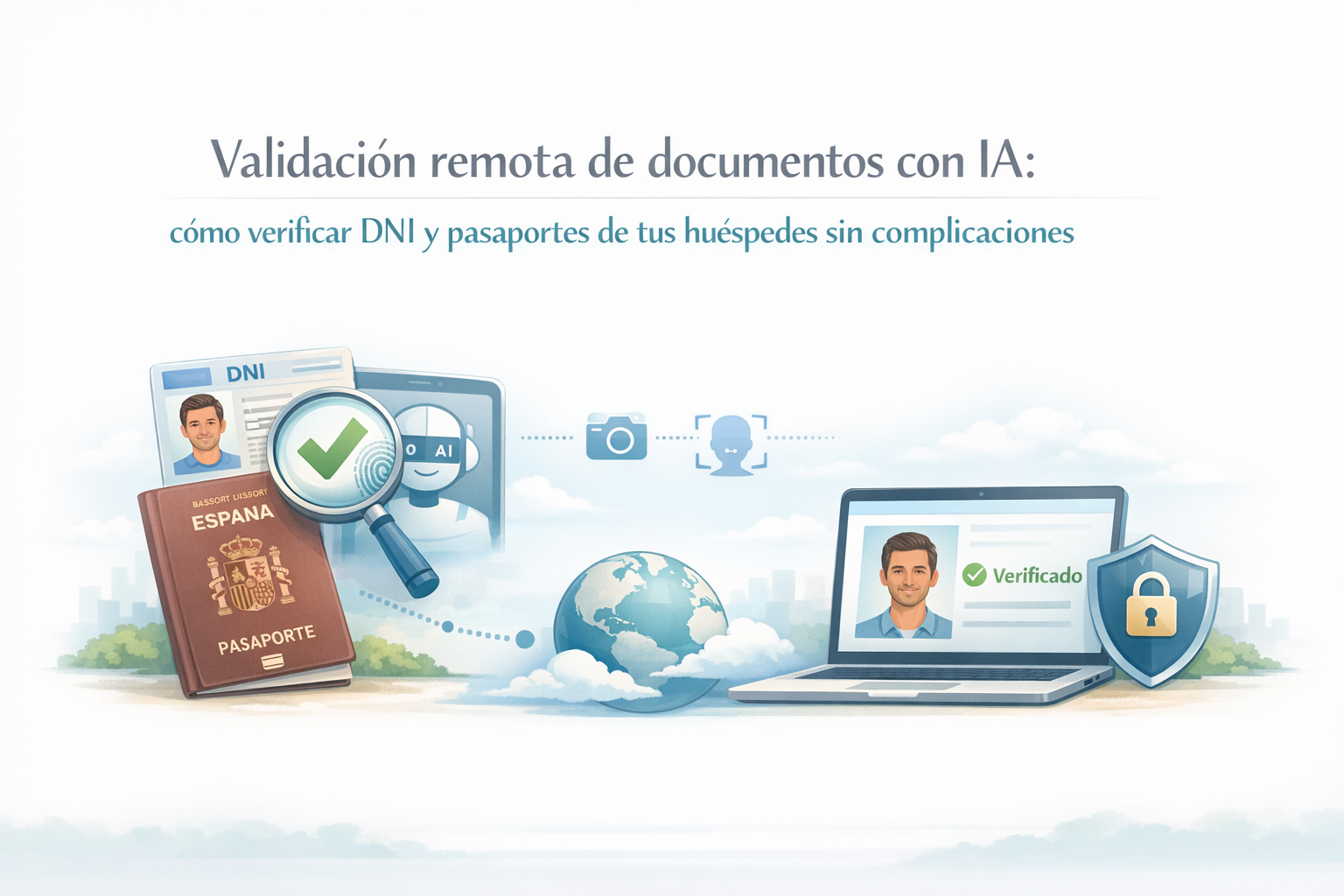
Managing tourist accommodation, whether a cozy holiday rental or a bustling hotel, involves a myriad of responsibilities. Among these, one of the most paramount and often underestimated tasks is the meticulous validation of guests' identity documents. In an increasingly digital world, relying on manual processes for this crucial step can lead to a cascade of inefficiencies, potential errors, and even significant legal repercussions. Fortunately, the relentless march of technological innovation has provided robust solutions, enabling this vital process to be automated, conducted remotely, and executed with unparalleled security.
This comprehensive article delves into the intricacies of how to remotely validate ID cards and passports using cutting-edge artificial intelligence. We will explore the underlying technology, the benefits it offers, and critically, how platforms like Macufy.com are revolutionizing the hospitality sector by facilitating seamless, automatic online check-in, ensuring you avoid any potential hitches, streamline your operations, and enhance the overall guest experience.
Why Is It Absolutely Essential to Validate Guest Documents? The Unseen Risks of Negligence
The act of identifying guests is not merely a formality; it's a cornerstone of responsible property management and a legal imperative in many jurisdictions. In Spain, for instance, strict regulations mandate that all tourist accommodations identify travelers over 14 years old and register their details with local security forces. This isn't unique to Spain; similar requirements exist across Europe and globally, aimed at enhancing public safety and combating illicit activities. Failing to comply with these mandatory processes, which can be incredibly tedious if done manually, exposes property owners and managers to severe penalties, ranging from hefty fines to reputational damage.
Beyond legal compliance, the correct validation of ID cards, NIEs (Foreigner Identification Numbers), passports, and other forms of identification offers a multi-faceted layer of protection and operational advantages:
- Prevents Identity Fraud and Impersonation: In an era where digital identity theft is rampant, verifying that the person checking into your property is indeed who they claim to be is crucial. This proactive measure safeguards your property from potential scams, criminal activities, and unauthorized occupancy.
- Enhances Security for All: Knowing who is staying at your property contributes significantly to the safety and security of all your guests, staff, and the local community. It helps in maintaining a secure environment and addressing any incidents promptly and effectively.
- Speeds Up Guest Entry and Reduces Friction: A streamlined identification process leads to a faster, smoother, and more welcoming check-in experience. Guests appreciate efficiency, especially after a long journey, and a quick entry sets a positive tone for their stay.
- Elevates the Customer Experience: From the very first contact, a professional and efficient process demonstrates your commitment to guest satisfaction. Automating this step frees up your team to focus on personalized service, rather than administrative chores.
- Reduces Your Team's Administrative Workload: Manual data entry, photo taking, and document storage are time-consuming and prone to human error. Automation drastically cuts down on these tasks, allowing your staff to dedicate their valuable time to more strategic and guest-facing activities.
- Ensures Legal and Regulatory Compliance: Beyond just identification, many jurisdictions require specific data points to be collected and submitted to authorities. Automated systems ensure all necessary data is accurately captured and formatted, minimizing the risk of non-compliance.
In essence, neglecting thorough document validation is akin to leaving your property's front door ajar. It invites risks, complicates operations, and can significantly detract from the guest experience. Embracing modern solutions for guest document verification is not just good practice; it's a fundamental requirement for sustainable and successful property management.
The Perils of Manual Document Validation: Outdated Practices in a Digital Age
Despite the clear advantages of automation, many landlords and property managers still cling to outdated manual methods for guest identification. Common practices include requesting guests to send photos or scanned copies of their documents via email or messaging apps, or even taking physical copies upon arrival. While seemingly straightforward, this approach is fraught with serious drawbacks that can undermine security, efficiency, and legal compliance. It's a method that simply doesn't align with the demands of modern hospitality or the expectations of today's tech-savvy travelers.
1. The Illusion of Security: Lack of Automatic Verification
One of the most significant flaws of manual document collection is the inherent lack of robust verification. A simple photo or scanned copy, whether sent via email or captured on a mobile device, provides little to no assurance of authenticity. How can you be certain that:
- The Document is Authentic? Fraudsters are increasingly sophisticated, using readily available tools to create convincing fake IDs or alter legitimate documents. A visual inspection by an untrained eye is often insufficient to detect advanced forgery patterns, holograms, or subtle security features.
- The Document Belongs to the Person Present? Even if a document appears authentic, there's no guarantee that the person presenting it is the legitimate holder. Impersonation is a serious threat, and a manual process offers no reliable mechanism for facial matching or liveness detection.
- The Data is Accurately Transcribed? Manually transcribing details from a document into a registration form is highly susceptible to human error. A single digit or letter misplaced can invalidate the registration, leading to compliance issues and potential penalties.
Without an automated, intelligent verification layer, you're essentially operating on trust, leaving your property vulnerable to a range of risks, from minor inconveniences to serious security breaches. This 'blind spot' in verification is a critical weakness in any manual guest identification process.
2. Data Privacy Nightmare: Risk of Data Loss or Leakage
Guest identity documents contain highly sensitive personal information, including names, dates of birth, nationalities, document numbers, and often photos. Storing these documents without proper security measures is a recipe for disaster and a direct violation of stringent data protection regulations like GDPR (General Data Protection Regulation) in Europe, and similar laws worldwide. Consider the vulnerabilities:
- Insecure Storage: Photos sent via email or messaging apps might reside on unencrypted servers, personal devices, or in cloud storage without adequate protection. This makes them prime targets for cybercriminals.
- Unauthorized Access: Multiple staff members might have access to these documents, increasing the risk of internal misuse or accidental exposure.
- Lack of Data Minimization: Manual processes often involve collecting and retaining more data than legally necessary, which increases the risk surface.
- Difficulty in Data Management: Deleting data upon request or after the legally mandated retention period becomes a logistical nightmare with scattered digital copies.
A data breach involving guest identity documents can lead to massive fines, severe reputational damage, and a complete erosion of guest trust. Property managers have a legal and ethical obligation to protect this sensitive information, an obligation that manual methods struggle to uphold.
3. The Hidden Cost of Time: Loss for Both Host and Traveler
In today's fast-paced world, time is a precious commodity. Manual document validation is a significant time sink for everyone involved:
- For the Host: It involves sending requests, chasing guests for documents, manually reviewing photos, transcribing data, and then securely storing these documents. This administrative burden can consume hours of valuable staff time, diverting resources from more productive activities.
- For the Traveler: Guests often find it frustrating to have to send emails, wait for responses, or repeat processes. The expectation nowadays is for immediacy and frictionless interactions. Having to physically hand over a document or navigate a cumbersome digital process after a long journey can be a major source of dissatisfaction, negatively impacting their initial impression and overall experience.
This inefficiency creates friction, generates unnecessary stress, and ultimately detracts from the seamless experience that modern travelers expect. Outdated methods simply have no place in a hospitality industry striving for excellence and efficiency. The immediacy and convenience offered by a robust online check-in system are paramount for both guest satisfaction and operational smoothness.
The Revolutionary Solution: Remote Document Validation with AI
The advent of artificial intelligence has ushered in a new era for digital identification processes, transforming how businesses verify identities. For the hospitality sector, this means you can now verify ID cards, passports, and other identity documents in real-time, with remarkable accuracy, and crucially, without the guest needing to be physically present. This is the core of truly effective remote ID validation, offering a secure, efficient, and user-friendly alternative to traditional methods.
How Does AI-Powered Document Verification Work Its Magic?
The process, while sophisticated under the hood, is designed to be incredibly simple for the end-user. Here's a breakdown of the key technological components and steps:
- Document Capture: The traveler uses their mobile phone or webcam to capture a high-quality image or video of their identity document. Advanced AI algorithms can guide the user to ensure optimal lighting, angle, and focus.
- Optical Character Recognition (OCR): Once captured, sophisticated OCR technology instantly extracts all relevant data from the document. This includes names, dates of birth, document numbers, expiry dates, and other crucial information. Unlike basic OCR, these systems are trained on vast datasets of global ID documents, ensuring accuracy across diverse formats and languages.
- Authenticity and Anti-Forgery Analysis: This is where AI truly shines. The system performs a multi-layered analysis to detect any signs of tampering or forgery. This involves examining:
- Security Features: Verifying the presence and authenticity of holograms, watermarks, microprinting, and other embedded security elements.
- Material Analysis: Detecting inconsistencies in paper texture, ink, and laminate.
- Pattern Recognition: Identifying common forgery patterns and discrepancies in font, layout, and image quality that are invisible to the human eye.
- Deepfake and Spoofing Detection: Advanced AI models can identify if a document is a screen photo, a printed copy, or a digitally altered image, preventing sophisticated spoofing attempts.
- Facial Biometric Comparison (Liveness Detection & Facial Matching): Simultaneously, the guest is prompted to take a live selfie or a short video. The AI then performs two critical checks:
- Liveness Detection: This technology verifies that the person presenting the selfie is a real, live individual and not a photo, video, or 3D mask. It analyzes subtle movements, reflections, and other biometric cues to prevent presentation attacks.
- Facial Matching: The AI compares the live selfie with the photo on the identity document. Using advanced facial recognition algorithms, it calculates the probability that both images belong to the same person, ensuring that the individual checking in is indeed the legitimate holder of the document.
- Data Validation and Cross-Referencing: The extracted data is then validated against known document templates and, in some cases, against external databases (where legally permissible) to ensure consistency and accuracy.
This entire process, from document upload to final verification, typically takes no more than 30 seconds, providing near-instantaneous and highly reliable results. It's a testament to the power of AI in creating secure, efficient, and user-friendly solutions for digital identity verification.
Key Benefits of AI-Powered Remote ID Validation: A Game Changer for Hospitality
- Near-Absolute Accuracy and Error Reduction: AI systems eliminate human errors in data transcription and significantly reduce the chances of overlooking subtle signs of fraud. This leads to a level of accuracy unachievable through manual checks.
- Unprecedented Speed and Efficiency: The entire verification process is completed in seconds, drastically cutting down check-in times and improving operational efficiency. This speed is crucial for enhancing the online check-in experience.
- Guaranteed Legal Compliance: Automated systems are designed to capture and format all legally required data points, ensuring that your property adheres to local and national traveler registration laws and data protection regulations (like GDPR) without manual oversight.
- Frictionless and Enhanced Guest Experience: Guests can complete the entire verification process from their mobile phone, at their convenience, before even arriving at the property. This seamless, remote experience is highly valued by modern travelers and contributes to higher satisfaction scores.
- Robust Fraud Prevention: The multi-layered AI analysis makes it extremely difficult for fraudsters to bypass the system, providing a strong deterrent against identity theft and unauthorized access.
- Scalability and Accessibility: Whether you manage a single holiday rental or a portfolio of hotels, AI validation scales effortlessly. It also makes your property accessible to international guests, as it can verify documents from virtually any country.
- Cost Savings: By reducing manual labor, preventing fraud, and avoiding compliance penalties, AI validation offers significant long-term cost savings for property managers.
Embracing AI for guest document verification is not just about adopting new technology; it's about fundamentally transforming the operational efficiency, security posture, and guest satisfaction levels of your tourist accommodation business.
Macufy.com: Your Partner in Automating Online Check-in and Guest Management
Macufy.com is more than just a booking management system; it's a comprehensive platform meticulously designed to empower hosts in managing all aspects of their holiday homes or hotels. At its core, Macufy integrates a sophisticated AI-powered system that performs online check-in automatically, with remote document validation as a central, critical component. This integration means that the once cumbersome and error-prone process of guest identification is now handled with precision and efficiency, allowing you to focus on delivering exceptional hospitality.
When a guest confirms their booking through any of your channels, Macufy seamlessly takes over the initial administrative burden. It sends them a secure, personalized link to a dedicated portal where they can easily upload their identity document and a selfie. The integrated AI tool then springs into action, meticulously extracting all necessary data, verifying the authenticity of the document, and performing facial matching. Crucially, it then completes the mandatory traveler registration form without any intervention required from your side. This automated workflow is a cornerstone of modern, efficient property management, embodying the true spirit of a frictionless digital check-in experience.
The beauty of Macufy lies in its holistic approach. The AI-driven validation is not an isolated feature but a seamlessly integrated part of a larger ecosystem designed for total property management. For instance, you can learn more about how Macufy enhances your operational efficiency through booking synchronisation with Macufy, ensuring that your availability is always up-to-date across all major platforms like Airbnb, Booking.com, VRBO, and Lodgify. Furthermore, the efficiency gained from automated validation perfectly complements other time-saving features, such as how automatic messages to guests work, allowing you to provide timely updates, welcome messages, and access instructions without manual effort. These functionalities, when combined with AI validation, create an unparalleled automated guest journey, from initial booking to departure.
Comprehensive Document Support: Which Documents Can Be Validated with Macufy?
A truly effective remote identity verification system must be versatile enough to handle a diverse range of official identity documents from around the globe. Macufy’s advanced AI system is built with this global perspective in mind, ensuring broad compatibility and robust verification capabilities. This comprehensive support is vital for properties that welcome international travelers, as it eliminates potential barriers and ensures legal compliance regardless of the guest's country of origin. Most modern systems, like the one integrated into Macufy, are equipped to accept and process a wide array of identification, including:
- Spanish ID Cards (DNI): Both new and older formats of the Spanish National Identity Document are fully supported, with the AI meticulously analyzing all security features and data fields.
- NIEs (Foreigner Identification Numbers): Essential for non-Spanish residents, the Foreigner Identification Number cards are also processed with the same level of scrutiny and accuracy.
- Passports from Any Country: This is a critical feature for holiday rentals and hotels catering to an international clientele. Macufy's AI is trained on an extensive database of passport formats from virtually every nation, recognizing different designs, security elements, and data structures. This ensures that a traveler from anywhere in the world can complete their passport validation seamlessly.
- Driving Licences (as Supplementary Identification): While not always the primary document for legal guest registration in all jurisdictions, driving licenses can often be used as supplementary identification or as a primary document where local laws permit. Macufy's flexibility allows for this, adding another layer of convenience for guests.
The system's ability to recognize and verify such a broad spectrum of documents is a testament to the sophistication of its underlying AI. It means that whether your guest presents a national ID card, a residence permit, or an international passport, the system can reliably extract the necessary information, perform authenticity checks, and compare facial biometrics. This broad compatibility not only simplifies the process for guests but also provides property managers with peace of mind, knowing that their guest identification process is robust and inclusive.
Step-by-Step Excellence: Remote Document Validation with Macufy
One of the core strengths of Macufy.com is its commitment to creating a user-friendly experience for both property managers and their guests. The process of remote document validation is designed to be intuitive, transparent, and highly efficient, ensuring a seamless online check-in from start to finish. Here’s a detailed breakdown of how Macufy transforms the complex task of identity verification into a simple, automated workflow:
Step 1: Initial Setup and Customization by the Host
Before your first guest arrives, you, as the property manager, have complete control over configuring the identity verification feature within your Macufy control panel. This initial setup is straightforward and allows you to tailor the process to your specific needs and local regulations:
- Activate the Feature: With a simple toggle, you can enable the identity verification service for your properties.
- Define Accepted Document Types: You can specify which types of identity documents you are willing to accept (e.g., only passports, or passports and national ID cards).
- Choose Authorization Method: Macufy offers flexibility. You can opt for fully automatic authorization, where the system approves verified guests without your intervention, or a semi-automatic process where you receive a notification for manual review of any flagged or borderline cases.
- Customization Options: You can often customize aspects like the timing of the verification request and the language used in guest communications.
This ensures that the system works precisely according to your operational preferences and legal obligations, setting a solid foundation for secure guest management.
Step 2: Automatic Send of Verification Link to Guest
Once a booking is confirmed, Macufy takes over the communication, ensuring that guests receive timely and clear instructions for their remote identity verification. This automated outreach is key to a smooth guest journey:
- Triggered Communication: Macufy automatically sends a personalized message containing a secure, unique verification link to the guest shortly after their booking is confirmed, or at a predefined interval before their arrival.
- Customizable Messaging: You can customize the tone, language, and content of this message, ensuring it aligns with your brand voice and provides all necessary information in a helpful manner. This might include instructions on how to prepare their document and the selfie.
- Secure Portal Access: The link directs the guest to a secure, mobile-friendly portal where they can safely upload their documents. This portal is designed for ease of use, guiding the guest through each step.
This proactive communication minimizes guest questions and ensures they have ample time to complete the verification before their arrival, contributing to a stress-free pre-check-in experience.
Step 3: AI-Powered Document Capture and Verification
This is where Macufy's intelligent core comes into play. The guest interacts directly with the AI system through the secure portal:
- Guided Capture: The guest is prompted to take a clear photo or video of their identity document. The system often provides real-time feedback, advising on lighting, angle, and focus to ensure optimal image quality.
- Selfie Capture: Following the document capture, the guest takes a live selfie or a short video. The system incorporates liveness detection to ensure it's a real person and not a static image or a deepfake.
- Multi-Factor AI Analysis: The AI then performs its comprehensive analysis:
- Facial Biometric Matching: Comparing the live selfie with the photo on the document to confirm identity.
- Authenticity Checks: Analyzing textures, holograms, microprinting, and other security features on the document.
- Forgery Pattern Detection: Identifying any signs of tampering, alteration, or fraudulent activity using advanced machine learning models trained on vast datasets of real and fake documents.
This entire process is quick, often completed in under 30 seconds, and provides a highly accurate assessment of the document's authenticity and the guest's identity.
Step 4: Automatic Traveler Registration Form Completion
If the AI verification is successful and all checks pass, Macufy automatically proceeds to the next critical step:
- Data Extraction and Population: The AI extracts all legally required data from the verified document (name, surname, date of birth, nationality, document number, issue date, expiry date, etc.).
- Automatic Form Filling: This extracted data is then automatically populated into the mandatory traveler registration form, ready for submission to the relevant security authorities (e.g., Policía Nacional or Guardia Civil in Spain, or equivalent bodies elsewhere).
- Error Minimization: By eliminating manual data entry, Macufy significantly reduces the risk of human error, ensuring that the submitted data is accurate and compliant.
This automation saves property managers countless hours of administrative work and provides peace of mind regarding legal compliance, a crucial aspect of legal compliance for tourist accommodation.
Step 5: Check-in Completed and Guest Access
With the identity verification successfully concluded and the registration form prepared, the check-in process seamlessly transitions to providing the guest with access and information:
- Automated Access Instructions: The guest automatically receives their access instructions for the accommodation. This could include door codes for smart locks, instructions for key collection, Wi-Fi passwords, and other essential details.
- Host Notification: You, as the host, receive a notification confirming that the guest's identity has been successfully verified and that the check-in process is complete. This keeps you informed without requiring constant manual monitoring.
- Enhanced Guest Experience: The guest arrives at the property knowing their identity is confirmed and their access is ready, leading to a smooth, stress-free arrival and a positive start to their stay.
This comprehensive, automated workflow powered by Macufy's AI transforms the guest check-in from a potential bottleneck into a streamlined, secure, and satisfying experience for everyone involved, highlighting the true power of automated online check-in.
Frequently Asked Questions About Remote AI Validation: Addressing Your Concerns
Adopting new technology, especially one that handles sensitive personal data, naturally raises questions. It's essential for property managers to understand the legal, security, and practical implications of remote AI validation. Here, we address some of the most common concerns to provide clarity and confidence in using systems like Macufy's for guest document verification.
Is it legal to validate documents remotely using AI?
Absolutely, yes. Remote document validation using AI is perfectly legal, provided that the system and its operators comply with all relevant data protection regulations and traveler registration laws specific to your jurisdiction. Key considerations include:
- GDPR Compliance: For properties operating within or serving guests from the European Union, compliance with GDPR is non-negotiable. Platforms like Macufy are designed with GDPR principles in mind, ensuring data minimization (only collecting necessary data), lawful basis for processing (legal obligation for guest registration), transparency, and robust security measures (encryption, access controls).
- Local Traveler Registration Laws: The primary purpose of this validation is to fulfill legal obligations regarding guest identification and reporting to security forces. AI systems automate this process while ensuring all required data points are captured accurately and formatted for submission.
- Consent: While often a legal obligation, explicit consent for data processing is generally sought where required, or the processing is justified by a legitimate interest or legal obligation.
- Data Security: Legal frameworks mandate that sensitive data be stored securely. Platforms like Macufy employ state-of-the-art encryption, secure servers, and strict access protocols to protect guest information. Data is only stored for the legally necessary period and then securely purged.
In essence, remote AI validation is not only legal but often provides a more secure and compliant method of data handling than manual processes, reducing the risk of human error and data breaches.
Can a guest falsify the validation process? How robust is the AI against fraud?
It is significantly more difficult, bordering on almost impossible, for a guest to successfully falsify the validation process when using advanced AI systems like Macufy's, compared to manual methods. The multi-layered security protocols are designed to detect and thwart a wide range of fraudulent attempts:
- Advanced Anti-Spoofing and Liveness Detection: The AI doesn't just look for a face; it actively verifies that the person taking the selfie is a live individual. It can detect attempts to use photos, videos, 3D masks, or deepfakes by analyzing subtle movements, reflections, and biometric cues.
- Sophisticated Forgery Detection: The system employs advanced algorithms to analyze the identity document for even the most subtle signs of tampering. This includes detecting altered text, swapped photos, inconsistencies in security features (holograms, watermarks), and differences in material properties. It can identify documents that are screen photos or printed copies, rather than original physical documents.
- Biometric Facial Matching: The AI performs a highly accurate comparison between the live selfie and the photo on the document. This ensures that the person attempting to check in is the legitimate holder of the ID, preventing impersonation.
- Database Cross-Referencing (where applicable): In some advanced systems, data can be cross-referenced with official databases (with appropriate legal permissions) to further verify authenticity.
While no system is 100% impervious to every conceivable attack, AI-powered validation offers a level of security and fraud deterrence that is vastly superior to traditional manual checks, making it a highly reliable method for preventing identity fraud in tourist accommodation.
What happens if a guest doesn't have a valid document or fails the validation?
A robust AI validation system is designed to provide clear outcomes and actionable steps for property managers when a guest's document is deemed invalid or the validation process fails:
- System Rejection: If the AI detects a forged document, an expired ID, a mismatch in facial biometrics, or any other critical failure, the system will automatically reject the validation attempt.
- Immediate Notification to Host: You, as the property manager, will receive an immediate notification regarding the failed validation. This alert will typically include the reason for the failure (e.g., 'document appears forged,' 'face mismatch,' 'document expired').
- Options for Action: Based on the nature of the failure and your property's policies, you can then take appropriate action:
- Request an Alternative Document: If the issue is minor (e.g., a blurry photo, an expired document where another valid one exists), you can request the guest to resubmit with a different valid ID.
- Manual Review: For borderline cases or specific scenarios, you might opt for a manual review of the provided information.
- Contact Guest Directly: You can reach out to the guest to understand the issue, provide assistance, or request further clarification.
- Cancellation Policy Enforcement: In cases of suspected fraud or inability to provide legally required identification, you may need to enforce your booking cancellation policy, as the guest cannot legally stay at your property without proper identification.
The system acts as an intelligent gatekeeper, ensuring that only properly identified guests gain access, thus upholding your legal obligations and property security. This proactive approach significantly reduces risks associated with unverified or fraudulent guests.
How is guest data protected after validation?
Data protection is paramount, especially when dealing with sensitive identity information. Platforms like Macufy adhere to stringent security protocols to ensure guest data is handled responsibly and compliantly:
- Encryption: All data, both in transit and at rest, is encrypted using industry-standard protocols (e.g., TLS/SSL for transmission, AES-256 for storage). This ensures that even if data were intercepted, it would be unreadable.
- Secure Servers: Data is stored on highly secure, compliant servers (often ISO 27001 certified data centers) with robust physical and digital security measures in place.
- Access Controls: Access to sensitive guest data is strictly limited to authorized personnel only, on a need-to-know basis, and is protected by strong authentication mechanisms.
- Data Minimization and Retention Policies: Macufy only collects and retains the data that is legally necessary for guest registration and for the period mandated by law. Once the retention period expires, the data is securely purged from the systems. This minimizes the risk associated with long-term data storage.
- Regular Security Audits: Systems undergo regular security audits and penetration testing to identify and rectify any potential vulnerabilities, ensuring continuous protection against evolving cyber threats.
By implementing these robust measures, Macufy provides a secure environment for guest identity data, far surpassing the security offered by manual storage methods like unencrypted emails or local hard drives. This commitment to data privacy is a crucial aspect of responsible tourist accommodation management.
Real-World Impact: Improving Accommodation Efficiency and Guest Satisfaction
The transition from manual to automated remote ID validation and online check-in is not just a theoretical improvement; it yields tangible, measurable benefits for property managers across the board. The experiences of numerous owners and managers who have adopted these tools paint a clear picture of enhanced efficiency, reduced workload, and significantly improved guest satisfaction.
Many owners have reported a dramatic reduction in the time spent on guest identification—up to 90% or more. This staggering efficiency gain frees up valuable resources that can be redirected to more strategic tasks, such as marketing, property maintenance, or enhancing the guest experience in other areas. The days of chasing guests for documents, manually transcribing details, and worrying about misplaced paperwork are effectively over. Instead, property managers can dedicate their energy to proactive management rather than reactive administration.
Furthermore, the elimination of human error in completing traveler registration forms is a massive relief. Incorrectly filled forms can lead to compliance issues, fines, and wasted time in corrections. With AI-powered automation, the data extracted is precise, and the forms are completed accurately, ensuring seamless submission to authorities and providing complete peace of mind regarding legal compliance for tourist accommodation.
Beyond operational benefits, the impact on guest experience is profound. A streamlined, remote check-in process is a major differentiator in today's competitive market. Guests appreciate the convenience of completing formalities at their leisure, often before even leaving home. This frictionless start to their stay translates directly into higher guest satisfaction, better reviews, and an increased likelihood of repeat bookings. A positive initial impression sets the tone for the entire stay, and an efficient check-in is a powerful way to make that impression count.
The synergy between AI validation and other management functionalities is also a key factor in Macufy's success. Integrating AI validation with features like internal owner notifications allows you to maintain total control over each booking without additional effort. You receive real-time updates on verification status, check-in completion, and any issues, all delivered directly to your preferred device. This means you are always informed and in control, without being bogged down by manual checks.
Consider a small holiday rental owner managing multiple properties. Before Macufy, they might spend hours each week coordinating document collection, data entry, and submission. With Macufy, this entire process becomes automated, allowing them to focus on property improvements, guest communication, and expanding their business. For a boutique hotel, the staff can shift their focus from administrative tasks to providing personalized concierge services, directly enhancing the guest experience and driving loyalty.
This is the true power of intelligent automation: it doesn't just simplify tasks; it elevates the entire operational model of tourist accommodation, making it more efficient, more secure, and ultimately, more profitable. It enables property managers to meet and exceed the evolving expectations of modern travelers, solidifying their reputation for professionalism and convenience.
The Future is Now: Remote Validation is the Cornerstone of Modern Online Check-in
In the dynamic and competitive landscape of the tourism sector, staying ahead means embracing innovation. Automating the validation of ID cards and passports is no longer a mere convenience; it has evolved into a fundamental necessity for any property manager aiming to compete effectively, operate efficiently, and provide an exceptional guest experience. The traditional methods are simply no match for the speed, accuracy, and security offered by AI-powered solutions. This shift represents a paradigm change in how tourist accommodations manage their most critical operational processes.
By integrating advanced AI for guest document verification, you achieve multiple strategic advantages. You reclaim valuable time that would otherwise be consumed by tedious manual tasks, allowing you and your team to focus on high-value activities that directly impact guest satisfaction and business growth. You ensure unwavering compliance with complex and ever-evolving legal requirements, mitigating the risks of penalties and reputational damage. Most importantly, you deliver a seamless, professional, and secure experience for your guests, setting a positive tone for their stay from the very first interaction.
With Macufy.com, you gain access to a comprehensive, all-in-one platform designed to manage your accommodation intelligently and effortlessly. From robust booking synchronisation across all major channels to sophisticated automated communication with travelers, Macufy streamlines every aspect of property management. And at its core, its powerful AI performs the entire online check-in process for you – including identity verification – without errors, without complications, and with unparalleled efficiency. This integrated approach ensures that your property operates like a well-oiled machine, leaving you free to focus on what you do best: providing outstanding hospitality.
The future of tourist accommodation management is here, and it’s powered by intelligent automation. Embracing solutions like Macufy's AI-driven identity verification is not just an upgrade; it's an investment in the security, efficiency, and reputation of your business. Your guests will undoubtedly appreciate the convenience and professionalism, and your business will thrive from the enhanced operational agility and peace of mind.
What are you waiting for? Elevate your property management today and experience the transformative power of automated guest identification. Your guests will thank you... and so will your business.