
How to Differentiate Your Holiday Rental from the Competition with Free Experiences
El Gran Desafío del Alojamiento Genérico en el Sector Turístico: ¿Cómo Destacar en un Mercado Saturado?
El mercado del alquiler vacacional ha experimentado un crecimiento exponencial durante la última década, transformando radicalmente la forma en que millones de personas viajan y se alojan. Plataformas como Airbnb, Booking.com y VRBO han democratizado el turismo, permitiendo que cualquier propietario ponga su inmueble a disposición de viajeros de todo el mundo. Este fenómeno, si bien ha abierto un sinfín de oportunidades para los anfitriones, también ha traído consigo un desafío crítico: la saturación del mercado y la consecuente homogenización de la oferta. De repente, el «problema del alojamiento genérico» se ha convertido en una preocupación central para quienes buscan la rentabilidad y la sostenibilidad a largo plazo.
Hace apenas unos años, ofrecer un piso limpio, con una conexión Wi-Fi rápida y una cama cómoda, era un factor diferenciador. Hoy, es el estándar mínimo esperado, casi una trivialidad. Cuando todas las publicaciones en tu área muestran fotos similares, descripciones casi idénticas y precios competitivos, tu propiedad se convierte en una mera mercancía. En este escenario, la única variable de decisión para el huésped suele ser el precio, lo que arrastra a los propietarios a una guerra de precios destructiva que reduce drásticamente sus márgenes de beneficio. Esta dinámica no solo es agotadora, sino que también desincentiva la inversión en mejorar la calidad y la experiencia del huésped.
Para escapar de esta trampa de la estandarización y evitar ser uno más en el mar de opciones, es esencial comprender que los viajeros modernos no buscan simplemente un lugar donde dormir; buscan una experiencia memorable, algo que resuene con sus deseos de aventura, cultura, relajación o conexión local. La clave para destacar no reside necesariamente en realizar costosas renovaciones estructurales o en rebajar tus tarifas hasta el límite, sino en el arte de la hospitalidad y la personalización. Añadir pequeños detalles y servicios de valor añadido puede transformar completamente la percepción de tu alojamiento, permitiéndote no solo aumentar tu tasa de ocupación, sino también justificar tarifas por noche considerablemente más altas. Es aquí donde la diferenciación se convierte en tu arma secreta para prosperar en el competitivo sector del alquiler vacacional.
En Macufy.com entendemos que gestionar una propiedad turística exitosa va más allá de la logística. Se trata de crear una marca, una reputación y, sobre todo, una experiencia. Por ello, hemos diseñado este artículo para brindarte las herramientas y estrategias necesarias que te permitirán convertir tu propiedad de un simple lugar para alojarse en un destino en sí mismo, un lugar que los huéspedes recordarán y recomendarán con entusiasmo. Abordaremos cómo la automatización y una gestión inteligente pueden potenciar estas estrategias de diferenciación, liberándote para enfocarte en lo que realmente importa: la hospitalidad de cinco estrellas.
La Evolución del Viajero Moderno: Más Allá de lo Básico
Para comprender por qué la diferenciación es tan crucial, primero debemos analizar la evolución del viajero. Atrás quedaron los días en que un hotel estándar o un apartamento básico era suficiente. El acceso a información ilimitada a través de internet y las redes sociales ha elevado las expectativas. Los viajeros de hoy son más informados, más exigentes y buscan algo más que una transacción. Quieren una historia que contar, una conexión auténtica con el destino y un servicio que anticipe sus necesidades.
- La búsqueda de autenticidad: Los turistas quieren vivir como un local, probar la gastronomía genuina y descubrir rincones escondidos lejos de las masas.
- La importancia de la conexión: Desean sentirse bienvenidos y valorados, no solo como un número de reserva. Una interacción humana y personalizada puede marcar una diferencia abismal.
- La conveniencia y la eficiencia: Aunque buscan experiencias, también valoran la comodidad y la fluidez. Una buena comunicación, un check-in sin problemas y servicios que faciliten su estancia son muy apreciados.
- El impacto de las redes sociales: Las experiencias 'instagrameables' son un motor poderoso. Detalles únicos no solo mejoran la estancia, sino que también animan a los huéspedes a compartir su experiencia, generando publicidad gratuita y orgánica.
En este contexto, tu alojamiento no es solo un inmueble; es un lienzo en blanco para crear una experiencia. Y cada pequeño detalle que añades es una pincelada que lo hace único y memorable.
¿Por Qué la Diferenciación es la Clave para Disparar Tus Reservas y Rentabilidad?
La psicología del consumidor turístico ha cambiado de forma irreversible. El viajero moderno valora la autenticidad, la conexión local y la conveniencia por encima de los lujos impersonales de las grandes cadenas hoteleras. Cuando un huésped potencial navega por cientos de opciones en su pantalla, su cerebro busca activamente estímulos que rompan la monotonía visual y conceptual de los listados estándar. La diferenciación no es un lujo; es una estrategia de supervivencia y crecimiento en el sector del alquiler vacacional.
Implementar una estrategia de diferenciación basada en experiencias de valor añadido, muchas de ellas de bajo coste pero alto impacto, tiene múltiples beneficios directos y tangibles para tu negocio de alojamiento turístico:
- Mejora del posicionamiento en motores de búsqueda (SEO) y OTAs: Los algoritmos de las OTAs (Online Travel Agencies) como Airbnb y Booking.com, así como los de Google, premian los alojamientos con altas tasas de conversión y excelentes valoraciones. Al ofrecer algo único y superior, tus visitas se transforman en reservas con mayor frecuencia. Esto mejora tu ranking, te hace más visible y atrae aún más tráfico cualificado. Una alta tasa de clics (CTR) y una baja tasa de rebote son indicadores clave de que tu oferta es relevante y atractiva, lo que se traduce en un mejor posicionamiento orgánico.
- Aumento exponencial de reseñas de 5 estrellas: Los huéspedes tienden a escribir reseñas entusiastas cuando sus expectativas son superadas. Son precisamente esos «detalles inesperados» los que mencionarán por su nombre en sus comentarios públicos. Una reseña que dice: «¡Nos encantó el cesto de bienvenida con productos locales y la guía personalizada!», tiene mucho más peso que una que solo menciona la limpieza. Estas reseñas son oro puro, ya que actúan como prueba social y son un factor decisivo para futuros huéspedes.
- Fidelización de clientes y recomendaciones boca a boca: Un cliente satisfecho no solo regresa en su próximo viaje, sino que se convierte en un embajador gratuito de tu marca, recomendando tu alojamiento a amigos, familiares y en sus redes sociales. La publicidad boca a boca es una de las formas más poderosas y creíbles de marketing, y te permite construir una base de clientes leales que valoran tu oferta más allá del precio. Esta fidelización reduce tus costes de adquisición de clientes a largo plazo.
- Justificación de precios premium: Si tu alojamiento ofrece bicicletas gratuitas, un cesto de bienvenida con productos locales de calidad y una guía exclusiva con las recomendaciones de un experto, el valor percibido es muy superior al de tu competencia directa. Esto te permite cobrar un precio más alto sin perder competitividad, ya que los huéspedes están dispuestos a pagar más por una experiencia enriquecida y diferenciada. No estás compitiendo por el precio más bajo, sino por el mayor valor.
- Reducción de la estacionalidad: Los alojamientos que ofrecen experiencias únicas suelen ser menos afectados por las fluctuaciones estacionales de la demanda. Cuando la oferta estándar lucha en temporada baja, tu propiedad diferenciada sigue atrayendo huéspedes que buscan esa experiencia específica, manteniendo una ocupación más constante durante todo el año.
- Construcción de una marca personal fuerte: Al ofrecer algo distintivo, no solo alquilas un espacio, sino que construyes una marca. Esta marca personal o de propiedad te distingue y crea una identidad propia en el mercado, lo que puede abrir puertas a colaboraciones, menciones en blogs de viajes o incluso la posibilidad de escalar tu negocio con un portfolio de propiedades que compartan esa misma filosofía de hospitalidad.
En resumen, la diferenciación no es un gasto, sino una inversión estratégica que se traduce en una mayor visibilidad, mejores valoraciones, una base de clientes leales y, en última instancia, una rentabilidad superior. Es el camino más seguro para convertir tu propiedad de un simple lugar para dormir en un destino deseado.
Estrategias Prácticas para Transformar un Servicio Estándar en una Experiencia Premium Inolvidable
La teoría de la diferenciación es clara, pero ¿cómo se traduce en acciones concretas que puedas implementar hoy mismo? A continuación, analizaremos en detalle tres de las estrategias más efectivas, de bajo coste y alto impacto que puedes poner en marcha para dotar a tu propiedad de una personalidad única y un atractivo irresistible. Estas estrategias no solo mejorarán la estancia de tus huéspedes, sino que también te ayudarán a destacar en un mercado saturado, justificando tarifas más altas y atrayendo reseñas de cinco estrellas.
1. El Cesto de Bienvenida con Productos Locales: Un Toque de Autenticidad y Gratitud
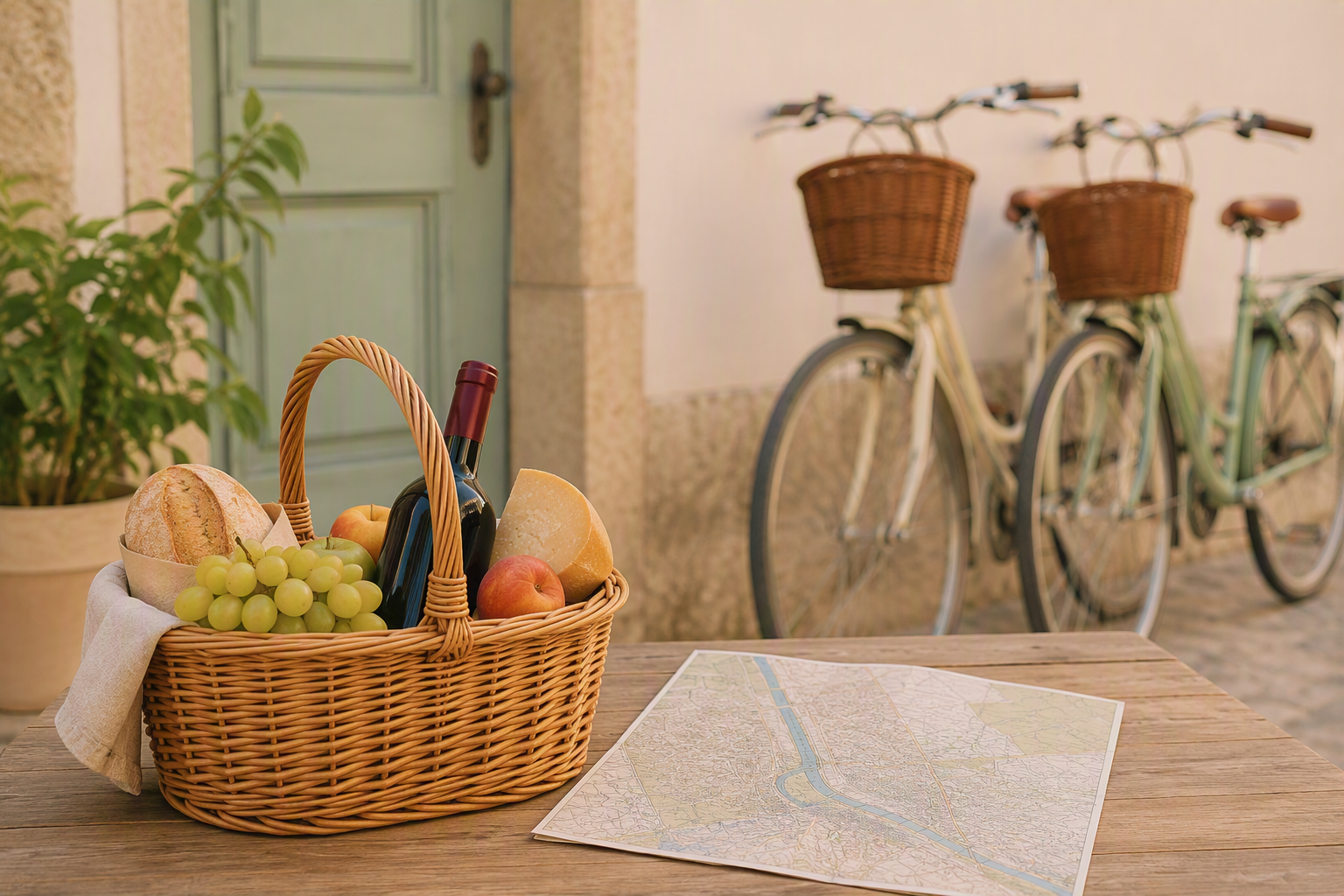
La primera impresión es crucial y establece el tono para toda la estancia. Imagina el escenario: tus huéspedes llegan cansados después de un largo viaje en avión o coche, cargados con maletas y con hambre. Al abrir la puerta de tu alojamiento, en lugar de una mesa vacía y anónima, se encuentran con un cesto de bienvenida cuidadosamente curado que celebra la gastronomía y los sabores de tu región. Este gesto, aparentemente pequeño, genera un impacto emocional inmediato y profundo.
Este simple detalle activa de inmediato el principio de reciprocidad. Al recibir un regalo inesperado y pensado, el cerebro del huésped genera una sensación instantánea de gratitud y bienestar, predisponiéndolos positivamente hacia el resto de su experiencia en tu hogar. No es solo un regalo; es una declaración de intenciones: "Nos importa tu bienestar y queremos que te sientas como en casa, pero con un toque local y especial".
¿Qué debe incluir un Cesto de Bienvenida Exitoso y Memorable?
No es necesario gastar una fortuna. El secreto no está en la cantidad, sino en la selección, la calidad y la presentación. Prioriza la autenticidad y el cariño:
- Productos artesanales y locales: Evita los productos de marca blanca o de supermercado. Opta por:
- Un tarro de mermelada casera o miel de la zona.
- Una botella de vino regional de una pequeña bodega, o una cerveza artesanal local.
- Quesos de productores cercanos o embutidos típicos.
- Dulces tradicionales de la panadería del barrio o galletas artesanales.
- Fruta fresca de temporada de un mercado local.
- Un paquete de café de especialidad o té local.
- Aceite de oliva virgen extra de la región, si es relevante.
- Una nota de bienvenida escrita a mano: En la era digital, un mensaje personalizado en papel, con los nombres de los huéspedes, demuestra un nivel de atención al detalle que ningún hotel automatizado puede replicar. Expresa tu alegría por tenerlos, ofréceles tu ayuda y dales la bienvenida a tu ciudad. Este gesto humano es increíblemente poderoso y crea una conexión personal.
- Opciones para necesidades especiales: Es un gran detalle preguntar con antelación si tienen alguna intolerancia alimentaria (como celiaquía, alergias a frutos secos) o si viajan con niños. Adaptar el contenido del cesto (por ejemplo, con productos sin gluten, zumos y galletas para niños) demuestra una consideración excepcional y un nivel de personalización que pocos ofrecen.
- Presentación impecable: Utiliza una cesta bonita, un lazo, papel de seda o una tela de arpillera. La estética importa. Un cesto bien presentado es visualmente atractivo y anima a los huéspedes a fotografiarlo y compartirlo en redes sociales.
Consejos Adicionales para el Cesto de Bienvenida:
- Colabora con productores locales: Establece alianzas con pequeñas empresas de tu zona. Esto no solo te permite ofrecer productos únicos, sino que también apoya la economía local y puede darte acceso a mejores precios o productos exclusivos.
- Varía el contenido: Si tienes huéspedes recurrentes, intenta cambiar el contenido del cesto de vez en cuando para ofrecerles nuevas sorpresas.
- Considera un tema: Podrías tener cestos temáticos (por ejemplo, "Desayuno Mediterráneo", "Noche de Vinos Locales").
- Información sobre los productos: Incluye una pequeña tarjeta explicando de dónde provienen los productos y su historia. Esto añade un valor cultural y educativo a la experiencia.
La inversión en un cesto de bienvenida de calidad es mínima en comparación con el valor percibido y el retorno en forma de satisfacción del cliente, reseñas positivas y recomendaciones. Es una de las formas más sencillas y efectivas de elevar tu alojamiento a un nivel premium.
2. Guías de Recomendaciones Personalizadas: Tu Toque de Experto Local
Cuando viajamos, todos queremos evitar las "trampas para turistas" y descubrir las verdaderas joyas ocultas de cada destino. Los folletos genéricos de la oficina de turismo, que suelen acumularse en los cajones, ya no añaden un valor real. Tus huéspedes quieren saber dónde comes tú, dónde compras el pan por la mañana, cuál es tu rincón favorito para ver el atardecer o qué actividad local es imperdible. Quieren la perspectiva de un verdadero experto local.
Crear una guía personalizada del anfitrión es una forma económica y altamente efectiva de posicionarte como un experto local y un anfitrión comprometido. Esta guía no solo proporciona información útil, sino que también establece una conexión más profunda entre el huésped y el destino, a través de tus ojos. Puede presentarse tanto en un formato físico de alta calidad dentro del apartamento como en un cómodo formato PDF digital interactivo, enviado antes de la llegada.
Estructura Recomendada para Tu Guía Local Exitosa:
Para asegurar que tu guía sea verdaderamente útil, atractiva y fácil de digerir, te sugerimos estructurarla en las siguientes secciones:
- Gastronomía auténtica y experiencias culinarias:
- Categoriza tus recomendaciones: desayunos con encanto, bares de tapas imprescindibles, restaurantes para cenas románticas, opciones vegetarianas o veganas, pizzerías para llevar, mercados locales de productos frescos.
- Explica brevemente qué plato es el "imperdible" en cada lugar o por qué es especial. Incluye rangos de precios para que los huéspedes puedan elegir según su presupuesto.
- Añade recomendaciones de bebidas locales: vinos, cervezas artesanales, licores típicos.
- Considera incluir alguna receta sencilla de un plato local para que los huéspedes puedan experimentar en tu cocina.
- Rutas y rincones secretos: Explora como un local:
- Diseña pequeños itinerarios a pie o en bicicleta para descubrir el barrio o la ciudad, evitando las aglomeraciones turísticas. Por ejemplo: "Ruta de los Patios Escondidos", "Paseo por el Casco Antiguo al Atardecer", "Sendero Costero con Vistas Panorámicas".
- Sugiere miradores con las mejores vistas, parques tranquilos para relajarse, librerías con encanto, tiendas de artesanía local o galerías de arte menos conocidas.
- Incluye mapas sencillos o enlaces a Google Maps con los puntos marcados.
- Servicios prácticos de confianza y esenciales:
- Indica la ubicación del supermercado con mejor relación calidad-precio, la farmacia más cercana, las paradas de transporte público (autobús, metro, tren) y centros de salud o urgencias.
- Información sobre cajeros automáticos, oficinas de correos y lavanderías si no dispones de una en la propiedad.
- Números de teléfono de emergencia (policía, bomberos, ambulancia) y tu propio número de contacto en caso de necesidad.
- Reglas de la casa e instrucciones claras: Evita malentendidos:
- Explica de forma visual y sencilla cómo funcionan los electrodomésticos (lavadora, lavavajillas, microondas), el aire acondicionado/calefacción, la gestión de residuos (reciclaje) y el uso de la televisión o la conexión Wi-Fi.
- Utiliza iconos y un lenguaje amable para las reglas de la casa (horarios de silencio, prohibición de fumar, cuidado de las instalaciones), evitando un tono excesivamente restrictivo.
- Información sobre el check-in y check-out, y cómo contactarte en caso de problemas.
Formato y Distribución de Tu Guía:
- Físico: Una guía impresa en papel de buena calidad, con un diseño atractivo y encuadernada, puede ser un hermoso objeto de consulta en el apartamento. Las fotos de alta calidad son esenciales.
- Digital: Un PDF interactivo es ideal para enviar antes de la llegada. Permite incluir enlaces a Google Maps, páginas web de restaurantes o sitios de interés. Es fácil de actualizar y los huéspedes pueden consultarlo en sus teléfonos.
Para asegurar que esta experiencia comience incluso antes de que los viajeros lleguen, es vital programar mensajes automáticos a huéspedes explicando las sorpresas que les esperan en tu alojamiento y proporcionando acceso digital a tu guía personalizada. Esto no solo genera una anticipación positiva, sino que también reduce significativamente la ansiedad previa al viaje, al tiempo que gestiona expectativas y proporciona información crucial de manera proactiva. Con Macufy, puedes configurar estos mensajes para que se envíen en momentos clave, asegurando que tus huéspedes estén siempre informados y emocionados por su estancia.
3. Movilidad Gratuita: Bicicletas, Patinetes o Abonos de Transporte
La movilidad es uno de los mayores quebraderos de cabeza y costes adicionales para cualquier turista. Ofrecer soluciones de transporte gratuitas e integradas en la reserva de tu alojamiento es un diferenciador masivo que muy pocos competidores se molestan en implementar debido a la logística que implica. Sin embargo, el valor percibido por el huésped es enorme.
Si tu propiedad está ubicada en una ciudad con buena infraestructura ciclista, cerca de la playa, en un entorno rural idílico o con excelentes conexiones de transporte público, poner a disposición de tus huéspedes dos bicicletas de uso gratuito, patinetes eléctricos o incluso abonos de transporte público recargados, transformará completamente su forma de experimentar el destino. Les ahorrarás el coste de alquiler diario, transporte público o taxis, proporcionando un valor real cuantificable en decenas de euros.
Beneficios Clave de Ofrecer Movilidad Gratuita:
- Ahorro económico para el huésped: Elimina un gasto significativo del presupuesto de viaje.
- Libertad y flexibilidad: Permite a los huéspedes explorar a su propio ritmo y llegar a lugares a los que quizás no irían en transporte público o taxi.
- Experiencia local auténtica: Recorrer la ciudad en bicicleta o usar el transporte local es una forma inmersiva de vivir como un residente.
- Sostenibilidad: Promueve el turismo ecológico y el transporte de bajas emisiones.
- Salud y bienestar: Anima a los ejercicio físico y a disfrutar del aire libre.
Tips para la Gestión Segura y Eficaz de Vehículos de Cortesía:
Para evitar problemas y asegurar una experiencia fluida tanto para ti como para tus clientes, ten en cuenta los siguientes aspectos:
- Mantenimiento regular y profesional: Asegúrate de que los frenos, luces, neumáticos y cadenas de las bicicletas o patinetes estén siempre en perfecto estado. Puedes externalizar este servicio a una tienda de bicicletas local, acordando un plan de mantenimiento periódico. La seguridad es primordial y un vehículo en mal estado podría causar un accidente y dañar tu reputación.
- Equipo de seguridad completo: Proporciona siempre cascos homologados y de diferentes tallas, chalecos reflectantes (especialmente si se usan de noche) y, fundamentalmente, candados robustos de alta seguridad para prevenir robos. Incluye también kits de reparación básicos (parches, bomba pequeña) y una guía rápida sobre cómo usarlos.
- Descargo de responsabilidad y normas de uso: Incluye una cláusula sencilla en las reglas de la casa o en el contrato de alquiler donde el huésped asuma la responsabilidad del uso correcto de los vehículos de cortesía y declare que conoce las normativas de tráfico locales. Es recomendable que firmen un documento de renuncia de responsabilidad. Explica claramente dónde deben guardarse los vehículos y cómo usar los candados.
- Ubicación estratégica: Si ofreces bicicletas, asegúrate de tener un lugar seguro y conveniente para guardarlas (un garaje, un patio cerrado). Si son patinetes eléctricos, indica dónde pueden cargarse de forma segura.
- Considera opciones alternativas: Si las bicicletas no son viables, ¿qué tal abonos de transporte público recargados? Puedes ofrecer una tarjeta con un saldo inicial o simplemente la tarjeta para que ellos la recarguen, facilitando el acceso a la red de transporte. También puedes investigar acuerdos con empresas de alquiler de patinetes o bicicletas compartidas para ofrecer descuentos a tus huéspedes.
La logística puede parecer un obstáculo, pero el valor percibido y la ventaja competitiva que obtendrás al ofrecer movilidad gratuita superan con creces los desafíos. Es una inversión en la experiencia del huésped que se traduce directamente en satisfacción, lealtad y mejores reseñas.
Cómo Comunicar Estas Experiencias Únicas en Tus Anuncios de Airbnb y Booking
De nada sirve esforzarse en diseñar la mejor experiencia para el huésped si esta permanece invisible para los usuarios que buscan alojamiento online. La diferenciación debe ser la estrella indiscutible de tu estrategia de marketing digital y la optimización de tus listados en las OTAs. Tu objetivo es que, al ver tu anuncio, el huésped potencial sienta una conexión y una emoción que no encuentra en otros. Aquí es donde el SEO on-page y el copywriting profesional juegan un papel fundamental.
Para captar la atención de los potenciales viajeros y maximizar tu tasa de conversión, sigue estas directrices de copywriting y fotografía:
Fotografías Profesionales que Cuentan una Historia
El cerebro humano procesa las imágenes miles de veces más rápido que el texto. No te limites a fotografiar habitaciones vacías. Asegúrate de incluir imágenes de alta calidad, luminosas y atractivas que muestren tus elementos diferenciadores en acción o listos para ser usados:
- El cesto de bienvenida: Una foto del cesto cuidadosamente dispuesto sobre la mesa de la cocina, con la luz del sol entrando por la ventana, acompañado quizás de unas tazas de café o una revista. Muestra los productos locales de forma apetitosa.
- Las bicicletas o patinetes: Una imagen de las bicicletas listas en la entrada o el garaje, o incluso una foto escenificada de alguien (un modelo o tú mismo) utilizándolas en un entorno atractivo de la ciudad o la naturaleza. Sugiere aventura y libertad.
- La guía local: Una foto de la guía física abierta en una página interesante, junto a una taza de café humeante o en la mano de alguien que parece estar planeando su día. Si es digital, una captura de pantalla atractiva en una tablet.
- Detalles del alojamiento que complementan: Si tienes un rincón de lectura acogedor, una zona exterior especial o una decoración con elementos artísticos locales, asegúrate de destacarlos.
- Iluminación y encuadre: Utiliza luz natural siempre que sea posible. Evita fotos borrosas o con poca luz. Contrata a un fotógrafo profesional si tu presupuesto lo permite; es una inversión que se recupera rápidamente.
- Perspectiva: Las fotos deben invitar al huésped a imaginarse en ese espacio, disfrutando de esas experiencias.
Recuerda que estas fotos no solo deben mostrar lo que ofreces, sino también la emoción y el beneficio que el huésped obtendrá al elegir tu propiedad.
Títulos y Descripciones Orientados al Beneficio: Vende la Experiencia, No Solo el Espacio
En un mar de anuncios, tu título es tu primera y a menudo única oportunidad de captar la atención. En lugar de utilizar títulos genéricos y aburridos como "Apartamento de 2 habitaciones en el centro", utiliza fórmulas que destaquen de inmediato tu propuesta de valor única. Las palabras clave relevantes para tu diferenciación deben aparecer aquí.
- Ejemplos de títulos optimizados:
- "Ático Céntrico con Bicicletas Gratis + Cesto de Bienvenida Local"
- "Escapada Rural con Guía Personalizada y Productos de la Huerta"
- "Apartamento de Diseño con Patinetes Eléctricos y Vistas al Mar"
- "Descubre [Tu Ciudad] con Nuestras Bicis Gratis y Guía de Experto Local"
- En tu descripción del anuncio, no te limites a enumerar las características físicas de la propiedad. Utiliza el storytelling para que el lector se visualice disfrutando de tu alojamiento. Conecta las características con los beneficios emocionales y las experiencias.
- Usa lenguaje sensorial y emocional: Describe cómo se sentirán, qué verán, qué saborearán.
Ejemplo de descripción con storytelling:
"Imagina despertar con el suave aroma del café local de tu cesto de bienvenida, listo para un delicioso desayuno con productos frescos de la región. Después, ¿qué tal explorar la ciudad a tu propio ritmo en una de nuestras bicicletas gratuitas, descubriendo los rincones más auténticos que solo los locales conocen, gracias a nuestra guía personalizada? Olvídate del estrés del transporte y sumérgete en una aventura única. Al regresar a casa, nuestro acogedor [tipo de propiedad] te espera para relajarte, quizás con una copa del vino local que te hemos dejado. No es solo un lugar para alojarse; es tu puerta de entrada a una experiencia inolvidable en [Tu Ciudad]."
- Usa negritas para destacar los puntos clave de diferenciación.
- Divide el texto en párrafos cortos y usa listas con viñetas para facilitar la lectura.
- Incluye un llamado a la acción claro: "¡Reserva ahora y vive la diferencia!" o "Tu aventura en [Tu Ciudad] comienza aquí."
- Sé consistente: Asegúrate de que las fotos, el título y la descripción refuercen el mismo mensaje de valor añadido.
Al optimizar tus anuncios de esta manera, no solo atraerás más clics, sino que también atraerás a los huéspedes adecuados: aquellos que valoran la experiencia y están dispuestos a pagar por ella. Esta es la base de un buen SEO on-page para tus listados de alquiler vacacional.
La Automatización como Aliada para Ofrecer una Experiencia de 5 Estrellas sin Esfuerzo
Ofrecer un servicio altamente personalizado y lleno de detalles requiere tiempo, organización y consistencia. Muchos propietarios temen que, a medida que escalan su negocio o gestionan múltiples propiedades, la calidad de la experiencia del cliente se diluya debido a la carga de trabajo administrativa. La buena noticia es que la tecnología moderna, como Macufy, te permite automatizar los procesos operativos más repetitivos sin perder ese toque cálido y personal que tanto aprecian los huéspedes.
Al liberar tiempo de las tareas administrativas diarias, puedes enfocar tus esfuerzos en lo que realmente importa: perfeccionar los detalles de la hospitalidad, interactuar con los huéspedes de manera significativa y buscar nuevas formas de sorprenderlos. La automatización no reemplaza la hospitalidad; la potencia.
¿Cómo Macufy Potencia tu Estrategia de Diferenciación?
Macufy.com está diseñado para ser tu socio estratégico en la gestión de propiedades turísticas, permitiéndote ofrecer una experiencia de cinco estrellas de manera eficiente y escalable:
- Mensajes automáticos personalizados: Con Macufy, puedes programar una serie de mensajes automáticos que se envíen a tus huéspedes en momentos clave. Estos mensajes pueden incluir:
- Un mensaje de bienvenida inmediatamente después de la reserva, agradeciendo y generando anticipación.
- El envío de tu guía local digital personalizada unos días antes de la llegada, junto con instrucciones de cómo llegar y qué esperar. Configurar mensajes automáticos nunca fue tan fácil.
- Recordatorios de check-in y códigos de acceso.
- Sugerencias de actividades durante la estancia.
- Mensajes de check-out con instrucciones claras sobre la salida y una invitación a dejar una reseña.
- Un mensaje de agradecimiento posterior a la estancia.
- Sincronización de reservas y gestión centralizada: Si gestionas tu propiedad en múltiples portales turísticos simultáneamente (Airbnb, Booking.com, VRBO, etc.), la sincronización de reservas de Macufy es indispensable. Previene las dobles reservas y te permite centralizar toda la información de tus huéspedes en una única plataforma fácil de usar. Esto asegura que nunca olvidarás preparar un cesto de bienvenida, enviar las instrucciones de acceso o coordinar el mantenimiento, independientemente del canal por el que se haya realizado la reserva. La gestión unificada te da la tranquilidad de que todos los aspectos de la experiencia del huésped están bajo control.
- Gestión de tareas y equipos: Macufy te permite asignar tareas a tu equipo de limpieza o mantenimiento (por ejemplo, "preparar cesto de bienvenida", "revisar bicicletas"), asegurando que los estándares de calidad se mantengan de forma consistente. Puedes ver el estado de cada tarea y asegurarte de que todo esté listo antes de la llegada del huésped.
- Análisis y reportes: Macufy te proporciona datos sobre tus reservas, ocupación y rendimiento. Esto te permite identificar patrones, entender qué funciona mejor y tomar decisiones informadas para seguir optimizando la experiencia del huésped y tu rentabilidad.
La automatización con una plataforma como Macufy no es un sustituto de la calidez humana, sino una herramienta que la facilita. Te permite ser un anfitrión más presente, atento y enfocado en los detalles, mientras la tecnología se encarga de la parte operativa. Es la combinación perfecta para escalar tu negocio sin comprometer la calidad de la experiencia premium que deseas ofrecer.
El Impacto Financiero de la Diferenciación: ¿Cuánto Cuesta y Cuánto Retornas?
Es natural que, como propietario de una propiedad y gestor de un negocio, te preguntes sobre el retorno de la inversión (ROI) de estas iniciativas de hospitalidad. ¿Realmente vale la pena el gasto de regalar productos locales o mantener bicicletas? La respuesta es un rotundo sí, y vamos a analizar los números con un ejemplo práctico y realista para demostrarlo.
La diferenciación no es un coste, es una inversión estratégica que se amortiza rápidamente y genera beneficios a largo plazo. No se trata de gastar sin control, sino de invertir de forma inteligente en detalles que tienen un alto valor percibido por el huésped.
Análisis de Coste Estimado (por reserva):
Los costes pueden variar según la ubicación y la calidad de los productos, pero usemos un promedio razonable para un alojamiento de gama media-alta:
- Cesto de bienvenida local: €12
- Botella de vino local / cerveza artesanal: €5
- Queso artesanal / embutido pequeño: €4
- Pan de panadería / dulces locales: €3
- Depreciación y mantenimiento de 2 bicicletas: €5 por reserva
- Inversión inicial en bicicletas de segunda mano revisadas (o nuevas de gama media): €300 - €600 por bicicleta. Digamos €800 por dos bicicletas.
- Vida útil estimada: 3-5 años. Depreciación anual: €200 - €400.
- Mantenimiento anual (revisiones, reparaciones menores): €100 - €200.
- Si tienes 80 reservas al año, el coste por reserva es de aproximadamente (€400 + €200) / 80 = €7.5. Si las bicicletas son más económicas o se usan menos, este coste baja. Para ser conservadores, estimemos €5 por reserva.
- Impresión y actualización de guías: €1 por reserva
- Guía física: €0.50 - €1.50 por copia (dependiendo de la calidad de impresión y volumen).
- Guía digital: coste casi nulo, pero incluimos el tiempo de diseño y actualización.
- Otros detalles (jabones artesanales, café/té de cortesía extra, etc.): €2 por reserva
- Inversión total estimada en experiencia: €20 por reserva.
Esta es una inversión relativamente baja si consideramos el impacto que genera.
Análisis de Beneficio Estimado:
Al diferenciarte claramente de la competencia estándar en tu área, puedes aplicar un aumento moderado en tu tarifa por noche. Incluso un incremento de solo €10 puede tener un impacto significativo:
- Aumento de tarifa por noche: +€10
- Para una estancia promedio de 4 noches, esto equivale a €40 adicionales en ingresos brutos por reserva.
Restando la inversión de €20 por reserva, obtienes una ganancia neta adicional directa de €20 por reserva. Pero el verdadero valor no se limita a esta ganancia inmediata. El impacto real a medio y largo plazo se traduce en:
- Aumento de la tasa de ocupación anual: Gracias a un mejor posicionamiento en OTAs y excelentes reseñas, tu tasa de ocupación puede pasar de un 60% a un 75% o más. Un 15% adicional de ocupación en un año puede significar decenas de miles de euros extra en ingresos.
- Eliminación virtual de temporadas bajas extremas: Tu alojamiento seguirá siendo atractivo y generando reservas incluso cuando la demanda general disminuya, reduciendo la volatilidad de tus ingresos.
- Flujo constante de huéspedes referidos y reservas directas: Un huésped satisfecho no solo vuelve, sino que recomienda tu propiedad a su círculo. Las reservas directas te ahorran las costosas comisiones de las OTAs (que pueden ser del 15% al 25%), lo que aumenta drásticamente tus márgenes.
- Mayor flexibilidad de precios: Cuando ofreces un valor superior, tienes más poder para ajustar tus precios en momentos de alta demanda, maximizando tus ingresos sin miedo a perder competitividad.
- Construcción de reputación y marca: Una reputación sólida es un activo intangible de valor incalculable que atrae a más huéspedes de calidad y te posiciona como líder en tu mercado.
Consideremos un ejemplo práctico: si tienes 80 reservas al año y cada una te genera €20 de beneficio extra directo, ya son €1,600 anuales. Pero si esas 80 reservas se convierten en 100 gracias a la mejor ocupación, y un 20% de ellas son directas (ahorrándote, por ejemplo, €50 en comisiones por reserva), el impacto financiero se dispara. Además, las reseñas de 5 estrellas te posicionan mejor, atraen más reservas y te permiten mantener tarifas premium.
La diferenciación es, por tanto, una de las estrategias más rentables y sostenibles para cualquier propietario de alquiler vacacional. No solo mejora la experiencia del huésped, sino que también impulsa directamente tu línea de fondo.
Conclusión: Tu Camino Hacia un Alojamiento Turístico Exitoso y Rentable con Macufy
El mercado del alquiler vacacional es, sin lugar a dudas, cada vez más competitivo. Sin embargo, esta realidad no debe ser percibida como una amenaza insuperable, sino como una gran oportunidad para aquellos anfitriones y gestores de propiedades que están dispuestos a ir un paso más allá en la calidad y la personalización de su servicio. Dejar atrás el modelo de alojamiento estándar y apostar por la diferenciación a través de pequeñas experiencias de valor añadido es la estrategia más robusta, rentable y satisfactoria para asegurar el éxito a largo plazo de tu negocio.
Hemos explorado cómo detalles aparentemente pequeños, como un cesto de bienvenida con productos locales, una guía personalizada con tus recomendaciones de experto o la oferta de movilidad gratuita, pueden transformar la percepción de tu propiedad. Estos elementos no solo deleitan a tus huéspedes, sino que también te posicionan como un referente, generan reseñas de 5 estrellas, fomentan la fidelidad y, crucialmente, te permiten justificar tarifas premium y aumentar tu ocupación anual.
Recuerda que la clave no está en el gasto exorbitante, sino en la autenticidad, la personalización y la atención al detalle. Cada una de las estrategias que hemos discutido es una inversión en la experiencia del huésped que se traduce directamente en un retorno financiero y en la construcción de una reputación inquebrantable.
Para implementar estas estrategias de manera eficiente y sin que el trabajo administrativo te abrume, es fundamental contar con las herramientas adecuadas. Aquí es donde Macufy.com se convierte en tu aliado indispensable. Nuestra plataforma te permite automatizar las tareas más tediosas de tu día a día, desde la gestión de la comunicación con los huéspedes mediante mensajes automáticos y personalizados, hasta la sincronización de reservas en todos tus canales, evitando dobles reservas y optimizando tu calendario.
Tu camino hacia el éxito comienza hoy. Empieza con algo pequeño: diseña una guía local digital con tus rincones favoritos de la ciudad, busca un proveedor local de confianza para tu cesto de bienvenida y, sobre todo, apóyate en herramientas de gestión profesional que te permitan automatizar las tareas repetitivas. Al liberar tu tiempo, podrás enfocarte en lo que realmente te apasiona: ofrecer una hospitalidad excepcional y crear experiencias que tus huéspedes no solo disfrutarán, sino que recordarán y recomendarán. Tus huéspedes te lo agradecerán con excelentes reseñas de 5 estrellas, y tu cuenta de resultados reflejará el verdadero valor de una hospitalidad auténtica y diferenciada. ¡Descubre cómo Macufy puede transformar la gestión de tu alojamiento y llevar tu negocio al siguiente nivel!