
Holiday Rental Regulations by Region 2026: A Complete Guide
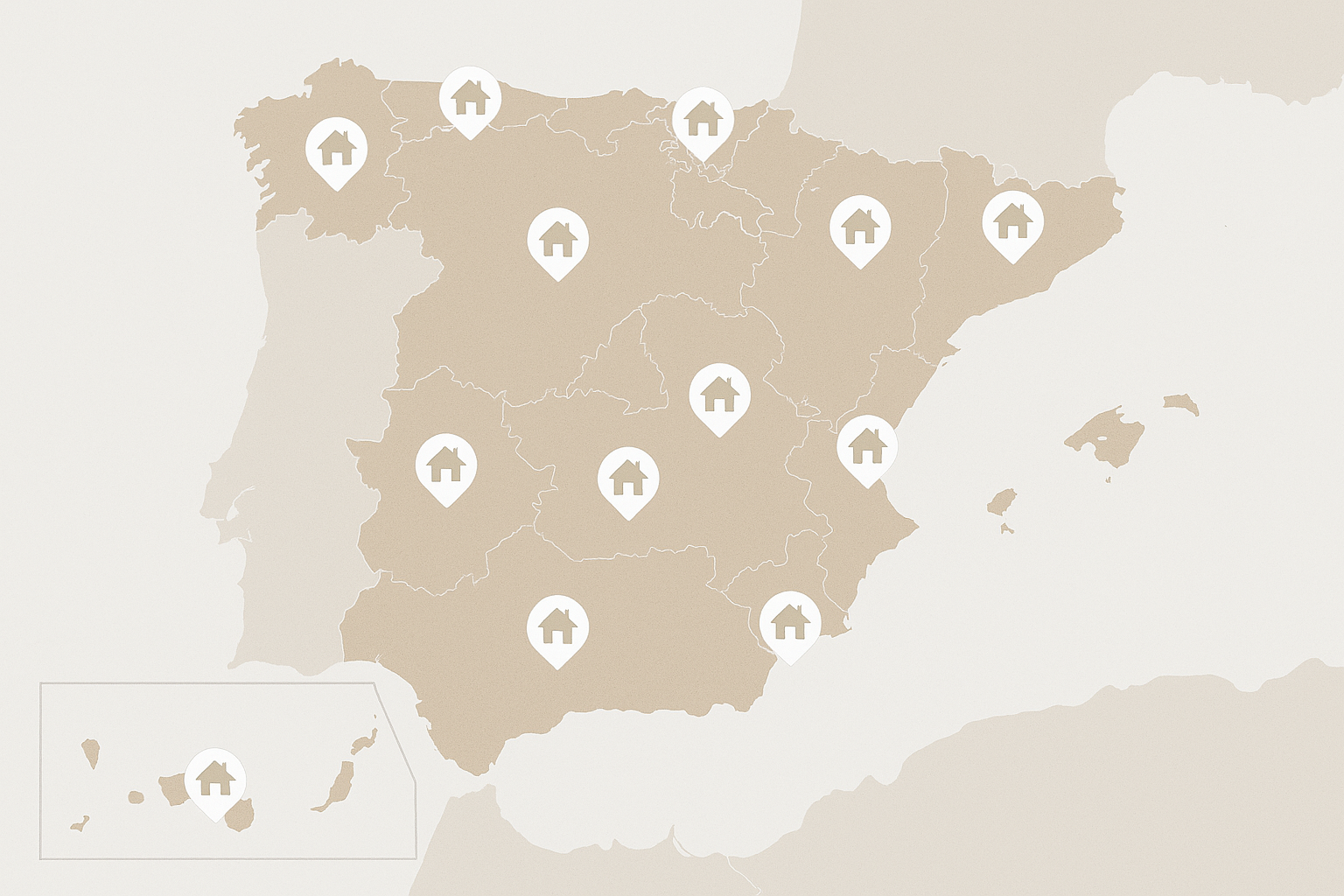
Holiday Rental Regulations by Region 2026: A Definitive Guide for Landlords on Macufy.com
The allure of holiday rentals has never been stronger. For travelers, they offer a unique blend of personalization, flexibility, and local immersion that traditional hotels often can't match. For property owners, they represent a fantastic opportunity to generate income from their assets. However, this booming popularity has inevitably led to increased scrutiny and, consequently, a complex web of regulations across different regions. As we approach 2026, understanding these evolving holiday rental regulations by region is not just advisable, but absolutely essential for any landlord.
In Spain, where tourism is a cornerstone of the economy, the autonomous communities have taken proactive steps to regulate this activity. Their goal? To ensure the quality, safety, and sustainability of services offered, protect local communities, and provide a fair playing field for all tourism stakeholders. Navigating these diverse and often intricate vacation rental rules Spain can be a daunting task, but it's crucial for avoiding legal pitfalls and ensuring a smooth, profitable operation.
This comprehensive guide is designed to be your go-to resource for understanding the legal requirements for holiday lets across various Spanish regions in 2026. We'll delve into the specifics, dissecting the regulations and requirements you must comply with to legally rent your property on a holiday basis. Whether you're a seasoned landlord or just considering entering the market, this guide, powered by insights relevant to platforms like Macufy.com, will equip you with the knowledge you need to thrive.
Why Understanding Holiday Rental Regulations is Non-Negotiable for Landlords
Ignoring or misunderstanding the holiday rental regulations can lead to significant headaches, financial penalties, and even the closure of your rental operation. Beyond mere compliance, a deep understanding of these rules underpins the long-term success and ethical operation of your property.
Legal Compliance and Avoiding Penalties
Each autonomous community in Spain has its own distinct set of regional tourism laws. These laws dictate everything from the registration process to the physical characteristics your property must possess. Failure to comply can result in substantial fines, which can range from hundreds to tens of thousands of euros, depending on the severity of the infraction and the region. In some cases, repeated non-compliance can even lead to the permanent prohibition of your property from being used for short-term rental purposes. Staying informed about the Spanish holiday rental legislation is your first line of defense.
Ensuring Guest Safety and a Superior Experience
Regulations aren't just about bureaucracy; they often incorporate crucial safety standards. Requirements for fire extinguishers, first-aid kits, proper ventilation, and electrical safety are designed to protect your guests. Adhering to these standards not only fulfills your legal obligations but also provides peace of mind for both you and your guests. A safe and comfortable environment directly translates to positive reviews, repeat bookings, and a stellar reputation for your property. Compliance with quality and safety standards is paramount.
Maintaining Quality Standards and Market Credibility
The regulatory framework often sets minimum quality benchmarks for holiday accommodation. This includes requirements for furnishings, amenities, cleanliness, and maintenance. By meeting these standards, you contribute to the overall quality of the tourist rental market in your region, which benefits everyone. For individual landlords, it enhances your property's appeal and credibility, allowing you to attract higher-paying guests and justify competitive pricing. This is vital for managing holiday rentals legally and profitably.
Local Community Impact and Sustainability
Many holiday rental regulations are introduced in response to concerns from local residents regarding noise, waste management, increased traffic, and the impact on housing availability. By understanding and respecting these regulations, landlords play a responsible role in integrating their businesses into the local community. This includes adhering to rules on guest registration, noise levels, and sometimes even limits on the number of vacation rental properties in certain areas. Sustainable tourism practices are increasingly important, and regulations often reflect this, aiming for a balance between economic benefits and community well-being.
Financial Implications and Tax Responsibilities
Operating a holiday rental property also comes with specific tax obligations. These can include income tax on rental earnings, local tourist taxes, and in some cases, VAT. Regulations often clarify these responsibilities. Being fully aware of these financial duties prevents unexpected tax bills and ensures you're operating a fully legitimate and transparent business. Professional advice on tax implications for holiday lets is always recommended.
The Evolving Landscape of Spanish Holiday Rental Legislation (2026 Perspective)
Spain's approach to holiday rental regulations is characterized by its decentralized nature. While the central government sets broad guidelines, the specific laws and decrees are enacted by each of the 17 autonomous communities, leading to significant variations. This dynamic environment means that what is legal in one region might be prohibited in another, and rules can change relatively quickly.
Overview of Decentralized Regulation
The principle of subsidiarity grants autonomous communities the power to legislate on tourism matters within their territories. This has resulted in a patchwork of regulations, each tailored to the specific economic, social, and environmental realities of the region. This is why a guide on holiday rental regulations by region 2026 is so critical. It's not a one-size-fits-all scenario.
Common Threads Across Regions
Despite the differences, there are several common requirements that generally apply across most, if not all, Spanish autonomous communities:
- Registration in an official tourism register: Properties must be registered with the relevant regional tourism authority.
- Obtaining a tourist license: A specific license or declaration of responsibility is often required to operate legally.
- Compliance with minimum quality and safety standards: Ensuring the property meets certain habitability and safety criteria.
- Civil liability insurance: Mandatory insurance to cover potential damages or accidents.
- Guest registration with security forces: Reporting guest details to the police or Guardia Civil.
- Energy Performance Certificate (EPC): Required for all properties offered for rent or sale.
Anticipating Future Trends in 2026
As we look towards 2026, several trends are likely to shape the future of holiday rental legislation:
- Increased focus on sustainability: Regulations may increasingly incorporate environmental criteria, such as energy efficiency and waste management.
- Digitalization of processes: More regions will likely move towards fully online registration and management systems.
- Stricter enforcement: With more sophisticated data analysis, authorities will likely enhance their ability to detect and penalize non-compliant properties.
- Balancing tourism with housing needs: Further restrictions or quotas may be introduced in highly saturated urban areas to address housing shortages and gentrification concerns.
- Transparency: Greater emphasis on clear communication of rules and obligations to both landlords and guests.
Comprehensive Guide to Holiday Rental Regulations by Region 2026
Let's dive into the specifics of holiday rental regulations by region 2026, examining the key requirements in Spain's most popular tourist destinations and beyond. Remember, this information is a guide, and it's always recommended to consult official regional sources or legal professionals for the most up-to-date and precise details.
Andalusia: Sun, Culture, and Clear Regulations
Andalusia, with its vibrant cities like Seville and Malaga and stunning coastlines, is a magnet for tourists. The holiday rental regulations here are governed primarily by Law 13/2017, of 28 December, on Tourism in Andalusia, and its implementing decrees, notably Decree 28/2016 for Viviendas con Fines Turísticos (VFT).
Key Requirements for Holiday Rentals in Andalusia:
- Registration in the Andalusia Tourist Enterprises Register (RETA): This is the crucial first step. You must submit a 'Declaración Responsable' (responsible declaration) to the Ministry of Tourism, Culture, and Sport. This declaration confirms that your property meets all the legal requirements.
- Obtaining a Tourist Licence (VFT): Once registered, your property will receive a unique registration code (VFT/GR/01234, for example). This code must be displayed in all advertising.
- Compliance with Quality and Safety Standards:
- Habitability Licence (Licencia de Ocupación): The property must have this, confirming it's fit for habitation.
- Direct exterior ventilation: All bedrooms and living rooms must have direct ventilation to the exterior.
- Air conditioning/heating: Properties rented between October and April must have heating, and between May and September, air conditioning in all bedrooms and living rooms.
- First-aid kit: A basic first-aid kit must be available.
- Tourist information: Provide information on local attractions, restaurants, shops, medical services, and public transport.
- Complaint book: An official complaint book must be available to guests.
- Cleaning: The property must be delivered clean and ready for use.
- Bed linen and towels: Sufficient sets must be provided.
- Contact number: A contact number for incidents must be available 24/7.
- Civil Liability Insurance: While not explicitly detailed in the original text, it's a common best practice and often implicitly required for any commercial activity involving guests.
- Guest Registration: Details of all guests over 16 must be sent to the police (Guardia Civil or Policía Nacional) within 24 hours of check-in, using the Hospederías system.
Specific Nuances in Andalusia:
Andalusia differentiates between different types of tourist accommodations, such as VFT (Viviendas con Fines Turísticos - urban properties), Casas Rurales (rural properties), and Apartamentos Turísticos (blocks of apartments managed by a single operator). The VFT category is the most common for individual landlords. Some municipalities, like Seville, have introduced additional local restrictions on the number of holiday rental properties in certain areas, particularly in the historic city center. It's crucial to check local urban planning regulations.
Catalonia: A Model of Stringent Regulation
Catalonia, home to Barcelona, is known for having some of the most stringent holiday rental regulations in Spain. Law 2/2016, of 10 March, on Tourism in Catalonia, along with Decree 159/2012 and subsequent amendments, governs the sector.
Key Requirements for Holiday Rentals in Catalonia:
- Registration in the Catalonia Tourist Activities Register (RATC): Similar to Andalusia, a 'Declaración Responsable' must be submitted to the Generalitat de Catalunya. This declaration results in a unique registration number (HUTG-012345 for Girona, for example). This HUT (Habitatge d'Ús Turístic) number is mandatory for all advertising.
- Obtaining a Tourist Licence (HUT): The registration process essentially grants you the license, provided all stated conditions are met.
- Compliance with Quality and Safety Standards:
- Habitability Certificate (Cédula de Habitabilidad): Essential for proving the property meets minimum living standards.
- Minimum furnishings and equipment: The property must be furnished and equipped for immediate use, including bedding, towels, and kitchenware.
- Complaint book: Mandatory.
- Contact person: A local contact person must be available.
- Energy Performance Certificate (EPC): Mandatory for all rental properties.
- Tourist Tax: Catalonia applies a tourist tax per person per night, which landlords are responsible for collecting and remitting to the tax authorities. Rates vary depending on the type of accommodation and location (e.g., Barcelona city vs. rest of Catalonia).
- Guest Registration: All guests over 16 must be registered with the Mossos d'Esquadra (Catalan police) via their online system within 24 hours of check-in.
Specific Nuances in Catalonia:
Barcelona city has famously imposed a moratorium on new tourist licenses and has been very active in cracking down on illegal rentals. Many other municipalities in Catalonia also have specific urban planning restrictions, limiting where holiday rentals can operate. For example, some areas only allow holiday lets in ground-floor properties or prohibit them in multi-family residential buildings. It's crucial to check with your local town hall (Ayuntamiento) before proceeding.
Community of Madrid: Adapting to Urban Pressures
The Community of Madrid, a bustling urban center, has also refined its holiday rental regulations, primarily through Law 1/2018, of 22 March, on Tourism in the Community of Madrid, and subsequent decrees, notably Decree 29/2019, which introduced stricter requirements.
Key Requirements for Holiday Rentals in Madrid:
- Registration in the Community of Madrid Tourist Enterprises Register (RETCM): Landlords must submit a 'Declaración Responsable' to the General Directorate of Tourism. Upon approval, a registration number (VT-01234) is issued.
- Obtaining a Tourist Licence: The registration process serves as the license.
- Compliance with Quality and Safety Standards:
- Separate access: Properties must have a separate and independent entrance from the rest of the building. This is a significant requirement that has impacted many traditional apartments.
- Habitability Licence (Licencia de Primera Ocupación): Required.
- Minimum furnishings and equipment: Fully furnished and equipped for immediate use.
- Air conditioning/heating: Required in all bedrooms and living rooms.
- First-aid kit: Mandatory.
- Complaint book: Mandatory.
- Contact number: 24/7 contact for incidents.
- Energy Performance Certificate (EPC): Mandatory.
- Guest Registration: Guest details must be sent to the Policía Nacional via their online system within 24 hours.
Specific Nuances in Madrid:
The requirement for a separate entrance has been a major hurdle for many holiday rental properties in Madrid, particularly in central areas. Furthermore, some districts within Madrid have imposed specific urban planning restrictions, limiting the number of new tourist rental units. The regulations aim to differentiate between purely residential use and tourist use, seeking to preserve housing for permanent residents.
Valencian Community: Balancing Coastal Tourism and Regulation
The Valencian Community, encompassing popular destinations like Valencia, Alicante, and Benidorm, relies heavily on tourism. Its holiday rental regulations are governed by Law 15/2018, of 7 June, on Tourism, Leisure and Hospitality of the Valencian Community, and Decree 92/2009 (and its amendments) which specifically regulates Viviendas Turísticas (VT).
Key Requirements for Holiday Rentals in Valencia:
- Registration in the General Register of Tourist Companies, Establishments and Professions: A 'Declaración Responsable' must be submitted to the Valencian Tourism Agency (Turisme Comunitat Valenciana). This leads to the issuance of a VT number (e.g., VT-45678-V for Valencia province).
- Obtaining a Tourist Licence: The registration process is the key.
- Compliance with Quality and Safety Standards:
- Habitability Certificate (Cédula de Habitabilidad): Required.
- Minimum furnishings and equipment: Must be fully equipped and furnished for immediate use.
- Air conditioning/heating: Required from May 1 to September 30 (air conditioning) and from October 1 to April 30 (heating) in living rooms and bedrooms.
- First-aid kit: Mandatory.
- Complaint book: Mandatory.
- Tourist information: Provide information on the area.
- Contact number: 24/7 contact for guests.
- Energy Performance Certificate (EPC): Mandatory.
- Tourist Tax: As of 2024, a tourist tax has been introduced in some municipalities within the Valencian Community. Landlords are responsible for its collection and remittance.
- Guest Registration: Details of guests over 16 must be sent to the Policía Nacional or Guardia Civil via the Hospederías system within 24 hours.
Specific Nuances in Valencia:
The Valencian Community places a strong emphasis on property standards. The classification of properties (e.g., standard, superior) can depend on the amenities and services offered. Local municipal regulations are also important here, with some coastal towns implementing specific zoning restrictions or limits on tourist rental properties.
Balearic Islands: Navigating Island-Specific Rules
The Balearic Islands (Mallorca, Ibiza, Menorca, Formentera) are a prime holiday rental destination, but their regulations are complex, varying significantly not just by island, but often by municipality. Law 6/2017, of 31 July, on the Marketing of Stays in Tourist Homes, and its subsequent amendments and island-specific decrees, are the main legislative frameworks.
Key Requirements for Holiday Rentals in the Balearics:
- Registration in the Tourism Register of the Balearic Islands: A 'Declaración Responsable' is submitted to the Conselleria de Turismo. This leads to a registration number.
- Obtaining a Tourist Licence: This is a multi-step process. First, properties must be located in zones where holiday rentals are permitted according to specific zoning plans (PTI - Planes Territoriales Insulares or municipal urban plans). Second, a maximum number of bed places is often assigned. Third, a sustainability contribution (similar to purchasing a 'slot') may be required in some areas.
- Compliance with Quality and Safety Standards:
- Habitability Certificate (Cédula de Habitabilidad): Essential.
- Minimum furnishings and equipment: Fully equipped.
- Energy Performance Certificate (EPC): Mandatory.
- Water meters: Individual meters for each property.
- Complaint book: Mandatory.
- Contact person: A local contact person must be available.
- Age of property: In some cases, properties must be at least 5 years old.
- Sustainable Tourism Tax (Ecotax): Landlords are responsible for collecting and remitting this tax from guests.
- Guest Registration: Details of guests over 16 must be sent to the Policía Nacional or Guardia Civil within 24 hours.
Specific Nuances in the Balearics:
The Balearic Islands have some of the most restrictive holiday rental regulations, particularly regarding multi-family buildings. In Mallorca, for example, holiday rentals in apartment blocks are largely prohibited, with exceptions for ground floors or properties with separate entrances in certain zones. Ibiza and Menorca also have their own specific zoning maps and restrictions. It is absolutely critical to check the specific regulations for the island and municipality where your property is located, as these can change frequently.
Canary Islands: Unique Climate, Unique Rules
The Canary Islands, with their year-round warm climate, are a popular holiday rental destination. The primary legislation governing holiday rentals is Law 14/2016, of 26 December, on Tourism in the Canary Islands, and Decree 113/2015, which specifically regulates Viviendas Vacacionales (VV).
Key Requirements for Holiday Rentals in the Canary Islands:
- Registration in the General Tourist Register of the Autonomous Community of the Canary Islands: A 'Declaración Responsable' must be submitted to the competent island council (Cabildo Insular). This leads to a registration number (e.g., VV-35/1/0001 for Gran Canaria).
- Obtaining a Tourist Licence: The registration process is key.
- Compliance with Quality and Safety Standards:
- Habitability Certificate (Cédula de Habitabilidad): Required.
- Minimum furnishings and equipment: Fully equipped for immediate use.
- Complaint book: Mandatory.
- Contact person: A local contact person must be available.
- Energy Performance Certificate (EPC): Mandatory.
- Civil Liability Insurance: Recommended and often implicitly required.
- Guest Registration: Details of guests over 16 must be sent to the Policía Nacional or Guardia Civil via the Hospederías system within 24 hours.
Specific Nuances in the Canary Islands:
A significant aspect of the Canary Islands holiday rental regulations is the restriction on Viviendas Vacacionales in areas zoned exclusively for tourist use (zonas turísticas). This means that in many purpose-built tourist complexes or resorts, individual apartments cannot be rented out as Viviendas Vacacionales if the land is classified for tourist exploitation. This has been a contentious issue and requires careful checking of the property's land classification. There are also specific rules differentiating between Viviendas Vacacionales (individual properties) and Apartamentos Turísticos (managed complexes).
Basque Country: Northern Charm and Emerging Regulations
The Basque Country, known for its gastronomy and unique culture, has also seen a surge in holiday rentals. Its holiday rental regulations are outlined in Law 7/2016, of 28 October, on Tourism in the Basque Country, and Decree 101/2018, of 3 July, which specifically regulates Viviendas Turísticas (ETVE).
Key Requirements for Holiday Rentals in the Basque Country:
- Registration in the Basque Country Tourist Enterprises Register (Registro de Empresas y Actividades Turísticas): A 'Declaración Responsable' must be submitted to the Directorate of Tourism of the Basque Government. This leads to a registration number (e.g., ESS01234 for Gipuzkoa).
- Obtaining a Tourist Licence: The registration process is key.
- Compliance with Quality and Safety Standards:
- Habitability Certificate (Cédula de Habitabilidad): Required.
- Minimum furnishings and equipment: Fully equipped for immediate use.
- Complaint book: Mandatory.
- Contact person: A local contact person must be available.
- Energy Performance Certificate (EPC): Mandatory.
- Specific signage: Often required to display a distinctive sign on the exterior of the property.
- Guest Registration: Details of guests over 16 must be sent to the Ertzaintza (Basque police) via their online system within 24 hours.
Specific Nuances in the Basque Country:
Some municipalities, like San Sebastián, have introduced their own urban planning restrictions, limiting the number of holiday rental properties in certain areas, particularly in the city center. It's crucial to consult local municipal ordinances as they can override or add to regional regulations.
Galicia: Green Coastline, Green Light for Rentals?
Galicia, with its rugged coastline and rich Celtic heritage, is another region where holiday rentals are gaining traction. The holiday rental regulations are primarily governed by Law 7/2017, of 13 October, on Tourism in Galicia, and Decree 12/2017, of 26 January, which regulates Viviendas de Uso Turístico (VUT).
Key Requirements for Holiday Rentals in Galicia:
- Registration in the Register of Tourist Companies and Activities of Galicia: A 'Declaración Responsable' must be submitted to the Xunta de Galicia. This results in a VUT number (e.g., VUT-PO-012345 for Pontevedra province).
- Obtaining a Tourist Licence: The registration process is key.
- Compliance with Quality and Safety Standards:
- Habitability Certificate (Licencia de Primera Ocupación): Required.
- Minimum furnishings and equipment: Fully equipped for immediate use.
- Complaint book: Mandatory.
- Contact person: A local contact person must be available.
- Energy Performance Certificate (EPC): Mandatory.
- Insurance: Civil liability insurance is explicitly mentioned as mandatory.
- Guest Registration: Details of guests over 16 must be sent to the Policía Nacional or Guardia Civil via the Hospederías system within 24 hours.
Specific Nuances in Galicia:
Galicia's regulations are generally considered less restrictive than those in some other autonomous communities, focusing more on quality and safety standards. However, as with all regions, checking local municipal ordinances is always a wise step, especially in popular tourist areas like Santiago de Compostela or coastal towns.
Other Key Autonomous Communities: A Brief Overview
While we've covered the major holiday rental hotspots, it's important to remember that all autonomous communities have their own regulations. Here's a brief mention of a few others:
- Asturias: Governed by Decree 48/2016, which regulates Viviendas Vacacionales. Focuses on registration and quality standards, often requiring properties to be individual homes (not apartments in multi-family buildings).
- Murcia: Regulated by Law 12/2013 on Tourism and its specific decrees for Viviendas con Fines Turísticos. Requires registration and compliance with basic habitability and safety standards.
- Cantabria: Governed by Law 5/1999 on Tourism and Decree 82/2019, regulating Viviendas de Uso Turístico. Emphasizes registration, display of the registration number, and minimum equipment.
- Castilla y León: Law 14/2010 on Tourism and Decree 3/2017 regulate Viviendas de Uso Turístico. Focuses on registration, display of the registration number, and specific quality standards, including heating and hot water.
The key takeaway is consistent: property registration for rentals and obtaining a specific license are almost universally required, along with adherence to quality and safety benchmarks.
Essential Common Requirements for All Holiday Rental Properties
Beyond the regional specificities, there are fundamental requirements that form the bedrock of short-term rental compliance across Spain. Understanding these general principles is crucial for any landlord.
Official Registration in the Corresponding Register
This is the gateway to legal operation. Every autonomous community maintains a public register of tourist enterprises and activities. The process typically involves submitting a 'Declaración Responsable' (responsible declaration), a legally binding document where you declare that your property meets all the legal requirements for holiday rental operations. This declaration usually includes:
- Property details: Address, cadastral reference, capacity.
- Owner/operator details: Identification, contact information.
- Declaration of compliance: A statement confirming adherence to all regional regulations (habitability, safety, equipment, etc.).
- Documentation: Often requires a copy of the habitability certificate, EPC, and proof of ownership.
Once processed, your property will be assigned a unique registration number, which is legally required to be displayed in all advertising and within the property itself. This number is your proof of legal framework for vacation properties.
Obtaining a Tourist License
In most regions, the successful completion of the registration process and the issuance of a registration number effectively serve as your tourist license. This license is not a physical document to be applied for separately in all cases, but rather the official recognition that your property is authorized for holiday rental purposes. It signifies that your property has met the necessary criteria set by the regional tourism authority. It's crucial to understand the validity period of your license and any renewal requirements.
Ensuring Quality and Safety Standards
This category covers a broad range of requirements designed to ensure a comfortable, safe, and pleasant stay for your guests. These standards directly impact guest satisfaction and your property's reputation.
- Minimum furnishings and equipment: Your property must be fully furnished and equipped for immediate use. This includes basic furniture, kitchenware, appliances (refrigerator, stove), hot water, and sufficient bedding and towels for the declared capacity.
- Safety installations: This is paramount. Ensure your property has:
- Functioning smoke detectors.
- A fire extinguisher (easily accessible and recently serviced).
- A first-aid kit, clearly visible and well-stocked.
- Properly maintained electrical and gas installations, with valid inspection certificates where required.
- Secure locks on all doors and windows.
- Accessibility considerations: While not always mandatory for existing properties, some new builds or renovated properties may have specific accessibility requirements. Providing information on accessibility features is always a good practice.
- Hygiene and cleanliness protocols: The property must be delivered in impeccable condition. Implement thorough cleaning and disinfection protocols between guests, especially in the context of public health concerns.
- Complaint book: An official complaint book (Hoja de Reclamaciones) must be available to guests.
- Tourist information: Provide useful information about the local area, including medical services, public transport, local attractions, and emergency numbers.
- 24/7 contact: A contact number for emergencies or incidents must be available to guests at all times.
Mandatory Civil Liability Insurance
While not explicitly mentioned for all regions in the original text, civil liability insurance is a crucial and often mandatory requirement for holiday rental properties. This insurance protects you, the landlord, against claims from guests for injuries or damages incurred during their stay at your property. It typically covers:
- Accidents to guests within the property.
- Damages to the property caused by guests (though a separate damage deposit is also advisable).
- Third-party liability arising from the property's use.
Ensure your policy specifically covers holiday rental activities, as standard home insurance policies often do not. Check the minimum coverage limits required by your autonomous community.
Guest Registration with Security Forces
This is a national requirement under Spanish law (Ley Orgánica 4/2015, de 30 de marzo, de protección de la seguridad ciudadana). All guests over the age of 16 must have their identification details recorded and sent to the relevant security forces (Policía Nacional or Guardia Civil) within 24 hours of check-in. This is done via specific online platforms:
- Hospederías: Used by Policía Nacional and Guardia Civil.
- e-hotel: Used by Mossos d'Esquadra (Catalonia) and Ertzaintza (Basque Country).
Failure to comply with guest registration can result in significant fines. This is a critical aspect of short-term rental compliance.
Energy Performance Certificate (EPC)
The Energy Performance Certificate (EPC), or 'Certificado de Eficiencia Energética (CEE)', is mandatory in Spain for all properties offered for sale or rent, including holiday rentals. This certificate rates the property's energy efficiency from A (most efficient) to G (least efficient). You must have a valid EPC before advertising your property for rent, and it must be shown to potential guests. This is a non-negotiable legal requirement for holiday lets.
Transparent Pricing and Information
Transparency is key. All prices displayed for your holiday rental must be final, inclusive of all taxes and fees, unless explicitly stated otherwise (e.g., tourist tax collected separately). You must also clearly communicate:
- Cancellation policies.
- Check-in/check-out times.
- House rules.
- Any additional charges (e.g., for cleaning, pets, extra guests).
This prevents misunderstandings and builds trust with your guests.
Compliance with Community Rules
If your holiday rental property is part of a community of owners (e.g., an apartment in a building), you must ensure your guests comply with the community's rules and statutes. This includes rules regarding:
- Noise levels, especially at night.
- Use of common areas (pools, gardens, elevators).
- Waste disposal.
- Pet policies.
Providing guests with a clear set of house rules that align with community regulations can prevent conflicts with neighbors and ensure a harmonious environment.
Tax Obligations
While this guide focuses on holiday rental regulations, it's crucial to acknowledge the associated tax obligations. Rental income is generally subject to income tax (IRPF for residents, IRNR for non-residents). Additionally, some regions or municipalities levy a tourist tax. It is highly recommended to consult with a tax advisor to ensure full compliance with all tax implications for holiday lets.
Strategic Tips for Successful and Compliant Holiday Rentals in 2026
Beyond simply meeting the minimum requirements, adopting a strategic approach can elevate your holiday rental business, ensuring both compliance and profitability.
Thorough Research & Due Diligence
Don't just skim the surface. Before you even consider listing your property, dedicate significant time to researching the exact holiday rental regulations by region 2026 for your specific municipality and autonomous community. This involves:
- Consulting official government websites: Look for the tourism department of your autonomous community and your local town hall (Ayuntamiento).
- Reviewing urban planning regulations: Some areas have specific zoning that prohibits or restricts short-term rentals.
- Speaking with local experts: Lawyers specializing in tourism law or property management companies can provide invaluable, up-to-date advice.
- Joining landlord associations: These groups often share vital information and updates on regulatory changes.
Remember, ignorance of the law is not an excuse. Proactive research is your best defense against non-compliance.
Optimizing Your Property for Guests & Compliance
Your property needs to be both legally compliant and appealing to guests. This involves a comprehensive checklist:
- Safety first: Install and regularly check smoke detectors, carbon monoxide detectors, fire extinguishers, and a first-aid kit. Ensure all electrical appliances are safe and gas installations are certified.
- Comfort & amenities: Provide high-quality bedding, towels, reliable Wi-Fi, a fully equipped kitchen, and comfortable furnishings. Consider amenities like air conditioning/heating (often mandatory), a washing machine, and a hairdryer.
- Maintenance: Keep the property in excellent repair. Address any issues promptly.
- Cleanliness: Professional cleaning between guests is a must. Maintain high standards of hygiene.
- Information pack: Create a welcome book with essential information (Wi-Fi password, appliance instructions, emergency numbers, local recommendations, house rules, and details of your tourist license number).
Dynamic Pricing Strategies for Profitability
Setting the right price is crucial. Don't just pick a number; use data-driven strategies:
- Market research: Analyze prices of comparable holiday rentals in your area.
- Seasonality: Adjust prices based on high, mid, and low seasons, local events, and holidays.
- Demand fluctuations: Use dynamic pricing tools (often integrated into platforms like Macufy.com) to automatically adjust rates based on real-time demand.
- Competitor analysis: Keep an eye on what your competitors are charging.
- Value proposition: Highlight unique features or services that justify your pricing.
Effective Marketing & Distribution Channels
To maximize bookings, you need a robust marketing strategy:
- High-quality photography: Professional photos are non-negotiable for attracting guests.
- Compelling descriptions: Write engaging copy that highlights your property's best features and local attractions.
- Online Travel Agencies (OTAs): List your property on major platforms (Airbnb, Booking.com, Vrbo) for broad reach.
- Direct bookings: Consider creating your own website to encourage direct bookings, saving on commission fees.
- Social media: Leverage platforms like Instagram and Facebook to showcase your property and engage with potential guests.
- Local partnerships: Collaborate with local businesses (restaurants, tour operators) to offer exclusive deals to your guests.
Exemplary Guest Management
Outstanding guest service leads to positive reviews, which are vital for your holiday rental's success:
- Prompt communication: Respond quickly to inquiries and guest messages.
- Smooth check-in/check-out: Provide clear instructions and options (e.g., self-check-in with a key box).
- Personalized touches: A welcome gift or local treat can make a big difference.
- Address issues quickly: Be prepared to resolve any problems guests might encounter during their stay.
- Encourage feedback: Politely ask guests for reviews after their stay.
Leveraging Technology: The Macufy Advantage
Managing a holiday rental property can be complex, especially with evolving regulations. This is where platforms like Macufy.com become indispensable. Macufy.com is designed to streamline operations and help landlords stay compliant:
- Centralized booking management: Manage all your bookings from various channels in one place, preventing double bookings.
- Automated communication: Schedule welcome messages, check-in instructions, and follow-up emails.
- Compliance reminders: Macufy.com can help you track and manage compliance aspects, such as guest registration deadlines and license renewals.
- Reporting and analytics: Gain insights into your bookings, revenue, and guest demographics to make informed decisions.
- Channel Manager: Seamlessly integrate with OTAs, ensuring your availability and pricing are always up-to-date across all platforms.
- Task Management: Assign cleaning and maintenance tasks to your team, ensuring the property is always ready.
By using a robust property management system like Macufy.com, you can save time, reduce stress, and ensure your holiday rental business runs efficiently and legally, freeing you up to focus on providing an excellent guest experience.
Staying Updated with Legislative Changes
The holiday rental regulations by region 2026 are not static. Laws can change, new decrees can be published, and municipal ordinances can be updated. Make it a habit to regularly check official sources, subscribe to tourism industry newsletters, and engage with professional associations. Continuous learning is key to long-term short-term rental compliance and success.
The Future of Holiday Rentals: Trends and Challenges Beyond 2026
As we look beyond 2026, the holiday rental market will continue to evolve, presenting both opportunities and challenges for landlords.
- Sustainability and Eco-Tourism: There will be an increasing demand for environmentally friendly properties and practices. Regulations may start to incorporate specific requirements for energy efficiency, waste reduction, and water conservation. Landlords who invest in sustainable upgrades will gain a competitive edge.
- Digitalization and Smart Homes: Technology will play an even greater role, from smart locks and automated check-ins to energy-efficient smart home systems. Platforms like Macufy.com will continue to integrate advanced tech solutions to simplify management.
- Increased Regulation and Enforcement: It's likely that authorities will continue to refine and potentially tighten holiday rental regulations, especially in popular tourist areas. Data analytics will improve, making it harder for non-compliant properties to operate under the radar.
- Community Integration: The focus on balancing tourism with local community needs will intensify. Landlords who actively engage with their communities and demonstrate responsible practices will be better positioned for long-term success.
- Health and Safety Standards: Post-pandemic, elevated health and hygiene standards are here to stay. Regulations may permanently incorporate stricter cleaning protocols and certification requirements.
Preparing for these trends now will ensure your holiday rental business remains resilient and prosperous in the years to come.
Conclusion: Empowering Landlords for Success in 2026 and Beyond
The landscape of holiday rental regulations by region 2026 in Spain is undoubtedly complex, characterized by its regional diversity and continuous evolution. However, it is precisely this complexity that underscores the importance of being well-informed, proactive, and committed to compliance. For property owners, understanding the legal requirements for holiday lets is not merely about avoiding fines; it's about building a sustainable, reputable, and profitable business that contributes positively to the tourism ecosystem.
This guide has aimed to demystify the Spanish holiday rental legislation, providing a comprehensive overview of the requirements across key autonomous communities and highlighting the essential commonalities. From the mandatory property registration for rentals and obtaining a tourist license, to adhering to stringent quality and safety standards, every step is crucial for ensuring a safe, enjoyable, and legally sound experience for your guests and for yourself.
As you navigate these regulations, remember that technology is your ally. Platforms like Macufy.com are specifically designed to empower landlords, offering tools for seamless booking management, automated guest communication, and crucial compliance support. By leveraging such solutions, you can simplify the operational complexities and focus on what truly matters: providing exceptional stays and maximizing your rental income.
We encourage all holiday rental property owners to use this guide as a starting point for their due diligence. Always consult official regional sources and consider professional legal advice to ensure your specific property fully complies with the most current regional tourism laws. The future of holiday rentals is bright for those who are prepared, compliant, and committed to excellence.
If you have further questions or need advanced tools to manage your holiday rental property efficiently and compliantly, explore how Macufy.com can transform your rental business. Your journey to successful and stress-free holiday rental management starts here!