
Holiday Rental Photography: Complete Guide to Bookings
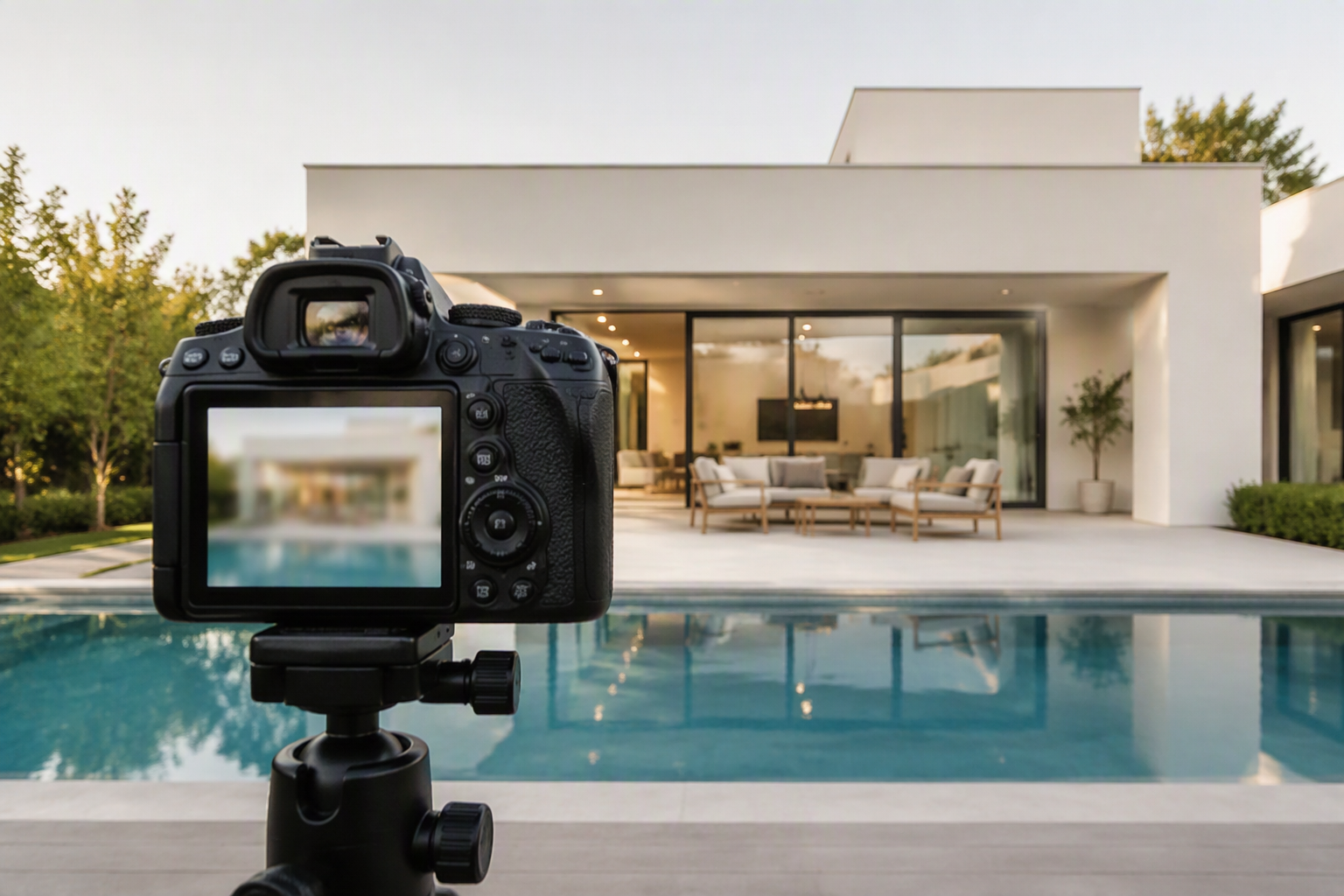
The Visual Impact of Holiday Rentals: Why Your Photos Decide Your Occupancy Rate
In the competitive tourist accommodation market, first impressions aren't just important—they are everything. When a user browses platforms like Airbnb, Booking.com or Vrbo, they are faced with an endless sea of options. In this scenario, your listing's cover photo acts as the main shop window for your business. If that image doesn't captivate the user within milliseconds, they will scroll past and book the competitor's property.
Many holiday home owners underestimate the power of a good photoshoot. They think that a detailed description, a competitive price and a good location are enough. However, the reality of digital consumer behaviour proves otherwise. The human brain processes images thousands of times faster than written text. Therefore, before a potential guest reads a single word about your fantastic amenities or excellent location, they will have already judged your property based solely on the quality of your images.
Investing in your accommodation's visual identity is not a superfluous expense, but one of the most profitable marketing decisions you can make. A professional image gallery not only increases the click-through rate (CTR) on your listing, but also justifies a higher nightly rate and improves your property's organic positioning within booking platform algorithms.
The Three-Second Rule on Booking Platforms
User behaviour online is characterised by immediacy and impatience. Digital marketing experts agree that you have a window of approximately three seconds to capture a user's attention before they continue scrolling. During this brief lapse of time, your listing's cover photo must convey comfort, cleanliness, brightness and, above all, the desire to be there.
If the cover image is dark, shows a confusing angle or lacks a clear focal point, the user will subconsciously assume that the accommodation shares those same negative traits. A lack of visual quality is directly associated with a lack of professionalism and care. Conversely, a vibrant, spacious and well-lit image builds instant trust and sparks the desire to explore the rest of the gallery.
The Real Cost of Low-Quality Images
Maintaining a listing with poor photographs has a very high opportunity cost that translates directly into financial losses. Let's analyse in detail what happens when you use non-professional images:
- Drastic loss of conversions: Even if you get visits to your listing thanks to an excellent location or a very low price, the conversion rate (visits that turn into actual bookings) will be extremely low if the photos are not convincing.
- Price war to the bottom: If your images do not differentiate your property from others, you will be forced to compete solely on price. This reduces your profit margins and attracts a guest profile that is often less careful with the facilities.
- Poorer search engine ranking (local SEO): OTA (Online Travel Agency) algorithms reward listings that generate more engagement and bookings. If your listing has low views and conversions due to bad photos, the algorithm will relegate it to the last pages of results.
- Misaligned expectations: Interestingly, poor photos can also lead to negative reviews. If the images do not clearly show the layout and actual condition of the property, guests may arrive with the wrong expectations, resulting in three-star reviews that damage your reputation.
Fatal Mistakes in Holiday Accommodation Photos and How to Fix Them
Identifying the most common mistakes in interior photography is the first step to completely transforming your property's digital presence. Below, we analyse the most frequent mistakes made by owners and managers, providing practical and professional solutions for each.
Dark Spaces and Lack of Natural Light
A lack of light is undoubtedly the most frequent mistake and the one that causes the most rejection among guests. An apartment photographed on a cloudy day, with the blinds half-closed or using only the artificial light of yellowish bulbs, conveys a feeling of claustrophobia, sadness and uncleanness.
The solution: Natural light is your best ally. Plan the photoshoot during the hours of the day when your property receives the most indirect sunlight. Open all curtains, blinds and shutters fully. If the external light is too intense and creates extreme contrasts (very harsh shadows), use white sheer curtains to diffuse the light and create a soft, welcoming atmosphere. Additionally, turn on all auxiliary lights (floor lamps, table lamps and indirect lighting) to add warmth and depth to the space, but avoid turning on main overhead lights if they create unsightly vertical shadows.
Clutter, Personal Belongings and Lack of "Home Staging"
A classic mistake is to photograph the accommodation exactly as it is left after guests check out, or worse, while the owner is still temporarily living there. Seeing cables hanging behind the TV, cleaning products on the kitchen worktop, the toilet lid up, or crumpled towels in the bathroom completely destroys the guest's fantasy of enjoying a perfect holiday.
The solution: Apply home staging or emotional marketing techniques. Before taking the first photo, do a deep clean and completely depersonalise the space. Remove any object that does not add aesthetic value: remote controls, bins, cables, family photos, fridge magnets and toiletries. Replace them with strategic decorative elements that evoke an experience: an open art book on the coffee table, a steaming cup of coffee by a window, or a bowl of fresh, colourful fruit in the kitchen. The goal is for the guest to project themselves enjoying that space.
Distorted Perspectives and Poor Framing
Taking photos from impossible corners, with the camera tilted up or down, or using the mobile phone's digital zoom often distorts the architectural lines of the property. This makes the walls look like they are falling backwards and makes spaces look much smaller or more deformed than they actually are.
The solution: Always keep the camera completely level. The vertical lines of walls, doors and windows must be perfectly parallel to the side edges of the frame. To achieve this consistently, it is essential to use a tripod equipped with a spirit level. Take the photos from a medium height, approximately chest or eye level for general rooms, and slightly lower (waist height) in kitchens and bathrooms to give a greater sense of space and visual stability.
Step-by-Step Guide: How to Take Professional Photos of Your Holiday Apartment
If you decide to take on the task of photographing your property yourself, it is essential that you follow a structured method and use the right techniques to obtain a result that competes with that of a professional in the industry.
The Necessary Equipment: DSLR or Latest-Generation Smartphone?
Nowadays, high-end smartphones have extraordinary sensors and image processing systems that, when used well, can offer very decent results for digital platforms. However, if you are looking for maximum quality, a DSLR or mirrorless camera with a Full Frame sensor will always offer far superior dynamic range and sharpness.
Regardless of the device you choose, there are three pieces of hardware that are absolutely non-negotiable:
- A wide-angle lens: For interior photography, you need a lens with an equivalent focal length of between 16mm and 24mm in full-frame format. This will allow you to capture the entirety of a room without excessively distorting the corners. Avoid "fisheye" lenses (focal lengths below 12mm), as they bend straight lines and convey a misleading impression that may disappoint the guest when they arrive.
- A sturdy tripod: This will allow you to shoot at slow shutter speeds without the photos being blurry or shaken, which is essential for capturing interiors with natural light without having to excessively raise the ISO sensitivity (which would generate noise and loss of sharpness in the image).
- A remote shutter release or timer: Pressing the shutter button with your finger always transmits a small vibration to the camera. Using a 2-second timer or a Bluetooth shutter release guarantees absolute sharpness in every shot.
The Secret of Lighting: Harnessing Natural Light and HDR
One of the biggest challenges in interior photography is managing the huge difference in brightness between the inside of the property and the outside seen through the windows. If you set the camera so that the interior is well-exposed, the windows will appear completely white and blown out (overexposed). If you set the camera to see the landscape through the window, the interior will be plunged into absolute darkness.
To solve this dynamic range problem, the most effective technique is HDR (High Dynamic Range) or exposure bracketing:
This involves taking several identical photographs (hence the absolute need for a tripod) but with different exposure levels: an underexposed photo to capture the details of the exterior and bright areas, a neutrally exposed photo for mid-tones, and an overexposed photo to rescue shadow details from the interior. These images are then merged using editing software (such as Adobe Lightroom or Photoshop) to obtain a single perfect photograph where everything is correctly lit and detailed.
Composition and Angles: The Strategic Use of the Wide-Angle
Composition is the art of arranging elements within the frame to guide the viewer's eye where you want it to go. In holiday rental photography, your goal is to convey spaciousness, flow and connection between different spaces.
To achieve attractive compositions, follow these professional guidelines:
- Shoot from corners and doorways: Positioning yourself in the corner of a room or right in the doorway allows you to maximise the space captured by the wide-angle lens, showing the physical relationship between different furniture and areas of the room.
- Apply the rule of thirds: Mentally divide the screen into a 3x3 grid. Place the elements of greatest visual interest (such as a fireplace, a decorated table or a window with a view) at the intersections of these lines to create a harmonious visual balance.
- Show three walls whenever possible: By including three walls in the frame of a room, you provide the viewer with a clear sense of depth and three-dimensional volume, preventing rooms from looking flat or two-dimensional.
The Art of Home Staging: Setting the Scene to Make Guests Fall in Love
Home staging is a property marketing technique that involves preparing and decorating a home to make it as attractive as possible to the highest number of potential clients. It is not about renovating the property, but about highlighting its strengths and minimising its weaknesses through aesthetics and the psychology of space.
The Living Room: Creating a Sense of Warmth and Comfort
The living room is usually the space where guests will spend most of their relaxing time. It must convey comfort, relaxation and sophistication. To achieve this in your photos, pay attention to the following details:
- Place cushions of different textures and complementary colours on the sofa. Avoid them looking flat; give them volume by plumping them gently before the photo.
- Drape a light throw made of natural fabrics (such as linen or wool) seemingly casually over an arm of the sofa or an armchair to add a cosy texture.
- Style the coffee table with a couple of carefully selected items: a wooden tray with a teapot and two cups, a lit scented candle, and a travel book with an attractive cover.
- Ensure the television is completely turned off and free of fingerprints. A professional trick is to display a still image of a relaxing landscape or a work of art on the screen if you have a smart TV.
The Bedroom: The Importance of an Impeccable Bed
The master bedroom is one of the deciding factors when securing a booking. The guest is looking, above all, for the guarantee of a restful night's sleep in a clean and comfortable environment that emulates the experience of a luxury hotel.
To achieve a bed worthy of a magazine cover, follow these steps:
- Use high-quality bed linen, preferably in white or very light neutral tones, as they convey an unmatched sense of hygiene, freshness and spaciousness.
- Iron the sheets and duvet directly on the bed using a handheld vertical steamer to eliminate even the smallest wrinkle.
- Use the layering technique: place a fluffy duvet, fold the top of the flat sheet back over it, and add a bed runner or throw at the foot of the bed to provide colour and texture contrast.
- Use plenty of pillows and cushions. Prop the main pillows against the headboard and place two or three smaller decorative cushions in front that match the room's colour palette.
The Kitchen and Bathroom: Conveying Cleanliness and Functionality
The kitchen and bathroom are the areas where cleanliness is judged most harshly. Any sign of dirt, damp or clutter will completely ruin your listing's credibility.
In the kitchen, clear the worktops almost completely. Leave only a designer appliance (such as a cafetière or a vintage toaster) and add a touch of life with a fresh herb plant (such as basil or rosemary) and a high-quality wooden chopping board with an artisanal loaf of bread and an aesthetic knife.
In the bathroom, remove absolutely all personal items. Close the toilet lid and make sure the mirror is spotless, without reflecting the photographer or the tripod. Place thick, brand-new cotton towels, neatly folded or rolled in a wicker basket. You can add a spa touch by placing a reed diffuser, designer artisanal soaps and a small humidity-tolerant plant.
Details and Exteriors: Selling the Complete Experience
Don't limit yourself to taking general photos of the rooms. The small details and outdoor spaces are often what seal the deal for undecided clients.
If your property has a balcony, terrace, garden or pool, you must give them the prominence they deserve. Set the outdoor table as if guests were about to enjoy a sunny breakfast: place plates of fresh fruit, orange juice in glass jugs, freshly baked croissants and wildflowers. Photograph these spaces during the "golden hour" (sunrise or sunset), when the sunlight is soft, warm and casts long, magical shadows that invite outdoor relaxation.
Image Editing: How to Enhance Your Photos Without Misleading the Client
The photographer's job doesn't end when the camera is turned off; in fact, post-production is where the real magic happens, separating a mediocre photo from an exceptional one. However, in the holiday accommodation sector, editing must be guided by a fundamental principle: honesty.
Recommended Tools for Quick Editing
You don't need to be a graphic design expert or master complex tools to significantly improve your images. There are very accessible and powerful options on the market today:
- Adobe Lightroom (Mobile and Desktop): It is the industry standard. Its mobile version is free and extremely powerful. It allows you to correct exposure, balance highlights and shadows, and adjust colour temperature selectively and very intuitively.
- Snapseed: A free Google app for mobile devices that features excellent professional tools, such as perspective correction and selective removal of small blemishes (like an unsightly plug socket or a mark on the wall).
- Canva: Ideal for organising your gallery, adjusting light brightness and contrast parameters, and cropping images into the specific formats required by each booking platform.
The Fine Line Between Optimisation and Misleading Advertising
The goal of editing is to show your property in its best possible version, faithfully recreating how the space looks on a perfect day of light. You should never use editing to hide structural defects, undesirable views or to mislead about the actual size of the rooms.
Avoid committing the following excesses in editing:
- Extreme colour saturation: Excessively blue skies or radioactive green lawns look artificial and generate immediate distrust in the user.
- Abusive use of artistic filters: Your photo gallery is not a personal Instagram account. Avoid applying trendy filters that alter the actual colours of the walls, furniture and textiles of the home.
- Over-brightening dark areas without texture: If you try to artificially illuminate an area that was completely in the dark in the original shot, you will generate very unsightly digital noise that will reduce the sharpness and professionalism of the image.
- Removing fixed elements from the environment: Never use cloning tools to erase a lamppost, a neighbouring building blocking the view or any other permanent element of the environment that the guest will inevitably discover upon arrival. This is considered misleading advertising and is justified grounds for cancellations and financial claims.
How to Integrate a Winning Visual Strategy with the Operational Management of Your Accommodation
Having spectacular photographs is the engine that will attract a constant flow of visits and booking enquiries to your listings. However, capturing the interest of hundreds of potential clients is of no use if you do not have the necessary technological and operational infrastructure to manage that demand efficiently and professionally.
Smart Channel Synchronisation for Increased Demand
When your new professional photos start to take effect, you will notice a significant increase in the volume of enquiries and bookings across the different platforms where your property is listed. Manually managing availability on multiple channels like Airbnb, Booking.com or Vrbo quickly becomes an unmanageable task prone to costly human errors, such as overbookings.
To avoid these problems and maximise your income, it is essential to have a centralised booking synchronisation system like the one offered by Macufy. This technology allows you to unify the calendars of all your distribution platforms in real-time. The moment a booking is confirmed on one channel, availability is automatically blocked on all others, ensuring flawless, stress-free operational management and allowing you to scale your business safely and professionally.
Keeping the Visual Promise: Cleanliness and Order Under Control
One of the greatest risks of having very high-quality photographs is that you generate very high expectations in your guests. If your photo gallery shows a dream apartment, impeccably clean, tidy and with designer details, the client will expect to find exactly that same level of perfection when they open the door to the property on the day of their arrival.
If the guest finds wrinkled sheets, dust on surfaces, or the furniture layout is different from the photos, they will feel immediately disappointed, which will negatively affect their final review. To ensure that your property always maintains the standards of excellence promised in your images, it is highly recommended to implement advanced digital tools such as Macufy's control forms.
These forms allow you to create detailed and customised checklists for your cleaning and maintenance teams. Staff can verify each point of the process (from the exact placement of cushions to the cleaning of the bathroom) and attach photographs of the final state of the property directly through the application before the arrival of each new guest. In this way, you ensure that the physical reality of your accommodation always matches the visual promise of your online listing perfectly.
Conclusion: Your Photo Gallery Is Your Best Sales Tool
Holiday rental photography is not a minor detail or a task to be rushed with any mobile phone. It is, by far, the most powerful, direct marketing investment with the highest return on investment you can make for your tourist accommodation business.
Bright, well-composed, tidy images that convey a lifestyle experience not only multiply your bookings and income, but also position your brand at a higher level of professionalism. By combining this visual impact with technological management tools that automate your operations and ensure service quality in every stay, you will be building a highly profitable, sustainable holiday rental business ready to stand out in any market.