
From Manual Management to PMS: How to Optimise Your Holiday Rental and Eliminate Booking Errors
El Gran Desafío de la Gestión de Propiedades Vacacionales: El Fin de la Era Manual
Iniciar en el sector del alojamiento vacacional es, por lo general, una aventura emocionante y llena de ilusión. Al principio, con una sola propiedad, gestionar las reservas parece una tarea sencilla. Un calendario de Google, una hoja de cálculo de Excel bien organizada y un par de alertas en el teléfono móvil suelen ser suficientes para mantener el control. Sin embargo, a medida que el negocio crece, decides listar tu propiedad en múltiples canales de venta como Airbnb, Booking.com o Vrbo, y el flujo de viajeros se intensifica, este sistema artesanal comienza a resquebrajarse.
La gestión manual de reservas es una bomba de relojería para cualquier propietario o gestor de viviendas vacacionales. Lo que antes ocupaba diez minutos al día se convierte en un trabajo a tiempo completo de constante revisión de calendarios, respuestas apresuradas a mensajes repetitivos y la ansiedad constante de un overbooking. La falta de automatización no solo reduce tu calidad de vida, sino que también amenaza directamente la rentabilidad y la reputación de tu negocio de alquiler vacacional.
En este extenso artículo, profundizaremos en por qué los métodos de gestión tradicionales están destinados al fracaso en el mercado actual y cómo la implementación de un Property Management System (PMS) especializado puede transformar tu caos operativo en un negocio fluido, escalable y altamente rentable. Exploraremos cada faceta de la gestión de propiedades vacacionales, desde la sincronización de reservas hasta la optimización de la limpieza y la comunicación con los huéspedes, demostrando cómo una solución tecnológica integral se convierte en el pilar fundamental para el éxito y la tranquilidad en el dinámico mundo de los alquileres a corto plazo.
¿Por qué la gestión de propiedades vacacionales requiere una solución digital?
El mercado de alquileres vacacionales ha evolucionado drásticamente. Los huéspedes esperan inmediatez, información precisa y una experiencia sin fricciones, desde el momento de la reserva hasta el check-out. Los propietarios y gestores, por su parte, se enfrentan a una creciente complejidad: múltiples plataformas de venta, regulaciones cambiantes, demandas de comunicación 24/7 y la necesidad de maximizar la rentabilidad en un entorno competitivo. En este escenario, apoyarse únicamente en herramientas manuales no solo es ineficiente, sino insostenible. Un software de gestión de alquileres vacacionales ya no es un lujo, sino una necesidad imperativa para cualquier negocio que aspire a crecer y prosperar.
Los Peligros Reales de la Gestión Manual de Reservas en el Sector Turístico
Muchos propietarios se resisten al cambio tecnológico por miedo a la complejidad de las herramientas digitales o por el deseo de ahorrar en costes de software. Sin embargo, el coste indirecto del error humano derivado de la gestión manual supera con creces la inversión en cualquier plataforma profesional. Es crucial entender que estos “ahorros” iniciales se traducen rápidamente en pérdidas significativas, estrés constante y una reputación dañada. A continuación, detallamos las consecuencias más graves de no disponer de un sistema centralizado para tu gestión de propiedades vacacionales.
El Espectro del Overbooking (Reservas Duplicadas)
El overbooking, o reserva duplicada, ocurre cuando dos huéspedes diferentes reservan las mismas fechas para la misma propiedad en distintas plataformas. Con la gestión manual, esto sucede con una frecuencia alarmante y es, quizás, el mayor temor de cualquier anfitrión. Imagina que un huésped reserva tu apartamento a través de Booking.com a las 3:00 AM mientras duermes. Si no bloqueas manualmente esas fechas en Airbnb de inmediato, otro viajero puede reservar exactamente las mismas fechas, sin que tú te enteres hasta que sea demasiado tarde. Este escenario de pesadilla no es una rareza, sino una consecuencia casi inevitable de la falta de un channel manager robusto.
Las consecuencias de una doble reserva son devastadoras para tu negocio de alquiler vacacional:
- Penalizaciones económicas severas: Plataformas como Airbnb y Booking.com imponen multas financieras considerables a los anfitriones que cancelan reservas debido a overbooking. Estas penalizaciones pueden ascender a un porcentaje significativo del valor total de la reserva, o incluso al coste de reubicar al huésped. En algunos casos, la plataforma puede cobrarte la diferencia entre tu tarifa y el coste de una alternativa más cara.
- Costes de reubicación: En la mayoría de los casos, estás obligado a buscar y pagar un alojamiento alternativo de igual o mejor categoría para el huésped afectado. Esto no solo implica un gasto económico que suele duplicar o triplicar tu tarifa original, sino también una considerable inversión de tiempo y estrés para encontrar una solución de última hora, a menudo en plena temporada alta.
- Pérdida de posicionamiento en los resultados de búsqueda: Los algoritmos de las OTAs (Online Travel Agencies) penalizan duramente a los propietarios por cancelaciones unilaterales, relegando sus anuncios a las últimas páginas de los resultados de búsqueda. Esto significa menos visibilidad, menos reservas y una caída directa en tus ingresos a largo plazo. Recuperar un buen posicionamiento puede llevar meses de esfuerzo y nuevas reservas sin incidencias.
- Daño irreparable a la reputación: Un huésped molesto por una cancelación de última hora casi con total seguridad dejará una reseña extremadamente negativa online. Estas reseñas no solo aparecen en la plataforma donde se realizó la reserva, sino que a menudo se extienden a otros sitios de opinión, redes sociales o foros de viajeros. Una mala reputación puede disuadir a futuros huéspedes y dañar la percepción de tu marca, impactando en tus reservas mucho después de que el incidente inicial haya ocurrido.
- Impacto emocional y psicológico: Más allá de los costes económicos y de reputación, el overbooking genera un enorme estrés y ansiedad en el propietario. La llamada de un huésped furioso, la urgencia de encontrar una solución y la sensación de haber fallado pueden ser emocionalmente agotadoras, afectando tu bienestar y tu pasión por el negocio.
Un software de gestión de propiedades vacacionales con un potente channel manager es la única defensa real contra este problema, garantizando que tu disponibilidad esté siempre actualizada en todos los canales de venta en tiempo real.
Sobrecarga por Duplicidad de Mensajes y Falta de Comunicación
La comunicación con el huésped es el pilar de una gran experiencia. Sin embargo, cuando gestionas todo manualmente, tu bandeja de entrada se convierte en un laberinto. Tienes que enviar instrucciones de llegada, solicitar datos de identificación para el registro legal, recordar las normas de la casa, preguntar la hora de llegada, agradecer después de la salida, y responder a un sinfín de preguntas recurrentes sobre la conexión WiFi, aparcamiento o recomendaciones locales.
Hacer esto para múltiples reservas al mismo tiempo conduce a dos escenarios fatales:
- Olvido total: Olvidas enviar las instrucciones de acceso, lo que resulta en llamadas de pánico de los huéspedes en la puerta de tu propiedad a altas horas de la noche. Omites enviar la contraseña del Wi-Fi, o las indicaciones para el uso de algún electrodoméstico. Cada olvido genera fricción y frustración, empañando la experiencia del huésped desde el primer momento.
- Duplicidad de mensajes: Envías la misma información varias veces porque no recuerdas si ya has respondido, transmitiendo una imagen de desorganización y falta de profesionalidad. Esto no solo es ineficiente para ti, sino que también puede resultar confuso y molesto para el huésped, que recibe información redundante.
La comunicación manual es un pozo sin fondo de tiempo y energía. Cada interacción, por pequeña que sea, requiere tu atención. Esto te impide centrarte en tareas de mayor valor, como la mejora de la propiedad, la estrategia de precios o el marketing. Además, la inconsistencia en las respuestas o la lentitud en la comunicación pueden llevar a reseñas negativas, donde los huéspedes se quejan de la falta de atención o la dificultad para obtener información. Un sistema de mensajería automatizada para alquileres vacacionales se convierte en una herramienta indispensable para garantizar una comunicación fluida, consistente y profesional.
Falta de Coordinación en los Servicios de Limpieza y Mantenimiento
La limpieza es el motor invisible del alojamiento vacacional. Si el equipo de limpieza no sabe con exactitud cuándo sale un huésped y cuándo llega el siguiente, el sistema colapsa. Con la gestión manual, dependes de enviar mensajes individuales por WhatsApp a tu personal de limpieza cada vez que se realiza una reserva, se cancela o se modifica. Esta dependencia de la comunicación personal es extremadamente frágil y propensa a errores.
Una sola falla en la comunicación puede llevar a que un nuevo huésped entre a una casa que aún no ha sido limpiada, destruyendo por completo su primera impresión y garantizando una mala reseña en las plataformas. Pero las implicaciones van más allá:
- Ineficiencia operativa: El personal de limpieza puede llegar demasiado pronto y tener que esperar, o demasiado tarde, retrasando el check-in del siguiente huésped. Esto se traduce en tiempo perdido y costes laborales innecesarios.
- Estándares de calidad inconsistentes: Sin un sistema de seguimiento, es difícil asegurar que cada limpieza cumpla con los mismos estándares rigurosos. No hay listas de verificación digitales ni reportes de incidencias, lo que puede llevar a descuidos y quejas de los huéspedes.
- Problemas de mantenimiento sin resolver: Si el personal de limpieza detecta un problema (una bombilla fundida, un grifo que gotea), pero no tiene un canal claro para reportarlo, el problema puede persistir y afectar a los siguientes huéspedes. La gestión manual dificulta el seguimiento de las reparaciones y el mantenimiento preventivo.
- Impacto en la disponibilidad: Un retraso en la limpieza significa que la propiedad no está lista para el check-in, lo que puede obligarte a bloquear fechas adicionales, perdiendo ingresos potenciales.
Un buen software de gestión de propiedades vacacionales debe incluir herramientas de gestión de tareas para el personal, garantizando que todos estén siempre sincronizados y que la propiedad esté impecable para cada nuevo huésped.
Gestión de Precios Ineficiente y Oportunidades de Ingresos Perdidas
Una de las mayores desventajas de la gestión manual es la incapacidad de implementar una estrategia de precios dinámica y optimizada. Si fijas un precio fijo para toda la temporada o lo ajustas solo unas pocas veces al año, estás dejando dinero sobre la mesa. El mercado de alquileres vacacionales es volátil y los precios deben adaptarse a:
- Demanda estacional: Precios más altos en temporada alta, eventos especiales, festivos.
- Eventos locales: Conciertos, festivales, ferias comerciales.
- Días de la semana: Fines de semana suelen tener mayor demanda y permiten precios más altos.
- Precios de la competencia: Necesidad de ser competitivo pero sin infravalorar tu propiedad.
- Antelación de la reserva: Precios más altos para reservas de última hora o con mucha antelación.
- Duración de la estancia: Ajustes para estancias cortas o largas.
La gestión manual hace que sea casi imposible reaccionar a estos factores en tiempo real. Esto lleva a:
- Subvaloración: Alquilar tu propiedad por debajo de su valor de mercado durante períodos de alta demanda.
- Sobrevaloración: Tener la propiedad vacía durante períodos de baja demanda porque el precio es demasiado alto.
- Falta de promociones: Incapacidad de lanzar ofertas de última hora para llenar huecos en el calendario.
Un PMS con funcionalidades de revenue management permite automatizar estos ajustes, asegurando que siempre estés vendiendo al precio óptimo.
Cumplimiento Legal y Registro de Huéspedes Tedioso
En muchos países y regiones, la ley exige que los propietarios de alojamientos vacacionales registren la identidad de todos sus huéspedes y envíen esta información a las autoridades policiales o de turismo. Este proceso, si se hace manualmente, es increíblemente tedioso y propenso a errores:
- Recopilación de datos: Solicitar manualmente los DNI o pasaportes de cada huésped, a menudo antes de la llegada o en el check-in.
- Cumplimentación de formularios: Rellenar a mano formularios en papel o introducir datos en portales gubernamentales.
- Errores de transcripción: Riesgo de introducir datos incorrectos, lo que puede llevar a multas.
- Almacenamiento seguro: Necesidad de guardar la información de manera segura y cumplir con las normativas de protección de datos (RGPD).
- Pérdida de tiempo: Cada registro consume un tiempo valioso que podría dedicarse a mejorar la experiencia del huésped.
Un PMS para alquileres vacacionales puede automatizar la recopilación de esta información a través de formularios online seguros y, en muchos casos, integrarse directamente con los portales de registro policial, simplificando drásticamente este requisito legal y eliminando el riesgo de multas.
Procesamiento de Pagos y Contabilidad Desorganizada
La gestión manual de pagos es un auténtico quebradero de cabeza. Implica:
- Recepción de pagos: Coordinar transferencias bancarias, gestionar pagos en efectivo o con TPV manual.
- Facturación: Emitir facturas manualmente, lo que es propenso a errores y consume mucho tiempo.
- Seguimiento: Rastrear qué pagos se han recibido, cuáles están pendientes y cuáles han sido reembolsados.
- Reconciliación bancaria: Intentar cuadrar los ingresos de las reservas con los movimientos bancarios.
- Informes financieros: Dificultad para generar informes precisos para la declaración de impuestos o para entender la salud financiera del negocio.
Esta desorganización puede llevar a pérdidas de ingresos, errores contables, dificultades con la declaración de impuestos y una visión poco clara de la rentabilidad real de tu negocio. Un PMS con gestión de pagos integrada automatiza todo este proceso, desde la captura segura de pagos hasta la generación de informes financieros detallados.
Pérdida de Oportunidades de Reservas Directas
Depender exclusivamente de las OTAs significa pagar altas comisiones por cada reserva. Si bien las OTAs son excelentes para la visibilidad, un negocio de alquiler vacacional verdaderamente rentable busca maximizar las reservas directas. Sin un sistema de gestión, ofrecer reservas directas es un reto:
- Motor de reservas: Necesitas un motor de reservas seguro y funcional en tu propia web.
- Sincronización de calendario: Debes asegurarte de que tu calendario directo esté siempre sincronizado con las OTAs para evitar overbookings.
- Gestión de pagos: Necesitas una forma segura de procesar pagos directamente.
- Marketing: Sin herramientas para gestionar tus propios datos de clientes, es difícil construir una base de datos para marketing directo y fidelización.
La gestión manual ahoga el potencial de crecimiento de las reservas directas, dejando tu negocio a merced de las comisiones y políticas de las grandes plataformas. Un PMS con motor de reservas integrado es la clave para construir un canal de venta directo sólido y rentable.
¿Qué es un PMS y Por Qué es la Solución Definitiva para Tu Alojamiento?
Un Property Management System (PMS), o sistema de gestión de propiedades, es un software diseñado específicamente para centralizar, automatizar y simplificar todas las operaciones diarias de un alojamiento vacacional, ya sea una única vivienda turística, una cartera de apartamentos o un pequeño hotel boutique. Actúa como el cerebro de tu negocio, conectando todas las piezas del rompecabezas operativo en una única interfaz intuitiva. Es la herramienta esencial para cualquier propietario o gestor que busque profesionalizar y escalar su gestión de propiedades vacacionales.
En esencia, un PMS moderno va más allá de un simple calendario. Es una plataforma integral que te permite gestionar reservas, precios, comunicación con huéspedes, tareas de limpieza, mantenimiento, pagos, y mucho más, todo desde un único lugar. Su objetivo principal es optimizar la eficiencia operativa, reducir el riesgo de errores y liberar tu tiempo para que puedas concentrarte en lo que realmente importa: ofrecer una experiencia excepcional a tus huéspedes y hacer crecer tu negocio.
Características Clave de un PMS Moderno para Alquileres Vacacionales
Para comprender el impacto transformador de esta herramienta, es esencial conocer las características que reemplazan por completo el trabajo manual y elevan tu gestión a un nivel profesional:
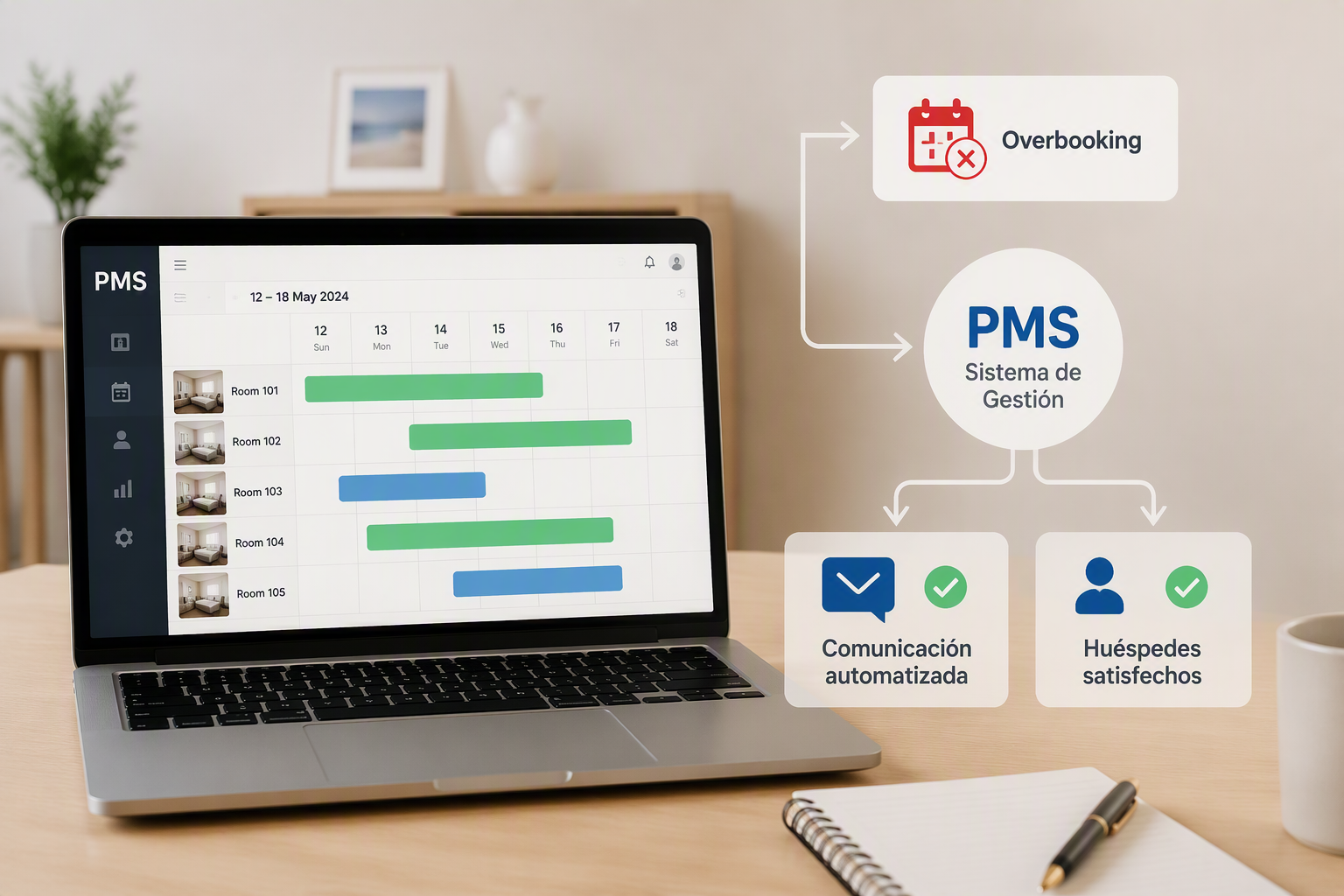
- Dashboard Unificado y Calendario Centralizado: Una vista de calendario intuitiva donde puedes ver el estado de ocupación de todas tus propiedades en tiempo real, independientemente de la plataforma de la que provenga la reserva. Este calendario maestro es el corazón del sistema, mostrando de un vistazo la disponibilidad, las reservas, los bloqueos y las tareas pendientes. Te permite arrastrar y soltar reservas, bloquear fechas y visualizar tu agenda con total claridad.
- Channel Manager Integrado: Esta es una de las funcionalidades más críticas para cualquier negocio que opere en múltiples OTAs. El channel manager sincroniza automáticamente tu disponibilidad y tarifas en tiempo real entre tu PMS y plataformas como Airbnb, Booking.com, Vrbo, Expedia, etc. Cuando se realiza una reserva en una plataforma, las fechas se bloquean instantáneamente en todas las demás, eliminando el riesgo de overbooking. También te permite actualizar precios y restricciones en todos los canales desde un único punto.
- Motor de Reservas Directas (Booking Engine): Permite recibir reservas directamente desde tu propia página web, sin intermediarios ni comisiones. Este motor de reservas es personalizable, seguro y procesa pagos de forma fiable. Es tu canal más rentable, ya que te permite construir tu propia marca, controlar la relación con el cliente y mantener el 100% de los ingresos por reserva.
- Gestor de Tarifas y Restricciones (Revenue Management): Modifica precios, estancias mínimas, descuentos, suplementos y políticas de cancelación para todos los canales de venta con un solo clic. Un PMS avanzado ofrece herramientas de precios dinámicos, permitiéndote ajustar automáticamente las tarifas en función de la demanda, la estacionalidad, los eventos locales y la competencia, maximizando así tus ingresos.
- Base de Datos de Clientes (CRM): Almacena de forma segura los datos de contacto de tus huéspedes, sus preferencias, historial de estancias y cualquier nota relevante. Esta información es invaluable para campañas de fidelización, ofertas personalizadas y para comprender mejor a tu audiencia, fomentando las reservas recurrentes y construyendo relaciones duraderas.
- Sistema de Mensajería Automatizada: Configura flujos de comunicación personalizados que se activan automáticamente en función de eventos de reserva (confirmación, pre-llegada, check-in, check-out, solicitud de reseña). Estos mensajes pueden ser altamente personalizados con campos dinámicos y enviados en múltiples idiomas, garantizando que los huéspedes reciban la información precisa en el momento justo, sin que tú tengas que mover un dedo.
- Gestión de Tareas de Limpieza y Mantenimiento (Housekeeping): Asigna tareas de limpieza automáticamente a tu equipo cuando se produce un check-out o una nueva reserva. El personal recibe notificaciones en tiempo real, puede acceder a listas de verificación digitales, reportar incidencias (daños, artículos perdidos) y marcar las tareas como completadas. Esto asegura una coordinación perfecta y unos estándares de limpieza consistentes.
- Procesamiento de Pagos Seguro: Un PMS te permite procesar pagos de forma segura y eficiente, a menudo con integración directa con pasarelas de pago. Facilita la gestión de depósitos, pagos finales, reembolsos y cargos adicionales, todo ello con la seguridad y la conformidad PCI necesarias.
- Informes y Análisis de Datos (Reporting & Analytics): Genera informes detallados sobre ocupación, ingresos, rendimiento por canal, duración media de la estancia, rentabilidad y mucho más. Estos datos son cruciales para tomar decisiones estratégicas informadas, identificar tendencias, optimizar tu estrategia de precios y medir el éxito de tu negocio.
- Gestión de Contratos y Documentación Legal: Algunos PMS ofrecen la posibilidad de generar contratos de alquiler, gestionar la firma electrónica y almacenar la documentación legal de forma segura, facilitando el cumplimiento normativo.
- Check-in Online y Registro de Huéspedes: Permite a los huéspedes realizar el check-in online antes de su llegada, proporcionando sus datos de identificación y firmando documentos. Esto agiliza el proceso de llegada y facilita el cumplimiento de las normativas de registro de viajeros con las autoridades.
Ventajas de Centralizar tus Operaciones de Gestión de Propiedades Vacacionales
Cuando migras de la gestión manual a un PMS, el primer cambio que experimentarás es la recuperación de tu tiempo libre. Tareas que antes te ocupaban horas al día se resuelven en segundos. Pero los beneficios van mucho más allá:
- Aumento de la Eficiencia Operativa: La automatización de tareas repetitivas libera una cantidad significativa de tiempo, permitiéndote centrarte en la estrategia, el marketing o simplemente disfrutar de tu vida personal.
- Reducción Drástica de Errores: La centralización reduce a cero la posibilidad de errores humanos al transcribir datos de una plataforma a otra. La información fluye de forma automática y bidireccional, asegurando que tu negocio funcione con la precisión de un reloj suizo, incluso mientras duermes o disfrutas de tus vacaciones.
- Incremento de la Rentabilidad: Con un channel manager, evitas overbookings y las costosas penalizaciones asociadas. Con un motor de reservas directo, reduces las comisiones de las OTAs. Con herramientas de revenue management, optimizas tus precios para maximizar los ingresos.
- Mejora de la Experiencia del Huésped: La comunicación automatizada, el check-in fluido y una propiedad impecable gracias a la gestión de tareas, se traducen en huéspedes más satisfechos, que a su vez dejan mejores reseñas y se convierten en clientes recurrentes.
- Escalabilidad del Negocio: Un PMS te permite gestionar múltiples propiedades sin aumentar proporcionalmente tu carga de trabajo. Puedes expandir tu cartera con confianza, sabiendo que tienes las herramientas para manejar el crecimiento.
- Análisis y Toma de Decisiones Informadas: Los informes detallados te proporcionan una visión clara del rendimiento de tu negocio, permitiéndote identificar áreas de mejora y tomar decisiones basadas en datos reales.
- Cumplimiento Normativo Simplificado: Las herramientas de registro de huéspedes y gestión de documentación facilitan el cumplimiento de las regulaciones locales y nacionales, reduciendo el riesgo de multas.
- Reducción del Estrés: La tranquilidad de saber que tu negocio está bajo control, que las reservas están sincronizadas y que los huéspedes están bien atendidos, te permite disfrutar más de tu papel como anfitrión.
Un PMS no es solo una herramienta, es una inversión estratégica que transforma fundamentalmente la forma en que gestionas tus propiedades vacacionales, llevándote del caos a la calma y del estancamiento al crecimiento.
Sincronización de Reservas: El Fin de los Calendarios Duplicados y el Miedo al Overbooking
Uno de los mayores hitos tecnológicos para un gestor de alquileres vacacionales es la automatización del inventario. Simplemente no puedes permitirte estar presente en múltiples canales de venta si no dispones de tecnología que unifique la disponibilidad de forma instantánea. Este es el campo de batalla donde se gana o se pierde la guerra contra el overbooking, y donde un channel manager integrado en tu PMS se convierte en tu mejor aliado.
Aquí es donde entra en juego la sincronización de reservas. Al conectar tu PMS con plataformas como Airbnb, Booking.com o Vrbo, el sistema actúa como un guardián de tu disponibilidad. En el momento exacto en que entra una reserva en cualquiera de estos canales, el PMS bloquea instantáneamente esas fechas en todos los demás portales conectados. Esto significa que si un huésped reserva en Airbnb, en cuestión de segundos, esas fechas aparecerán como no disponibles en Booking.com, Vrbo y tu propio motor de reservas directo, eliminando cualquier posibilidad de una doble reserva.
Diferencias Fundamentales entre Conexión iCal y Conexión API Bidireccional
Cuando busques soluciones de sincronización, es vital entender que no todas las conexiones son iguales. Existen dos métodos principales para vincular calendarios, y la elección entre uno y otro marcará una diferencia abismal en la seguridad y eficiencia de tu gestión de propiedades vacacionales:
| Característica | Conexión iCal (Básica) | Conexión API (Profesional) |
|---|---|---|
| Velocidad de actualización | Lenta (puede tardar desde 15 minutos hasta varias horas). No es en tiempo real, sino que el sistema “pregunta” periódicamente por cambios. | Instantánea (en tiempo real, cuestión de segundos). La información se “empuja” y “jala” constantemente entre el PMS y la OTA. |
| Información transferida | Únicamente fechas de ocupación (bloqueado/disponible). No transfiere detalles de la reserva, precios, ni datos del huésped. | Detalles completos del huésped, tarifas, pagos, mensajes, restricciones, políticas de cancelación, y más. Es una comunicación rica y bidireccional. |
| Riesgo de Overbooking | Medio-Alto (debido al retraso en la actualización). Un huésped puede reservar en el intervalo entre actualizaciones. | Prácticamente nulo. La inmediatez de la sincronización elimina las ventanas de riesgo. |
| Gestión de Precios | No permite sincronizar precios ni aplicar estrategias dinámicas. Los precios deben gestionarse manualmente en cada plataforma. | Permite la gestión centralizada de precios y la aplicación de estrategias de precios dinámicos en todos los canales. |
| Restricciones de Estancia | No permite sincronizar estancias mínimas, días de llegada/salida, etc. | Permite aplicar y sincronizar restricciones de estancia complejas en todos los canales. |
| Gestión de Contenido | No sincroniza descripciones, fotos o servicios de la propiedad. | Algunas integraciones API avanzadas permiten gestionar y actualizar el contenido de los anuncios desde el PMS. |
Para una gestión verdaderamente profesional y libre de estrés, la conexión API bidireccional que ofrecen plataformas avanzadas como Macufy es la única opción viable. Esta tecnología es la que garantiza que tu inventario esté siempre protegido contra las temidas dobles reservas y que puedas gestionar de forma eficiente todos los aspectos de tu negocio de alquiler vacacional desde un único punto de control. Invertir en un channel manager con API robusta es invertir en la tranquilidad y la rentabilidad de tu negocio.
Automatización de la Comunicación: Ahorra Tiempo y Mejora la Experiencia del Huésped
El servicio al cliente no tiene por qué ser una tarea manual y repetitiva. El 90% de las preguntas que los huéspedes realizan antes, durante y después de su estancia son idénticas: ¿A qué hora es el check-in? ¿Cuál es la contraseña del Wi-Fi? ¿Cómo llego desde el aeropuerto? ¿Cómo recojo las llaves? ¿Hay recomendaciones locales?
Responder a estas preguntas manualmente consume una cantidad ingente de energía y tiempo. Además, la inconsistencia en las respuestas o los retrasos pueden generar frustración en el huésped y afectar negativamente su experiencia. La solución reside en implementar mensajes automáticos a huéspedes. Esta funcionalidad te permite programar flujos de comunicación personalizados que se activan por eventos específicos de la reserva, garantizando que el huésped reciba la información correcta en el momento preciso, sin que tú tengas que intervenir.
El Flujo de Comunicación Automatizada Perfecto para tu Alquiler Vacacional
Un sistema de mensajería automatizada bien estructurado no se siente frío o robótico; al contrario, proporciona a los huéspedes la información precisa que necesitan en el momento exacto, mejorando su percepción de tu servicio y demostrando profesionalidad. Aquí tienes un ejemplo de un flujo ideal que todo software de gestión de propiedades vacacionales debería ofrecer:
- Confirmación Inmediata de Reserva: Se envía en el segundo en que la reserva se confirma. Da la bienvenida al huésped, agradece su confianza y confirma los detalles clave de su estancia (fechas, propiedad, número de huéspedes). Incluye un mensaje cálido y personal para establecer una buena primera impresión.
- Formulario de Pre-registro (3 días antes de la llegada): Solicita automáticamente los datos de identificación de todos los ocupantes para cumplir con las regulaciones legales de registro de viajeros. Puede incluir un enlace a un formulario online seguro que facilite la recopilación de DNI/pasaportes y la firma de contratos de forma digital, ahorrándote tiempo en el check-in.
- Instrucciones de Llegada y Acceso (24 horas antes del check-in): Envía la dirección exacta de la propiedad, indicaciones de transporte, coordenadas GPS, y el código de acceso digital o las instrucciones detalladas para la recogida de llaves. También puede incluir información sobre aparcamiento, horarios de check-in/out y un número de contacto de emergencia. Este mensaje reduce la ansiedad del huésped y previene llamadas de última hora.
- Mensaje de Cortesía (24 horas después de la llegada): Pregunta automáticamente si todo está a su gusto y si necesitan alguna recomendación local (restaurantes, actividades, supermercados). Esto demuestra una atención genuina y te da la oportunidad de corregir cualquier problema menor antes de que se convierta en una mala reseña. También es una oportunidad para ofrecer servicios adicionales (upselling) si los tienes.
- Instrucciones de Salida (Check-out) (1 día antes de la salida): Recuerda la hora de check-out, dónde dejar las llaves, la importancia de apagar luces y aire acondicionado, y agradece su estancia. Puede incluir un recordatorio de las normas básicas de la casa antes de la salida (e.g., tirar la basura).
- Solicitud de Reseña (24 horas después de la salida): Invita amablemente al huésped a dejar un comentario sobre su experiencia, proporcionando un enlace directo a la plataforma correspondiente (Airbnb, Booking.com, Google My Business, etc.). Las reseñas son vitales para tu reputación online y este mensaje automatizado asegura que no se te olvide pedirlas.
- Mensajes de Retorno (Opcional, post-estancia): Algunos PMS permiten enviar mensajes automatizados después de un tiempo (e.g., 6 meses) ofreciendo un descuento para una futura reserva o informando de novedades.
Gracias a estas automatizaciones, puedes gestionar decenas de reservas simultáneamente mientras te aseguras de que cada huésped reciba un servicio de atención al cliente de cinco estrellas, sin que tú tengas que escribir un solo mensaje manualmente. Esto no solo mejora la experiencia del huésped, sino que también libera tu tiempo para concentrarte en aspectos más estratégicos de tu gestión de propiedades vacacionales.
Optimización de la Limpieza y el Mantenimiento (Housekeeping)
La limpieza es, sin lugar a dudas, el factor que más influye en las reseñas de los huéspedes. Una propiedad impecable es una expectativa básica, y cualquier fallo en este aspecto puede destruir una buena experiencia, sin importar lo bueno que sea el resto de tu servicio. Un PMS para alquileres vacacionales no solo organiza tus ventas, sino que también estructura tus operaciones internas, especialmente en lo que respecta a la gestión de la limpieza y el mantenimiento. Al automatizar la gestión de tareas, tu equipo de limpieza recibe notificaciones automáticas y en tiempo real sobre las salidas y llegadas, eliminando la dependencia de la comunicación manual y los errores que conlleva.
Gestión Automatizada de Tareas de Limpieza
Un PMS transforma la coordinación de la limpieza de un proceso caótico a uno fluido y eficiente:
- Creación Automática de Tareas: Cada vez que se confirma una reserva o se produce un check-out, el sistema genera automáticamente una tarea de limpieza para la propiedad correspondiente.
- Asignación Inteligente: Puedes pre-asignar tareas a miembros específicos de tu equipo de limpieza o permitir que el sistema las asigne según la disponibilidad o la carga de trabajo.
- Notificaciones en Tiempo Real: El personal de limpieza recibe notificaciones instantáneas en su dispositivo móvil (a través de una app dedicada o SMS/email) sobre nuevas tareas, cambios de horario o cancelaciones.
- Visualización Clara del Horario: El equipo tiene acceso a un calendario de limpieza centralizado, donde puede ver sus tareas pendientes, las fechas de check-in/out, la duración estimada de la limpieza y cualquier instrucción especial.
Si un huésped solicita un check-out tardío y lo apruebas en el sistema, el PMS actualiza automáticamente la tarea del personal de limpieza, evitando visitas inoportunas o desajustes en la coordinación. Esta flexibilidad es clave para ofrecer un servicio al cliente excepcional sin sacrificar la eficiencia operativa.
Listas de Verificación Digitales y Reporte de Incidencias
Para asegurar un estándar de calidad consistente y evitar olvidos, un PMS avanzado permite:
- Checklists Personalizables: Crear listas de verificación digitales detalladas para cada propiedad, asegurando que el personal de limpieza siga todos los pasos necesarios (e.g., “revisar el stock de toallas”, “limpiar el microondas”, “reponer café”). El personal marca cada elemento como completado.
- Reporte de Daños y Mantenimiento: El personal puede reportar directamente desde la app cualquier daño, artículo roto, falta de existencias (papel higiénico, jabón) o problema de mantenimiento (una bombilla fundida) mediante texto y fotos. Esto crea un registro claro y permite al gestor actuar rápidamente.
- Seguimiento del Estado: Los gestores pueden ver el progreso de la limpieza en tiempo real y confirmar que la propiedad está lista para el siguiente check-in, garantizando un estándar de calidad uniforme en todas las estancias.
Gestión del Mantenimiento Preventivo y Correctivo
Un PMS también puede ser una herramienta invaluable para la gestión del mantenimiento:
- Programación de Mantenimiento Preventivo: Configura tareas recurrentes para mantenimiento preventivo (e.g., revisión de aire acondicionado cada 6 meses, fumigación anual), asegurando que las propiedades se mantengan en óptimas condiciones y evitando problemas mayores.
- Gestión de Incidencias: Cuando un problema es reportado (ya sea por el huésped, el personal de limpieza o tú mismo), puedes crear una tarea de mantenimiento, asignarla a un técnico, establecer una fecha límite y seguir su progreso hasta la resolución. Esto minimiza el tiempo de inactividad de la propiedad y asegura que los problemas se solucionen rápidamente.
- Historial de Mantenimiento: Mantén un registro de todas las reparaciones y mantenimientos realizados en cada propiedad, lo cual es útil para la contabilidad, las garantías y para tomar decisiones sobre futuras inversiones.
La integración de la gestión de limpieza y mantenimiento en tu software de gestión de alquileres vacacionales es fundamental para la eficiencia operativa, la satisfacción del huésped y la longevidad de tu propiedad. Garantiza que tu alojamiento esté siempre listo, en perfectas condiciones, y que tu equipo trabaje de forma coordinada y sin estrés.
Revenue Management y Precios Dinámicos: Maximizando tus Beneficios
En el competitivo mundo de los alquileres vacacionales, fijar el precio correcto en el momento adecuado es crucial para la rentabilidad. La gestión manual de precios, que a menudo implica establecer tarifas fijas o ajustarlas esporádicamente, es una estrategia obsoleta que te hace perder ingresos significativos. Aquí es donde el revenue management y los precios dinámicos, facilitados por un PMS avanzado, se convierten en un cambio de juego para tu gestión de propiedades vacacionales.
El revenue management es la práctica de vender el producto adecuado, al cliente adecuado, en el momento adecuado, por el precio adecuado. En el contexto de los alquileres vacacionales, esto significa ajustar tus tarifas en tiempo real basándose en una multitud de factores del mercado para maximizar tanto la ocupación como los ingresos por noche.
Cómo un PMS Potencia tu Estrategia de Precios
Un software de gestión de alquileres vacacionales con capacidades de revenue management te permite ir mucho más allá de las tarifas fijas:
- Precios Basados en la Demanda: El sistema puede ajustar automáticamente los precios en función de la demanda actual. Si hay un aumento repentino en las búsquedas para ciertas fechas (debido a un evento, festivo, etc.), el precio subirá. Si la demanda es baja, el precio puede ajustarse a la baja para incentivar las reservas.
- Análisis de la Competencia: Algunos PMS se integran con herramientas que monitorean los precios de tus competidores en tiempo real, permitiéndote ajustar tus propias tarifas para mantenerte competitivo sin subvalorar tu propiedad.
- Temporadas y Eventos Especiales: Define temporadas (alta, media, baja) y eventos específicos (conciertos, festivales, conferencias) con tarifas predefinidas o ajustes porcentuales automáticos. El PMS aplicará estos cambios automáticamente.
- Restricciones de Estancia Dinámicas: No solo los precios, sino también las restricciones de estancia se pueden optimizar. Por ejemplo, exigir una estancia mínima de 3 noches en fines de semana de alta demanda, o permitir estancias de 1 noche para llenar huecos de última hora.
- Descuentos y Promociones Automatizadas: Configura descuentos para estancias largas, reservas de última hora, o promociones para llenar períodos de baja ocupación. El PMS aplicará estos descuentos automáticamente y los distribuirá a tus canales.
- Precios por Antelación de Reserva: Ofrece descuentos para reservas con mucha antelación (early bird) o aumenta los precios para reservas de última hora, capitalizando la urgencia del viajero.
- Integración con Herramientas de Inteligencia de Precios: Algunos PMS se integran con plataformas de precios dinámicos más avanzadas (como Beyond Pricing o PriceLabs) que utilizan algoritmos complejos y big data para optimizar tus tarifas al máximo.
Beneficios de una Estrategia de Precios Dinámicos
- Maximización de Ingresos (RevPAR): Al vender siempre al precio óptimo, aumentas tu RevPAR (Revenue Per Available Room), que es un indicador clave de la rentabilidad.
- Mejora de la Ocupación: Los precios ajustados a la demanda te ayudan a llenar más noches, incluso en temporada baja.
- Ventaja Competitiva: Te permite reaccionar rápidamente a los cambios del mercado y a las estrategias de precios de tus competidores.
- Ahorro de Tiempo: Elimina la necesidad de revisar y ajustar manualmente los precios en múltiples plataformas, liberando tu tiempo para otras tareas.
- Reducción del Estrés: La confianza de saber que tus precios están optimizados te permite dejar de preocuparte por si estás dejando dinero sobre la mesa.
Implementar una estrategia de revenue management a través de un PMS no es solo una forma de aumentar tus ingresos, sino que es una parte esencial de una gestión de propiedades vacacionales moderna y exitosa. Te coloca en una posición de ventaja en un mercado cada vez más competitivo.
Motor de Reservas Directas y Web Integrada: Recuperando el Control y las Comisiones
Si bien las Online Travel Agencies (OTAs) como Airbnb y Booking.com son excelentes para la visibilidad y para atraer nuevos huéspedes, también cobran comisiones significativas por cada reserva. Para cualquier negocio de alquiler vacacional que busque maximizar su rentabilidad y construir una marca sólida, tener un canal de reservas directas es absolutamente fundamental. La gestión manual hace que esto sea casi imposible de lograr de manera efectiva, pero un PMS con un motor de reservas directo integrado lo simplifica drásticamente.
La Importancia de las Reservas Directas
Las reservas directas no son solo una fuente de ingresos adicional; son un pilar estratégico para el crecimiento sostenible de tu negocio:
- Cero Comisiones: La ventaja más obvia. Cada reserva directa significa que el 100% del ingreso va a tu bolsillo, no a un intermediario. Esto puede suponer un ahorro de entre el 15% y el 30% por reserva.
- Control Total sobre la Marca y la Experiencia del Huésped: En tu propia web, tienes control absoluto sobre cómo se presenta tu propiedad, el tono de voz de tu marca y la experiencia de reserva. Puedes personalizar la comunicación, ofrecer servicios adicionales y construir una relación directa con el huésped desde el principio.
- Propiedad de los Datos del Cliente: Cuando un huésped reserva a través de una OTA, sus datos son “propiedad” de la plataforma. Con una reserva directa, tú eres el dueño de esa información, lo que te permite construir una base de datos de clientes para futuras campañas de marketing, ofertas de fidelización y comunicación personalizada.
- Mayor Flexibilidad en Precios y Ofertas: Puedes ofrecer precios especiales, paquetes exclusivos o descuentos para reservas directas que no están disponibles en las OTAs, incentivando así este canal.
- Reducción de la Dependencia de las OTAs: Diversificar tus canales de venta reduce tu vulnerabilidad a los cambios en las políticas o algoritmos de las grandes plataformas.
- Posicionamiento SEO: Tu propia web puede posicionarse en Google para búsquedas relevantes, atrayendo tráfico orgánico de alta calidad y reduciendo aún más la necesidad de depender de publicidad de pago o intermediarios.
Cómo un PMS Facilita las Reservas Directas
Un PMS para alquileres vacacionales con un motor de reservas integrado elimina las barreras técnicas y operativas para tener tu propio canal de venta directo:
- Motor de Reservas Fácil de Integrar: El PMS te proporciona un motor de reservas personalizable que puedes incrustar fácilmente en tu propia página web (o incluso crear una página web sencilla directamente desde el PMS si no tienes una). Este motor es intuitivo para el huésped y profesional en su apariencia.
- Sincronización Instantánea del Calendario: El motor de reservas directo está conectado en tiempo real con el channel manager del PMS. Esto significa que la disponibilidad en tu web directa es siempre precisa y se actualiza al instante con las reservas de las OTAs y viceversa, eliminando el riesgo de overbooking.
- Procesamiento de Pagos Seguro: El motor de reservas se integra con pasarelas de pago seguras (Stripe, PayPal, etc.), permitiéndote aceptar tarjetas de crédito y otros métodos de pago directamente en tu web, con total confianza y cumplimiento de la normativa PCI.
- Gestión de Precios y Promociones: Puedes configurar precios específicos para tu canal directo (a menudo ligeramente más bajos que en las OTAs para incentivar la reserva) y crear promociones exclusivas.
- Automatización de la Comunicación: Los mismos flujos de mensajes automatizados que utilizas para las OTAs se aplican a las reservas directas, garantizando una comunicación consistente y profesional.
- Recopilación de Datos del Huésped: Recopila toda la información necesaria del huésped durante el proceso de reserva, enriqueciendo tu base de datos CRM.
Invertir en un PMS con un potente motor de reservas directas es una de las decisiones más inteligentes que puedes tomar para la rentabilidad a largo plazo de tu negocio de gestión de propiedades vacacionales. Te permite recuperar el control, reducir costes y construir una relación más sólida y directa con tus huéspedes.
Informes y Análisis de Datos: Decisiones Basadas en Evidencia para el Crecimiento
En la era de la información, gestionar un negocio sin datos es como navegar sin brújula. La gestión manual de propiedades vacacionales se caracteriza por una falta total de datos consolidados y, por lo tanto, por la imposibilidad de tomar decisiones estratégicas informadas. ¿Cuáles son tus meses más rentables? ¿Qué canal de venta te trae más beneficios netos? ¿Cuál es tu ocupación real? Sin un PMS, estas preguntas son difíciles de responder, lo que limita tu capacidad de optimizar y hacer crecer tu negocio.
Un Property Management System moderno va mucho más allá de la mera gestión operativa; es una potente herramienta de inteligencia de negocio. Al centralizar todos los datos de reservas, huéspedes, pagos y operaciones, el PMS puede generar informes y análisis detallados que te proporcionan una visión profunda del rendimiento de tu negocio de alquiler vacacional.
Cómo un PMS Proporciona Insights Accionables
Las capacidades de reporting y analítica de un PMS te permiten entender la salud de tu negocio y tomar decisiones estratégicas para su crecimiento:
- Informes de Ocupación:
- Ocupación Global: Porcentaje de noches reservadas sobre el total de noches disponibles para todas tus propiedades.
- Ocupación por Propiedad: Rendimiento individual de cada alojamiento.
- Ocupación por Canal: Qué OTAs o canales directos te aportan más reservas en términos de noches.
- Tendencias Estacionales: Identifica fácilmente tus temporadas alta, media y baja.
- Informes de Ingresos (Revenue Reports):
- Ingresos Totales: Desglosados por mes, trimestre, año.
- Ingresos por Propiedad: Cuánto genera cada alojamiento.
- Ingresos por Canal: Qué canales de venta son los más rentables.
- ADR (Average Daily Rate): Precio medio por noche vendida.
- RevPAR (Revenue Per Available Room): Ingreso por habitación disponible, el indicador clave de rentabilidad.
- Análisis de Reservas:
- Antelación de la Reserva: Cuánto tiempo antes de la llegada suelen reservar tus huéspedes.
- Duración Media de la Estancia (LOS - Length of Stay): Te ayuda a optimizar las restricciones de estancia.
- Origen de la Reserva: De qué países provienen tus huéspedes.
- Tipo de Huésped: Viajeros individuales, parejas, familias, negocios.
- Análisis de Rendimiento del Canal:
- Compara el rendimiento de Airbnb, Booking.com, Vrbo y tu canal directo.
- Calcula el coste de adquisición por canal (comisiones + cualquier gasto de marketing).
- Identifica qué canales son los más eficientes para tu negocio.
- Informes Financieros y Contables:
- Resúmenes de ingresos y gastos.
- Informes de impuestos (IVA, tasas turísticas).
- Detalles de pagos y reembolsos.
- Facilita la conciliación bancaria y la preparación de la contabilidad.
- Historial de Clientes (CRM):
- Acceso rápido al historial de estancias de cada huésped.
- Preferencias, notas y feedback.
- Identifica a tus clientes más leales para programas de fidelización.
Beneficios de Tomar Decisiones Basadas en Datos
- Optimización de Precios: Conoce cuándo subir o bajar los precios para maximizar ingresos y ocupación.
- Estrategias de Marketing Dirigidas: Dirige tus esfuerzos de marketing a los canales y segmentos de clientes más rentables.
- Identificación de Tendencias: Anticipa las fluctuaciones del mercado y adapta tu oferta.
- Mejora de la Experiencia del Huésped: Entiende qué funciona y qué no para mejorar continuamente tu servicio.
- Control de Costes: Monitorea tus gastos operativos y detecta ineficiencias.
- Planificación de Inversiones: Decide dónde invertir (mejoras de propiedad, expansión) basándote en el rendimiento real.
- Demostrar el Valor del Negocio: Datos sólidos son esenciales si alguna vez necesitas financiación o quieres vender tu negocio.
Un PMS te transforma de un gestor reactivo a un estratega proactivo. Al proporcionarte una visión clara y en tiempo real de tu negocio de gestión de propiedades vacacionales, te empodera para tomar decisiones inteligentes que impulsarán tu crecimiento y rentabilidad a largo plazo. Dejar atrás las hojas de cálculo y adoptar una plataforma de gestión integral es el paso definitivo hacia un negocio de alquiler vacacional verdaderamente profesional y exitoso.
Guía Paso a Paso para Migrar de la Gestión Manual a un PMS
Dar el salto tecnológico de las hojas de cálculo a un software de gestión profesional puede parecer abrumador, pero el proceso es mucho más sencillo de lo que piensas si sigues estos pasos estructurados. Con un PMS para alquileres vacacionales como Macufy, la transición será fluida y te permitirá disfrutar de los beneficios de la automatización en poco tiempo.
Paso 1: Auditoría y Preparación de tus Canales de Venta
Antes de conectar nada, realiza una auditoría exhaustiva de tu situación actual. Este paso es crucial para asegurar una migración sin problemas:
- Lista de Plataformas: Haz una lista de todas las plataformas donde tu propiedad está anunciada (Airbnb, Booking.com, Vrbo, Expedia, tu propia web, etc.).
- Acceso de Administrador: Asegúrate de tener acceso de administrador a cada una de estas cuentas. Necesitarás tus credenciales para la conexión.
- Información Consistente: Verifica que la información de tus anuncios (títulos, descripciones, fotos, servicios, políticas) sea consistente en todos los portales. Si hay discrepancias, es un buen momento para estandarizarla. El PMS se convertirá en la “fuente de verdad” para tu información.
- Reservas Existentes: Ten a mano un registro de todas tus reservas futuras en cada canal. El PMS las importará, pero es bueno tener una copia de seguridad y una referencia para verificar.
- Políticas y Precios: Revisa tus políticas de cancelación, precios base, descuentos y restricciones de estancia actuales. Esto te ayudará a configurarlas correctamente en el PMS.
Paso 2: Centraliza tu Inventario en el PMS Elegido
Una vez que hayas elegido tu software de gestión de propiedades vacacionales (como Macufy), es hora de configurar tu negocio dentro de él:
- Creación de la Cuenta y Propiedades: Regístrate en la plataforma y comienza a crear tus propiedades. Para cada una, introduce los detalles básicos: nombre, dirección, tipo de propiedad, número de habitaciones, capacidad, servicios, fotos de alta calidad y descripciones detalladas.
- Configuración de Tarifas y Políticas: Establece tus tarifas estándar, políticas de cancelación, estancias mínimas, días de check-in/out, suplementos y cualquier otra regla de precios. Recuerda que el PMS te permitirá luego aplicar tarifas dinámicas.
- Añade tu Calendario Base: Si tienes fechas bloqueadas o reservas “offline” (por ejemplo, para uso personal), introdúcelas en el calendario del PMS. Este perfil actuará como la única fuente de verdad para todo tu negocio.
Paso 3: Conecta tus Canales a través de la API (Channel Manager)
Este es el paso más crítico para asegurar la sincronización y evitar overbookings:
- Accede al Channel Manager: Dentro del PMS, busca la sección de “Channel Manager” o “Conexiones OTA”.
- Vincula tus Cuentas: Sigue las instrucciones para vincular tus cuentas de Airbnb, Booking.com, Vrbo y otras plataformas con tu PMS. Esto generalmente implica autorizar la conexión a través de las APIs de cada OTA.
- Importación de Reservas y Sincronización: Durante este proceso, el software importará todas tus reservas existentes de las OTAs y las unificará en tu nuevo calendario centralizado. A partir de este momento, cualquier cambio en la disponibilidad (una nueva reserva, una cancelación, un bloqueo manual) se reflejará instantáneamente en todos los canales conectados. Es vital que revises que todas las reservas futuras se hayan importado correctamente.
- Configuración de Mapeo: Asegúrate de que tus propiedades en el PMS estén correctamente “mapeadas” a los anuncios correspondientes en cada OTA.
Paso 4: Configura tus Automatizaciones Clave
Ahora que tu inventario está sincronizado, es el momento de automatizar las tareas repetitivas:
- Mensajes Automáticos a Huéspedes: Redacta tus plantillas de mensajes utilizando campos dinámicos (como el nombre del huésped, la fecha de llegada, el nombre de la propiedad). Define las reglas de envío automático (e.g., “mensaje de bienvenida 24 horas después de la reserva”, “instrucciones de llegada 2 días antes del check-in”).
- Gestión de Tareas de Limpieza y Mantenimiento: Configura los perfiles de tu personal de limpieza y mantenimiento. Crea las plantillas de tareas de limpieza y establece las reglas para su asignación automática (e.g., “crear tarea de limpieza al check-out”).
- Registro de Huéspedes: Si tu PMS ofrece un sistema de pre-registro online, configúralo para cumplir con las normativas locales de identificación de viajeros.
- Configuración de Precios Dinámicos: Si tu PMS lo permite, establece las reglas de precios dinámicos, descuentos por estancia larga o de última hora.
Paso 5: Prueba el Sistema y Lánzate al Éxito
Antes de confiar plenamente en el sistema, es prudente realizar algunas pruebas:
- Reserva de Prueba: Realiza una reserva de prueba (idealmente una reserva ficticia en una de tus propiedades) para verificar que el flujo de sincronización y la entrega de mensajes automáticos funcionen exactamente como deseas. Observa si la disponibilidad se actualiza en todos los canales.
- Revisión del Equipo: Asegúrate de que tu equipo de limpieza y mantenimiento entienda cómo usar la nueva herramienta para recibir y completar sus tareas.
- Monitoreo Inicial: Durante las primeras semanas, monitorea de cerca el sistema para asegurarte de que todo funciona correctamente.
- Despedida de los Sistemas Antiguos: Una vez verificado, puedes decir adiós a tus viejas hojas de cálculo de Excel y calendarios manuales para siempre. Disfruta de la tranquilidad y la eficiencia de un negocio automatizado.
La migración a un PMS para la gestión de propiedades vacacionales es un paso adelante fundamental que transformará la forma en que operas, liberando tu tiempo y potenciando tu rentabilidad. ¡No te arrepentirás de dar este paso hacia la modernización!
Conclusión: El Camino hacia un Negocio de Alquiler Vacacional sin Estrés y Escalable
La gestión manual de reservas es una etapa natural al inicio de cualquier proyecto de alojamiento, pero aferrarse a ella a largo plazo limita tu crecimiento, agota tu energía y pone en riesgo la viabilidad de tu negocio debido a errores operativos evitables. El mercado de alquileres vacacionales actual es altamente competitivo, y los viajeros exigen inmediatez, profesionalidad y una comunicación fluida. Ignorar la necesidad de una solución tecnológica integral no es una opción si aspiras a la excelencia y a la rentabilidad sostenida.
La adopción de un Property Management System (PMS) como Macufy no es un gasto, sino una inversión estratégica que te devuelve el control de tu tiempo, elimina el riesgo de overbookings, automatiza tus tareas más tediosas y te permite ofrecer una experiencia de usuario excepcional que se traducirá en mejores reseñas y mayores ingresos. Hemos explorado cómo un software de gestión de propiedades vacacionales puede transformar cada aspecto de tu operación, desde la sincronización de calendarios a través de un robusto channel manager, hasta la optimización de la comunicación con mensajes automáticos a huéspedes, pasando por una gestión eficiente de la limpieza y el mantenimiento, la aplicación de estrategias de revenue management para maximizar precios, la potenciación de las reservas directas y la toma de decisiones basada en informes y análisis de datos.
En resumen, un PMS es la columna vertebral de un negocio de alquiler vacacional moderno y exitoso. Te proporciona la estructura, la automatización y la inteligencia necesarias para:
- Eliminar el estrés de la gestión diaria.
- Maximizar tus ganancias a través de precios inteligentes y reservas directas.
- Mejorar drásticamente la experiencia del huésped, lo que conduce a reseñas de 5 estrellas y clientes recurrentes.
- Escalar tu negocio con confianza, añadiendo más propiedades sin aumentar tu carga de trabajo de forma desproporcionada.
- Asegurar el cumplimiento legal de forma sencilla.
- Tomar decisiones estratégicas basadas en datos reales y no en suposiciones.
Es hora de dejar atrás la era manual y abrazar la eficiencia y la profesionalidad que la tecnología puede ofrecer. Da el paso hacia la digitalización hoy mismo y descubre lo sencillo que puede ser gestionar tu alojamiento vacacional cuando cuentas con la tecnología adecuada a tu lado. Tu tiempo, tus huéspedes y tu cuenta de resultados te lo agradecerán.