
Energy Performance Certificates in Holiday Rentals 2026: Requirements, Regulations and How to Adapt Your Accommodation
The Impact of Sustainability on Holiday Rentals for 2026
The tourist accommodation sector is undergoing one of the most profound transformations in its recent history. It is no longer enough to offer an excellent location, attractive decor or a swift check-in process. Nowadays, and with particular emphasis looking ahead to 2026, sustainability and energy efficiency have become fundamental pillars for the legal and commercial viability of any holiday rental property.
Travellers' environmental awareness, combined with extremely rigorous European legislation, has placed the energy performance certificate in holiday rentals at the centre of the debate. What was previously considered a mere administrative formality in some regions is today an inescapable obligation that can determine whether your property can continue to be marketed on platforms such as Airbnb, Booking or Vrbo.
In this detailed guide, we will analyse in depth the regulatory landscape of energy performance certificates for the year 2026, how European directives affect Spanish owners, the steps to obtain the document, the penalties for non-compliance and the best strategies to transform your accommodation into a sustainable and highly profitable space.
What is an Energy Performance Certificate (EPC) and Why is it Key in 2026?
An Energy Performance Certificate (EPC) is an official document drawn up by a competent technician (architect, surveyor or engineer) that includes objective information on the energy characteristics of a property. This document assesses the annual energy consumption required to meet the building's demand under normal conditions of operation and occupancy (including heating, cooling, ventilation, domestic hot water and lighting).
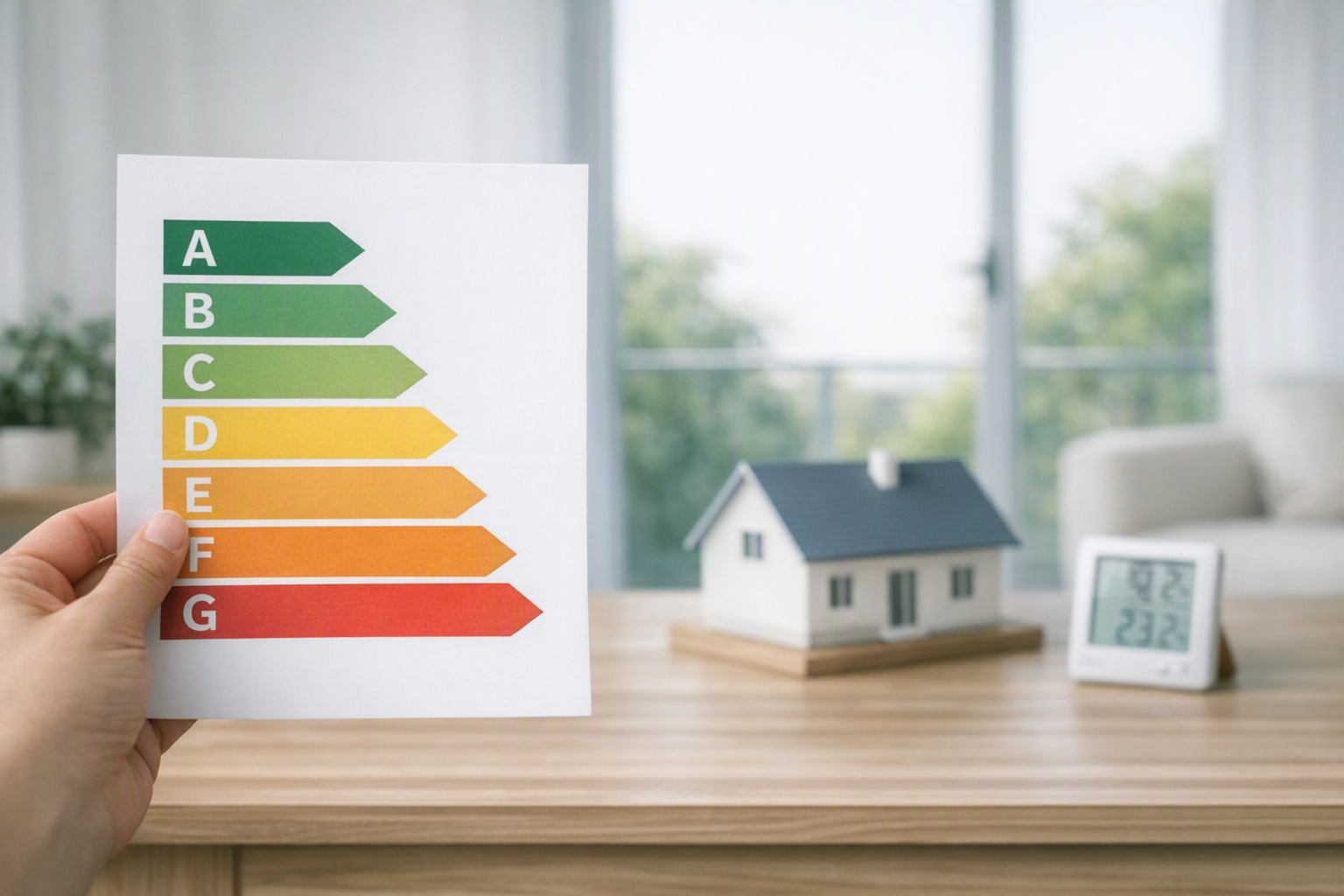
The rating scale consists of seven letters, ranging from A (maximum efficiency) to G (minimum efficiency):
- Class A, B and C: These correspond to homes with excellent insulation, high-efficiency air conditioning and heating systems (such as aerothermal systems) and, frequently, integrated renewable energy sources.
- Class D and E: These represent the average standard of existing buildings. They have moderate consumption but with ample room for improvement.
- Class F and G: These are properties with serious thermal insulation deficiencies, inefficient windows and obsolete heating or air conditioning systems that skyrocket utility bills.
By 2026, this scale will not be a simple visual indicator in advertisements. European Union regulations aim to progressively restrict the rental and sale of those properties in the lowest efficiency bands, with the aim of eradicating fuel poverty and decarbonising the housing stock by 2050.
European and National Regulations: Is it Compulsory in 2026?
The short answer is a resounding yes. By the year 2026, the compulsory nature of the energy performance certificate in holiday rentals is fully established and strictly monitored by public administrations and the booking platforms themselves.
The Energy Performance of Buildings Directive (EPBD)
The European Union approved the revision of the Energy Performance of Buildings Directive (EPBD), which establishes a very clear roadmap for the coming years. This directive requires all Member States to implement measures for residential buildings to reduce their primary energy consumption.
By 2026, EU countries must have fully adapted their legal systems to require that any home offered for rent (including holiday and short-term lets) has a minimum energy rating to be marketed. The ultimate goal is for properties with an F and G rating to disappear from the rental market if they do not carry out energy improvement renovations.
The end of the "four-month" exemption in Spain
Historically, many holiday home owners in Spain took advantage of an exemption included in Royal Decree 235/2013 (and partially maintained in subsequent reforms), which exempted properties rented out for less than four months a year from the obligation to present an energy certificate.
However, market reality and successive regulatory updates, such as Royal Decree 390/2021, have practically closed this loophole. Currently, if a property is promoted on tourist channels (digital platforms, travel agencies, booking websites), it is assumed to be available for rent throughout the year, meaning the four-month exemption is inapplicable in the vast majority of inspected cases.
Requirements by Autonomous Communities in Spain
Given that powers in tourism and housing are devolved to the autonomous communities, the specific requirements to register and maintain a holiday rental property (VUT) vary significantly from one region to another. However, the general trend looking towards 2026 is the unification of criteria around the compulsory nature of the energy performance certificate.
Andalusia and the Costa del Sol
In Andalusia, Decree 31/2024, which modifies the regulation of tourist apartments and holiday rental properties, has tightened the habitability and sustainability requirements. To register a property in the Tourism Registry of Andalusia, it is compulsory to have a valid energy performance certificate, duly registered with the competent body of the Regional Government of Andalusia (Junta de Andaluc??a). Inspections in this community have intensified to ensure that the tourist registration code is linked to a valid EPC.
Catalonia and the new restrictions
Catalonia has some of the strictest legislation regarding tourist housing. The Generalitat requires the tourist registration number to appear in all advertising for the accommodation along with the energy efficiency label. Looking ahead to 2026, Catalan town councils have the power to deny or revoke tourist licences for properties that do not meet minimum standards of sustainability and water and energy efficiency, especially in areas with high tourist pressure or resource scarcity.
Valencian Community
The Valencian Community requires holiday rental properties to have an energy certificate for registration. Furthermore, recent regional regulations make it compulsory for the energy rating to be visible on booking portals. Non-compliance with this rule is considered a serious infringement, subject to significant financial penalties.
Madrid and other regions
In the Community of Madrid, although tourist regulations have historically been more flexible in some aspects, the application of Royal Decree 390/2021 at national level requires any advertising aimed at the sale or rental of a property (including holiday lets) to display the energy efficiency label. In northern communities, such as the Basque Country or Galicia, the energy certificate is an essential requirement from the moment the responsible declaration of start of activity is submitted.
How the 2026 Regulation Affects Holiday Home Owners
The entry into force of the new energy efficiency requirements for 2026 poses both challenges and opportunities for tourist accommodation owners. Understanding these implications is vital to maintain competitiveness in the market.
- Loss of visibility on booking platforms: Channels such as Airbnb and Booking are adapting their search algorithms to prioritise accommodation that demonstrates sustainable practices and has favourable energy ratings. Accommodation with an A or B rating will receive greater visibility and even special "sustainable accommodation" badges.
- Increase in property value: Carrying out renovations to improve the energy rating of the property not only ensures compliance with the law, but also directly increases the market value of the property and its attractiveness to future buyers or long-term tenants.
- Drastic reduction in operating costs: Efficient accommodation consumes up to 60% less energy for heating and air conditioning. In a sector where utility costs are usually borne by the owner, this reduction directly impacts the net profit margin of each booking.
Step-by-Step Guide to Obtaining an Energy Performance Certificate in 2026
If you do not yet have an energy certificate for your holiday home, or if the one you have is about to expire (remember that, in general, they have a maximum validity of 10 years, although those with a G rating may be reduced to 5 years under the new directives), you must follow these steps to regularise your situation:
1. Choosing a qualified technician
You must hire the services of a competent and qualified professional to carry out energy certifications. These professionals are usually architects, technical architects, industrial engineers or technical engineers. It is advisable to request several quotes and verify that the technician is registered with their professional association and has experience in the residential tourist sector.
2. Technical inspection visit
The visit to the property is compulsory by law. Be wary of online services that offer energy certificates without carrying out a physical visit to the property. During the inspection, the technician will take measurements of the rooms, analyse the orientation of the property, assess the composition of the facades, the type of windows (glass and frames), and review the air conditioning, heating and domestic hot water systems.
3. Calculation and drafting of the report
With the data collected on-site, the technician will use software approved by the Ministry for the Ecological Transition and the Demographic Challenge (such as CE3X or CERMA) to calculate the energy demand of the property and its CO2 emissions. The software will generate the certificate, which will include the rating obtained and a set of personalised recommendations to improve the energy efficiency of the property cost-effectively.
4. Official registration in the autonomous community
For the certificate to have legal validity, it must be registered with the competent public body of your autonomous community. In most cases, the technician themselves will handle this online procedure, subject to payment of the corresponding regional fees. Once registered, the official energy label will be issued, which contains the registration code that you must include in your holiday rental listings.
Penalties and Fines for Non-Compliance
Not having an energy certificate or not displaying it in the advertising of your holiday home in 2026 can lead to serious financial and administrative consequences. Spanish legislation, through the Law on Urban Rehabilitation, Regeneration and Renovation, classifies infringements into three levels:
| Severity of the Infringement | Description of Non-Compliance | Range of Financial Fines |
|---|---|---|
| Minor | Advertising the property without mentioning the energy rating obtained or failing to renew an expired certificate. | From €300 to €600 |
| Serious | Selling or renting a property without delivering a valid energy certificate to the buyer or tenant. | From €601 to €1,000 |
| Very Serious | Falsifying certificate information, acting as a certifier without the required qualification or advertising a false rating. | From €1,001 to €6,000 |
In addition to these national fines, the tourism departments of the various autonomous communities can impose additional sanctions, including the temporary or permanent suspension of the tourist housing licence, which would completely prevent the commercial exploitation of the property.
Strategies to Improve Your Accommodation's Energy Rating
Obtaining a poor rating (F or G) not only makes compliance with the 2026 regulations difficult, but also significantly increases the running costs of your business. Below, we present the most effective renovations and improvements to raise the energy rating of your tourist accommodation:
Thermal insulation in windows and facades
The greatest loss of energy in a property occurs through the external building envelope. Replacing old single-glazed windows with aluminium windows with a thermal break (RPT) or PVC, combined with low-emissivity double or triple glazing, can reduce heating and cooling demand by up to 30%. Likewise, installing insulation from the inside or using EWI (External Wall Insulation) systems on the exterior walls drastically improves guest thermal comfort.
Efficient air conditioning and heating systems (Aerothermal energy)
Replacing oil or conventional gas boilers and inefficient electric radiators with aerothermal systems is one of the most profitable investments in the medium term. Aerothermal energy uses the energy contained in the outside air to provide heating, cooling and domestic hot water with an efficiency that exceeds 400%, allowing you to quickly move up the energy certification ranks.
Home automation and consumption control
One of the biggest problems with holiday rentals is the irresponsible use of air conditioning and heating by guests (for example, leaving the air conditioning on at full power with the windows open while they are out). Installing smart thermostats with motion and window-opening sensors allows equipment to be turned off or regulated automatically when the property is empty, reducing unnecessary energy consumption without detracting from the guest experience.
Optimisation of Your Holiday Rental Management in the Face of New Challenges
Adapting to the environmental demands of 2026 requires an investment of time and financial resources from owners. To offset these costs and maintain high profitability, it is essential to have technological management tools that automate daily tasks and optimise accommodation revenue.
The implementation of comprehensive management software allows you to centralise all your operations in a single control panel. By ensuring excellent booking synchronisation across channels such as Airbnb, Booking and your own direct booking website, you avoid overbooking issues and guarantee optimal occupancy of your efficient properties.
Likewise, to ensure that all sustainable installations in your home (such as solar panels, aerothermal systems or electric vehicle chargers) function correctly and do not suffer breakdowns that affect the guest experience, it is vital to co-ordinate your maintenance teams effectively. By using customised control forms, your cleaning teams and maintenance technicians can complete detailed checklists after each departure, verifying the status of energy systems and ensuring that the accommodation is always in perfect condition for sustainability and comfort.
Frequently Asked Questions (FAQ) on the 2026 Energy Performance Certificate
How much does it cost to obtain an energy certificate for a holiday home?
The price is not regulated by law and depends on free competition between professionals. The factors influencing the cost are the size of the property, the geographical location and the complexity of the dwelling. Generally, for a standard apartment of around 70 square metres, the cost usually ranges between 80 and 150 euros, excluding regional registration fees.
How long is the energy certificate valid for in 2026?
As a general rule, the certificate is valid for 10 years from its date of issue. However, under the new European directives coming into force for 2026, certificates with a very low energy rating (class G) have a reduced validity of 5 years, in order to encourage owners to carry out efficiency improvements on their properties more frequently.
Can I list my tourist accommodation on Airbnb without an energy certificate?
Not legally. Booking platforms are obliged by European and national regulations to request and display the energy efficiency label on the listings of the properties they market. Failing to include this data can lead to the immediate removal of the listing from the platform and the opening of disciplinary proceedings by consumer and tourism authorities.
Are there grants available to improve the energy efficiency of my holiday rental?
Yes, there are various public subsidy programmes funded by European funds (such as the Next Generation EU Funds) aimed at the energy rehabilitation of residential buildings and single-family homes. These grants can cover from 40% up to 80% of the cost of the renovations (such as changing windows, installing aerothermal systems or solar panels), provided that a significant reduction in non-renewable primary energy consumption is demonstrated after the renovation.
Sustainability as a Competitive Advantage for 2026
Far from seeing the energy certificate as a mere bureaucratic imposition or an additional expense, holiday rental owners should understand it as a strategic positioning opportunity in the tourism market of the future.
Post-pandemic travellers show a clear preference for accommodation that respects the environment and demonstrates a real commitment to sustainability. Efficient accommodation not only consumes fewer resources and reduces your utility bills, but also attracts a higher-spending guest profile, willing to pay a premium rate to enjoy a comfortable, modern stay that respects the planet.
Preparing your accommodation for the demands of 2026, processing your energy certificate on time and relying on advanced management tools will guarantee a prosperous, legal and highly profitable tourism business for years to come.