
Emergency Protocol for Holiday Rentals: A Safety Guide
The Importance of Safety in Holiday Accommodation
Managing holiday accommodation goes far beyond handing over the keys and ensuring the property is clean. As holiday rental owners or managers, we assume the implicit responsibility of looking after the safety and well-being of the people who trust our service. A domestic accident, a sudden illness, or a force majeure situation can happen at any time. The difference between a controlled incident and a reputational or legal crisis lies exclusively in preparation.
Many landlords operate under the assumption that "nothing ever happens". However, statistics show that medical and domestic emergencies are more common during holidays than we might think. The change of environment, lack of familiarity with the property, and the relaxed nature of the summer period can lead to carelessness. Therefore, having a structured contingency plan is not an optional extra, but a fundamental operational necessity for any professional hospitality business.
In this article, we will analyse in depth how to design and implement an all-inclusive action plan for emergencies with guests. You will learn how to equip your property, manage communication in critical moments, and protect your business against legal claims, whilst guaranteeing an impeccable user experience even under the worst circumstances.
What Risks Do You Run Without an Emergency Protocol?
The lack of a clear and accessible emergency protocol exposes holiday home owners to multiple risks that can compromise the viability of their business. When a guest faces a situation of panic or pain, their ability to react decreases. If they cannot find clear instructions, the consequences can be severe.
Below, we detail the main dangers of operating without a structured safety plan:
- Public and criminal liability: If it is proven that an accident was worsened by the lack of basic safety measures or the absence of crucial information (such as the location of stopcocks or emergency exits), the owner could face multi-million-pound lawsuits.
- Loss of reputation and damaging reviews: A guest who suffers a mishap and feels abandoned or ignored will almost certainly leave a one-star review on platforms like Airbnb or Booking.com. These types of reviews immediately drive future customers away.
- Aggravated property damage: If the emergency is of a technical nature (such as a water leak or a short circuit) and the guest does not know how to shut off the supply quickly, a minor issue can turn into a total loss that destroys the property.
- Stress and operational burnout: Receiving a call in the middle of the night from a panicked guest without knowing how to respond creates extreme tension for the manager, affecting their mental health and resolution capacity.
The Perfect First-Aid Kit for Your Property
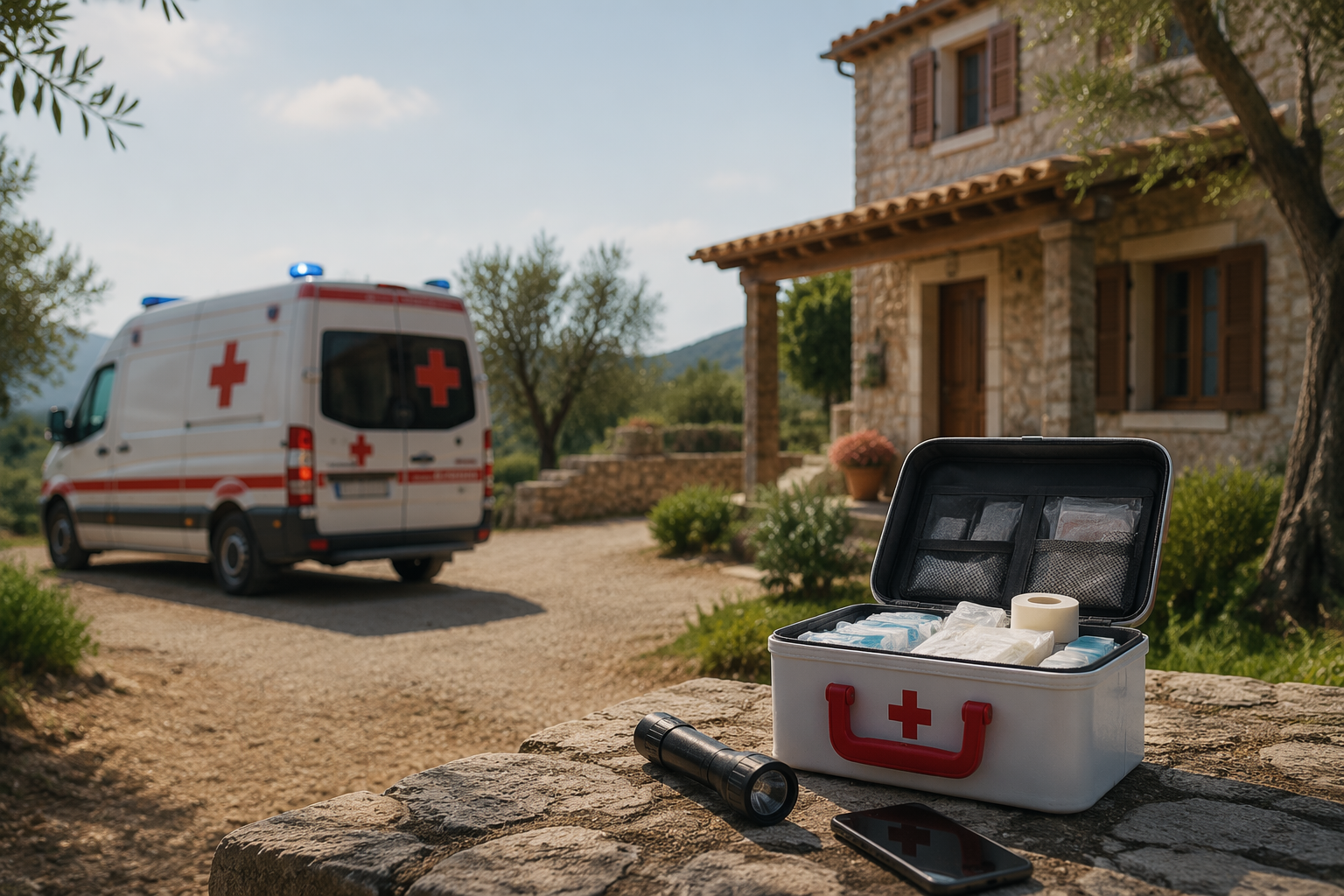
The first physical item that any holiday accommodation must have is a well-equipped and clearly marked first-aid kit. It is not enough to leave a cardboard box with old plasters in a kitchen drawer; the kit must be professional, visible, and checked regularly.
It is essential to locate it in an easily accessible place, preferably in the main bathroom or the kitchen, and clearly signpost it in the house manual. Furthermore, we must bear in mind a golden rule: oral medication must never be included (such as painkillers, antibiotics, or antihistamines) in the first-aid kit, as the guest could suffer severe allergic reactions and the liability would fall on the owner.
Essential Items in a Holiday Rental First-Aid Kit
A basic but highly efficient first-aid kit for a holiday let should contain:
- Dressings and bandages: Individual sterile gauze swabs, elastic bandages of different sizes, hypoallergenic micropore tape, and plasters of various sizes (waterproof, blister plasters, etc.).
- Approved antiseptics: Chlorhexidine or 70% rubbing alcohol to disinfect wounds quickly and safely.
- Basic tools: Round-ended scissors, tweezers (useful for removing splinters or thorns), and single-use nitrile gloves.
- Thermal relief items: Instant cold packs (activated by squeezing or striking them) for sprains or bruises, and an emergency foil blanket.
- Permitted topical treatments: Single-dose saline solution for eye washes or wound cleaning, and pure aloe vera gel to soothe mild sunburn.
To ensure that the kit is always fully stocked and with in-date products, it is highly recommended to use control checklists that your cleaning team can fill out after each guest departure. This way, if a client uses any item, it will be replenished immediately before the arrival of the next group.
The Emergency Contact Directory: Clarity in the Face of Chaos
In a crisis situation, Googling the number of an A&E hospital or the local police can consume vital minutes. Therefore, it is mandatory to have a visible emergency contact directory, written in several languages (at least the local language and English) and placed in a strategic spot in the house, such as behind the main door or next to the television.
This directory must be presented in a clear format, with large, legible typography, and include the following telephone numbers and location details:
1. Public Emergency Service Numbers
- Unified emergency number: 999 or 112 (in the UK and Europe) or 911 (in America). Briefly explain to the guest that this number connects to the police, fire brigade, and ambulance services.
- Local and National Police: Direct numbers for the police stations nearest to the accommodation to report thefts or public safety issues.
- Fire Service: Number of the local station for fires or rescues.
2. Health Centres and Medical Assistance
- NHS hospital with 24-hour A&E: Hospital name, exact address, and estimated travel time by car or public transport.
- Local GP surgery or health centre: For medical consultations that are not extremely serious but require daytime professional attention.
- Nearest late-night or 24-hour pharmacy: Directions to locate the nearest chemist offering night-time or 24-hour services.
3. Location Details of the Accommodation Itself
This is a detail that many owners forget, but it is crucial. When a foreign guest calls the emergency services in a state of panic, it is highly likely they will not remember the exact address of the house where they are staying. Therefore, the emergency sign must display, at the top in large, bold letters, the complete address of the accommodation, including flat, door, postcode, and GPS coordinates if it is in a rural area that is difficult to access.
Public Liability Insurance: Protecting Your Assets
Many owners blindly rely on the coverage offered by booking platforms like Airbnb (with their AirCover programme) or Booking.com. Whilst this coverage is of great help, it in no way replaces a specific public liability insurance policy for holiday lets.
A commercial public liability insurance policy tailored to holiday letting covers bodily injury and property damage that guests may suffer within the property due to building defects (for example, a fall down a poorly signposted step, electrocution from a faulty appliance, or carbon monoxide poisoning). When taking out this policy, you must ensure it includes:
- Full legal defence: Solicitor fees and legal representation costs in case the guest decides to take legal action against you.
- Water and fire damage cover: To protect the building structure and guests' belongings in the event of major incidents.
- Employers' liability insurance: In case you hire staff directly (cleaners, maintenance) and they suffer an accident at work inside your property.
Investing in a robust insurance policy is not an expense; it is the safeguard of your personal and business assets against any catastrophic eventuality.
The Guest Emergency Manual: Structure and Content
The house manual or "welcome book" is the document detailing how the accommodation works. However, the section dedicated to safety is often non-existent or too brief. Creating a specific Guest Emergency Manual is the best way to guide travellers step-by-step through critical situations.
This document should be written in an assertive manner, using a calm but firm tone, avoiding unnecessary alarmism whilst making safety instructions clear.
Key Sections to Include in the Safety Manual:
- Location of safety equipment: Clearly indicate where the first-aid kit, fire extinguisher, fire blanket in the kitchen, and smoke or carbon monoxide detectors are located.
- Mains shut-off valves: Show with photographs the exact location of the main water stopcock, gas valve, and fuse box. In the event of a leak, the guest can act immediately by following your visual instructions.
- Evacuation plan: A simple floor plan of the property showing the available emergency exits and the quickest evacuation route to the outside of the building or common area.
- Basic safety rules: Recommendations to prevent accidents, such as not leaving candles lit, not plugging too many appliances into one socket, keeping pool gates closed if travelling with children, etc.
An excellent practice to ensure that travellers have this information from the very first minute is to set up automated guest messaging that includes emergency details on the day of their arrival, ensuring they have digital access to the information even before stepping through the door.
Step-by-Step Action Protocol in the Event of an Incident
What should you do, as an owner or manager, when you receive a call from a guest reporting an accident or illness? Keeping a cool head is essential. Follow this standardised action protocol to manage the situation with the utmost professionalism:
Step 1: Assess the Severity of the Situation
Listen carefully to the guest without interrupting. Try to determine if it is a life-threatening emergency (heart attack, choking, loss of consciousness, severe bleeding) or a minor urgency (shallow cut, sprained ankle, fever). If the guest's life is in danger, instruct them immediately to hang up and call the local emergency services (999 or 112), or make the call yourself if the guest faces insurmountable language barriers.
Step 2: Facilitate Medical Assistance
If the situation is not critical but requires medical attention, offer the guest the options prepared in your directory. Provide them with the exact address of the nearest health centre or help them book a taxi if they do not have their own vehicle. If your insurance offers telephone or home medical assistance for guests, activate this service immediately.
Step 3: Constant and Empathetic Communication
Keep an open line of communication with the guest or their companions. Send them a written message so there is a record of your willingness to help and the recommendations you have offered. Show genuine empathy: ask how they are doing and if they need you to travel to the accommodation to assist them personally or coordinate with the medical services.
Step 4: Document Everything That Happened
Once the immediate medical emergency is resolved, it is vital to document the incident thoroughly. Take detailed notes of the time of the call, the facts described by the guest, the actions you took, and the solutions offered. If possible, take photographs of the accident site inside the property to demonstrate the condition of the facilities. This documentation will be your best defence against any subsequent insurance claim or dispute on booking platforms.
Ready-to-Use Emergency Manual Template
Below, we offer a template that you can copy, adapt with the actual details of your holiday accommodation, translate into the languages of your regular guests, and print to display in a visible place on your property:
SAFETY & EMERGENCY GUIDE
Property Address:
[Street, Number, Flat, Door, Postcode, City]
GPS Coordinates:
[Insert latitude and longitude if applicable]
EMERGENCY NUMBERS:
- General Emergency: 999 or 112 (UK / Europe) / 911 (America)
- Local Police: [Insert number]
- Fire Brigade: [Insert number]
- Medical Emergency: [Insert number]
MEDICAL ASSISTANCE NEARBY:
- Nearest Hospital 24h: [Hospital Name, Full Address]
- GP Surgery / Local Clinic: [Name, Address, Opening Hours]
- 24h Pharmacy / Chemist: [Address of the nearest or directions]
SAFETY EQUIPMENT LOCATION:
- First Aid Kit: [e.g. In the lower cupboard of the main bathroom]
- Fire Extinguisher: [e.g. In the entrance hallway, next to the door]
- Fire Blanket: [e.g. In the top kitchen drawer]
- Fuse Box: [e.g. Behind the main door]
- Water Stopcock: [e.g. Under the kitchen sink]
Host Contact: [Your Name and 24h Telephone Number]
Prevention as the First Line of Defence
Although knowing how to react in an emergency is crucial, the primary goal of any holiday accommodation manager must be to prevent accidents from happening in the first place. Active prevention drastically reduces the likelihood of suffering serious incidents on your property. Implementing a routine of preventive maintenance and regular safety audits is the best investment of time you can make.
To ensure a 100% safe environment, we recommend following this physical safety checklist in your accommodation:
- Smoke and carbon monoxide detectors: Install at least one in the kitchen and another near the bedrooms. Test the batteries regularly (at least twice a year).
- Safety lighting: Ensure stairs and outdoor pathways are perfectly lit at night. Consider installing emergency lights that turn on automatically during a power cut.
- Fall prevention: Place non-slip mats in baths and showers. Ensure that balcony and staircase railings are securely anchored and comply with local height regulations.
- Child safety: If you welcome families with children, offer socket covers, safety gates for stairs, and ensure that cleaning products are locked away or out of reach.
- Gas and electricity checks: Carry out the inspections required by law and keep maintenance certificates up to date. An electrical fault is one of the most common causes of domestic fires in holiday accommodation.
Conclusion: Safety Is Not Optional in Holiday Let Management
Offering a safe stay is the fundamental pillar upon which guest trust and your brand reputation as a host are built. Ignoring the risks associated with accidents or sudden illnesses inside your property is a negligence that can be very costly, both on a human and financial level.
Equiping your accommodation with a fully stocked first-aid kit, drafting a clear emergency directory, taking out robust public liability insurance, and educating your guests through a detailed emergency manual are simple yet invaluable actions. By professionalising your property's safety, you not only protect those who visit you, but you also secure the future and peace of mind of your holiday rental business.