
Complete Guide to Automating Cleaning and Maintenance of Your Holiday Rentals
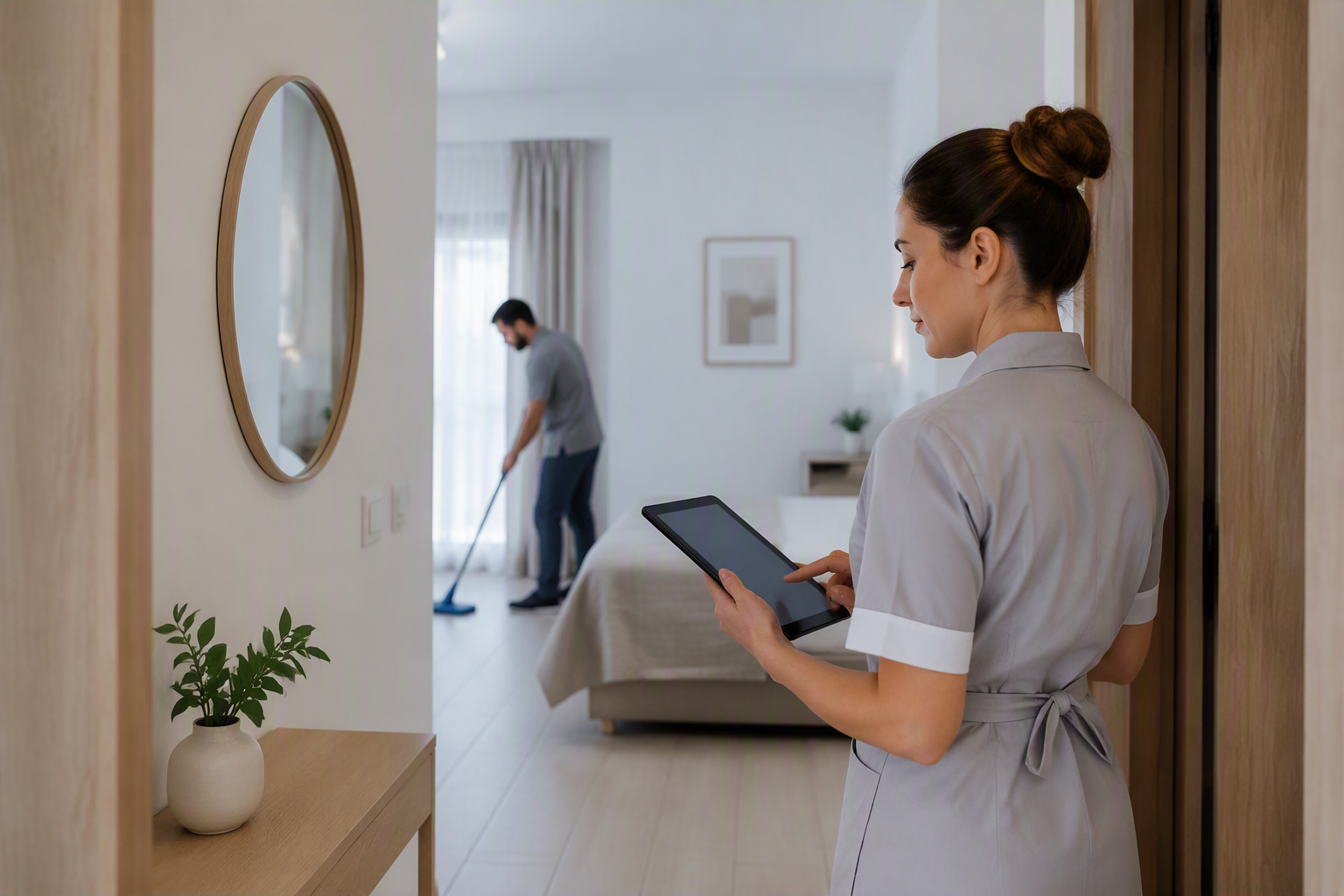
The Cleaning Challenge in the Holiday Rental Sector
Managing tourist accommodation involves multiple operational tasks, but none is as critical to business success as cleaning and preventive maintenance. A single hair in the bathroom or a poorly washed sheet can destroy months of online reputation in a matter of minutes. In fact, according to various satisfaction reports from platforms like Booking.com, cleanliness is the number one factor that determines a guest's final rating and their willingness to recommend the establishment.
For property owners and managers handling multiple units, coordinating these services manually quickly becomes a logistical nightmare. Constant calls, last-minute WhatsApp messages, involuntary oversights, and a lack of control over quality standards generate unnecessary stress and eat into business profitability. This is where holiday rental cleaning automation and the use of digital tools make a massive competitive difference.
In this practical guide, we will analyse in depth how you can structure, digitalise, and fully automate the cleaning and maintenance processes of your holiday homes to optimise your resources, reduce costs, and guarantee a five-star experience for each of your guests.
What Is Cleaning Automation in Holiday Rentals?
Cleaning automation does not consist of replacing human staff with robots, but rather of intelligently connecting the booking flow with the allocation of operational tasks. By using specialised management software, the system autonomously detects when a checkout and a check-in occur to generate immediate work orders for the cleaning team, without requiring manual intervention from the administrator.
This digital ecosystem relies on real-time booking synchronisation. When a customer books through Airbnb, Booking.com, VRBO, or your own direct booking website, the centralised calendar updates the dates and triggers a series of pre-configured automated rules. For example, you can set it so that, after each checkout, a standard 3-hour cleaning task is automatically assigned to the nearest available operator.
Benefits of Digitalising and Automating Cleaning Management
Adopting digital technologies to coordinate your work teams not only alleviates the administrative burden but completely transforms your business's cost structure. Below, we detail the most significant benefits:
1. Elimination of Human Errors and Overlaps
Human error is inevitable when managing calendars manually on spreadsheets or notebooks. Forgetting to log a last-minute booking or confusing a guest's departure day can result in a new guest arriving at a dirty apartment. Automation eliminates this risk by syncing tasks directly with real occupancy data.
2. Optimisation of Operational Staff's Time
Your cleaners and maintenance technicians receive their daily routes and tasks directly on their mobile devices. They know exactly what time they need to enter, which apartment is vacant, and what specific tasks they need to perform, drastically reducing downtime and unnecessary travel.
3. Consistent and Documented Quality Control
Automation allows for the implementation of rigorous quality standards. By using digital checklists, operators must confirm the completion of each critical point before they can close the service. This ensures that all apartments are prepared to the same standard of excellence, regardless of who does the job.
4. Reduction in Staff Turnover
A lack of organisation and chaotic communication are usually the main causes of frustration in cleaning teams. By providing them with a clear, predictable, and easy-to-use tool, you improve their working conditions, reduce their stress, and foster a long-term working relationship based on transparency.
Step-by-Step: How to Implement an Automated Cleaning System
Transitioning from a traditional management model to an automated one requires structured planning. It is not just about purchasing software, but about redefining how your business operates. Follow these key steps for a successful implementation:
Step 1: Map and Standardise Your Current Processes
Before automating, you must be clear about what you want to automate. Meticulously document each of the tasks that must be carried out in your properties. Divide cleanings by type:
- Changeover cleaning (Checkout): The standard cleaning carried out between a guest's departure and the next guest's arrival.
- Deep cleaning: More thorough tasks scheduled on a monthly or quarterly basis (cleaning curtains, windows, sanitising mattresses, etc.).
- Maintenance cleaning: A quick touch-up for properties that have been empty for several days to remove accumulated dust before an arrival.
Step 2: Selecting the Right Management Platform
Choose management software with a robust operations and team management module. It is essential that the platform offers an intuitive mobile app for cleaning staff, as they will work primarily on the ground. Look for solutions that allow two-way communication and real-time media uploads.
Step 3: Integration with Booking Channels
Connect your PMS (Property Management System) or Channel Manager with the task automation tool. Ensure that data transmission is instantaneous. If a booking is cancelled or modified at the last minute, the system must be able to automatically reschedule or cancel the associated cleaning task, immediately notifying the assigned operator.
Step 4: Creating Interactive Checklists and Control Forms
A fundamental pillar for guaranteeing quality is the implementation of digital control forms. These interactive questionnaires guide the cleaner step-by-step through each room of the accommodation (kitchen, bathrooms, bedrooms, terrace). The operator cannot complete the task without ticking each box and, optionally, attaching photos showing that the work has been done correctly. This serves as quality assurance for the manager and as visual proof against any unjustified guest complaints.
Step 5: Automating Task Assignment
Configure smart assignment rules based on different criteria:
- By geographical area: Assign properties to the staff who are closest to reduce travel costs.
- By workload: Distribute tasks evenly among your team members to avoid physical overload.
- By specialisation: Direct technical maintenance tasks to qualified technicians and standard cleaning tasks to cleaning staff.
Automated Coordination of Cleaning and Maintenance Teams
Once the system is set up, daily coordination flows organically. Digital tools allow you to monitor everything that happens in your properties without needing to be physically present.
Real-Time Notifications
When a cleaner starts their shift and enters the first apartment, they mark the start of the task in the app. The system updates the property status to "Cleaning in progress". This allows the customer service team to know precisely when the accommodation will be ready to welcome new guests, facilitating the management of early check-in requests.
Efficient Issue Management During Cleaning
It is very common for cleaning staff to be the first to detect problems in the property: a leaking tap, a blown light bulb, broken crockery left by previous guests, or even a serious defect requiring immediate technical attention. With an automated system, the cleaner can report an issue directly from the app, attach a photo of the damage, and classify the severity of the problem. The system automatically generates a work order for the maintenance team, allowing the issue to be resolved before the next guest arrives.
Visual Quality Control: The Power of Before and After
Requesting photos of the final state of the apartment not only serves to monitor staff performance but is also a marketing and security tool. Having a timestamped and geolocated visual record of how the apartment was left after cleaning protects you against disputes with booking platforms if a guest lies about the state of the property to demand a refund.
Automated Preventive and Corrective Maintenance
Cleaning keeps the apartment attractive, but maintenance ensures that everything works correctly. An air conditioner that does not cool in the middle of summer or a broken boiler in winter can completely ruin the guest experience and result in very costly financial compensation.
Differences Between Preventive, Corrective, and Predictive Maintenance
To efficiently manage your assets, you must understand and apply these three maintenance approaches:
- Preventive Maintenance: Periodically scheduled tasks to prevent failures before they occur. Examples: cleaning air conditioning filters every three months, boiler servicing before winter, changing batteries in electronic locks.
- Corrective Maintenance: Repairs carried out once the failure has already occurred. Example: fixing a broken blind reported by a guest.
- Predictive Maintenance: Use of data and technology to anticipate when equipment will fail. For example, monitoring the electricity consumption of an appliance to detect anomalies indicating internal wear and tear.
Good management software allows you to schedule recurring preventive maintenance tasks automatically during low occupancy periods, ensuring that your properties are always kept in optimal condition.
Key Tools and Technologies for Automation
The technological ecosystem for managing tourist accommodation has evolved enormously. To achieve comprehensive automation, it is advisable to integrate different tools:
1. Mobile Apps for Field Staff
They are the direct communication channel with your workers. They must be extremely simple to use, intuitive, and work offline in case the apartment does not have good coverage, automatically syncing data once the connection is restored.
2. Smart Locks and Access Control
Integrating electronic locks with your management system allows you to generate unique, temporary access codes for cleaning and maintenance staff. These codes are only valid during the hours assigned for the task. This not only increases property security but also records the exact time of entry and exit of staff with total accuracy, facilitating the tracking of actual working hours.
3. IoT (Internet of Things) Sensors
Home automation applied to holiday rentals offers innovative solutions. Noise sensors can alert you if permitted decibel levels are exceeded, preventing unauthorised parties. Meanwhile, flood sensors in bathrooms or kitchens can send an instant critical alert to the maintenance team to prevent major damage from water leaks.
Best Practices for Working with Cleaning Teams
Technology is an enabler, but the human factor remains the engine of operations. For automation to work successfully, you must look after the relationship with your work teams, whether internal or external:
Clear Definition of Cleaning Standards (SOPs)
Create highly visual and detailed Standard Operating Procedures (SOPs). If you work with an external cleaning company, ensure that their employees are perfectly trained in your specific standards. Detail aspects such as the exact placement of towels, welcome details for guests, or the arrangement of cushions on the sofa.
Incentives Based on Performance and Ratings
Motivate your team by linking part of their pay or monthly bonuses to the cleanliness ratings left by guests on booking platforms. If an apartment consistently receives 5-star ratings for cleanliness, reward the efforts of the operators responsible for that unit. This fosters pride in a job well done and attention to detail.
Centralised Communication Channels
Avoid using generic instant messaging apps like WhatsApp for assigning critical tasks. Important information often gets lost among informal conversations, leading to misunderstandings and coordination failures. All communication related to task status, issues, or special requests must be recorded centrally within the management platform.
The Impact of Automated Cleaning on Your Listings' SEO Ranking
Many owners are unaware that operational efficiency directly influences the ranking of their listings on platforms like Airbnb or Booking.com. The algorithms of these OTAs reward accommodations that offer an impeccable user experience:
- Better average ratings: Accommodations with excellent cleanliness scores appear higher in search results.
- Lower cancellation rate due to issues: Preventing a guest from cancelling their booking upon arrival due to cleaning or maintenance issues prevents algorithm penalties.
- Ability to offer late checkout and early check-in: Having precise, real-time control over cleaning times allows you to offer these additional services with total confidence, generating extra income and improving customer satisfaction.
Conclusion: The Future of Operational Management for Tourist Accommodation
Cleaning and maintenance automation is no longer a luxury reserved for large hotel chains or multinational property management companies. Today, it is an absolute necessity for any owner or manager who wants to scale their business sustainably, maintain high quality standards, and, above all, regain their free time.
Implementing digital tools and automating the coordination of your teams allows you to delegate daily operations with complete confidence, knowing that the system ensures compliance with your quality standards. Start digitalising your operational processes today and transform the management of your holiday rentals into a well-oiled and highly profitable machine.