
Common Errors When Submitting to SES Hospedajes: Solutions and Tips
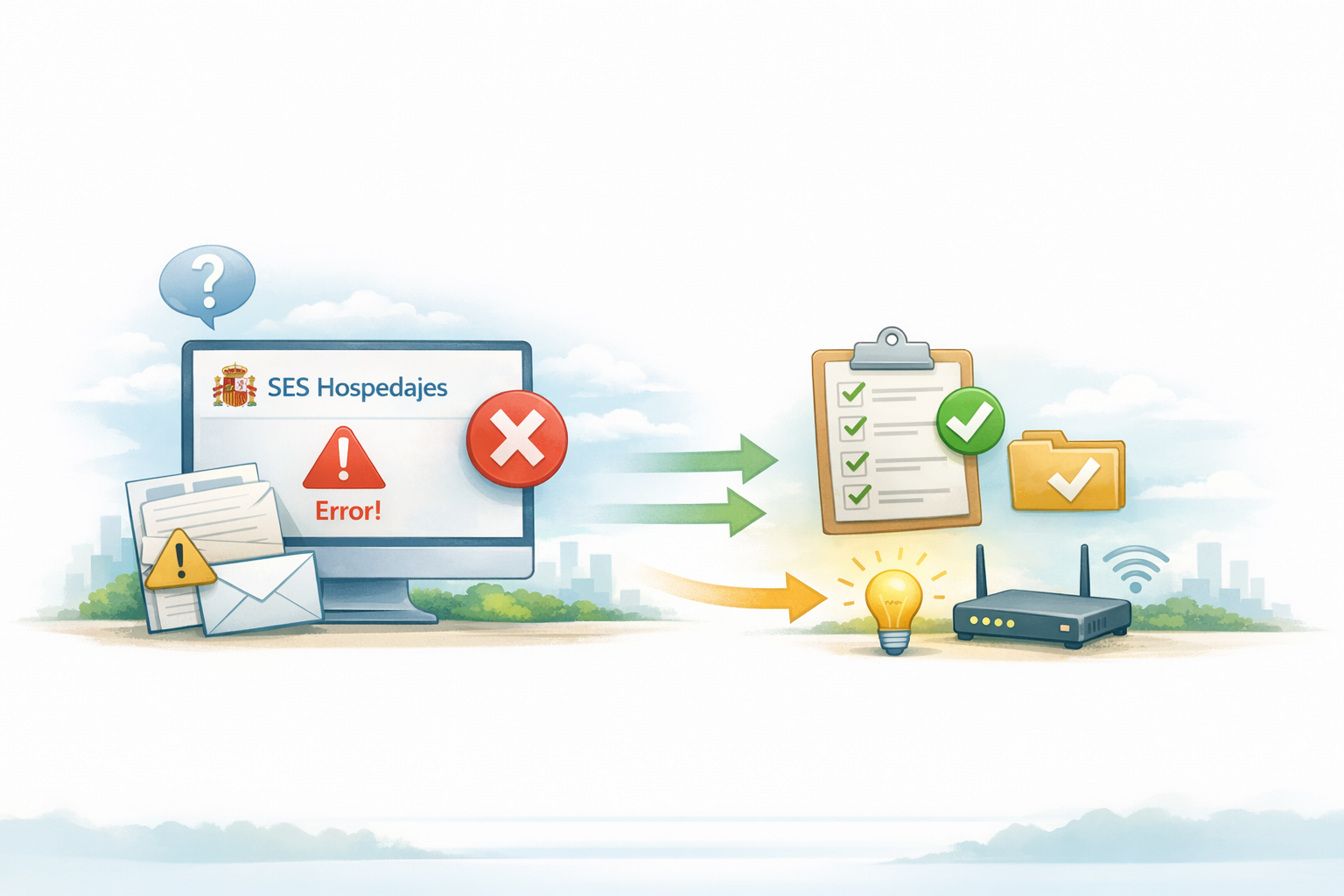
Introduction: Navigating the Mandate of Guest Registration in Spain with SES Hospedajes
In the vibrant and ever-evolving landscape of Spain's tourism industry, compliance with legal requirements is not merely an option but a fundamental pillar for any accommodation provider. Among these crucial obligations, the registration of guests stands out as a paramount responsibility, primarily managed through the platform known as SES Hospedajes. This system, developed and maintained by the Spanish Ministry of Interior, serves as the official conduit for logging the entry and exit of every guest staying in tourist accommodations across the country, from bustling hotels in Barcelona to quaint holiday rentals on the Costa del Sol.
For owners of holiday homes, apartments, villas, and hotels, understanding and mastering SES Hospedajes is non-negotiable. It's an essential tool for complying with Spain's stringent traveller registration regulations, designed to enhance public safety and security. However, despite its critical importance, many users frequently encounter a range of common errors when attempting to submit guest information to SES Hospedajes. These issues can lead to frustrating delays, potential fines, and a significant drain on valuable time and resources.
This comprehensive guide aims to demystify SES Hospedajes, offering an in-depth exploration of its purpose, the legal framework that underpins it, and, most importantly, the most frequent errors that accommodation providers face. Beyond merely identifying these challenges, we will provide practical, actionable solutions and expert tips, empowering you to streamline your guest registration process, ensure full compliance, and ultimately enhance the efficiency and reputation of your accommodation business. Our goal is to transform the often-daunting task of guest registration into a smooth, error-free operation, allowing you to focus on what you do best: providing exceptional experiences for your guests.
Understanding the Legal Landscape: The Foundation of SES Hospedajes
Before diving into the common pitfalls, it's vital to grasp the legal imperatives that make SES Hospedajes an indispensable part of operating tourist accommodation in Spain. The requirement to register guests is not a bureaucratic whim but a firmly established legal obligation rooted in national security and public order concerns. Adhering to these regulations is not just about avoiding penalties; it's about contributing to a safer environment for both residents and visitors.
The Core Legislation: Organic Law 4/2015 and Royal Decree 933/2021
The primary legal framework mandating guest registration in Spain is enshrined in Organic Law 4/2015, of March 30, on the Protection of Citizen Security. This law, specifically Article 25, establishes the obligation for individuals and legal entities engaged in activities relevant to public security to maintain guest registration records. It dictates that all establishments providing lodging services must maintain a register of their guests and transmit this data to the relevant police authorities.
Building upon this, Royal Decree 933/2021, of October 26, on the telematic registration of travellers in hotel and similar accommodation establishments, further specifies the details of this obligation. While this decree has a staggered implementation schedule, with certain aspects still pending full activation, its essence reinforces the move towards digital, centralized guest registration. It outlines:
- Who is affected: All types of tourist accommodation, including hotels, hostels, guesthouses, campsites, and crucially, holiday rentals and apartments. This means that even if you manage a single holiday apartment, you are subject to these regulations.
- What data must be collected: This is a critical point. The required data typically includes:
- Full name and surname(s)
- Type of identification document (e.g., DNI, NIE, Passport)
- Identification document number
- Nationality
- Date of birth
- Date of entry (check-in)
- Date of departure (check-out)
- Signature of the guest
- Deadlines for submission: The data must be transmitted to the police authorities (via SES Hospedajes) within 24 hours of the guest's arrival. For stays shorter than 24 hours, the submission must occur immediately upon check-in.
Understanding these legal underpinnings is the first step towards robust compliance. It clarifies not just *that* you must register guests, but *who*, *what*, and *when*. Failure to comply with these regulations can lead to significant penalties, ranging from minor infractions with fines of hundreds of euros to serious infractions that can incur fines of thousands of euros, and in severe cases, even the temporary closure of the establishment. These penalties underscore the importance of accurate and timely submissions to SES Hospedajes.
Deep Dive into the Most Frequent Errors When Submitting to SES Hospedajes
Even with a clear understanding of the legal requirements, the practical application of guest registration through SES Hospedajes often presents numerous hurdles. These common errors can be frustrating, time-consuming, and potentially costly. Let's explore them in detail, understanding why they occur and their potential impact.
1. Incorrect or Incomplete Guest Data: A Persistent Challenge
One of the most common and fundamental errors is the submission of incorrect or incomplete guest data. This is often the root cause of rejections from the SES Hospedajes system and can lead to non-compliance issues. The problem can manifest in several ways:
- Lack of Data Verification: Many establishments fail to implement a rigorous process for verifying guest data before submission. This might involve simply copying information from a booking confirmation without cross-referencing it with the physical identification document.
- Typographical Errors: Simple spelling mistakes in names, incorrect ID numbers, or transposed dates can render a submission invalid. These seemingly minor errors can be difficult to spot manually but are easily flagged by an automated system. For instance, a common mistake is entering an 'O' instead of a '0' in an ID number, or vice-versa.
- Outdated or Invalid Information: Sometimes, guests provide outdated identification (e.g., an expired passport) or information that doesn't match their current identity. Submitting this information, even if provided by the guest, will lead to errors. Similarly, not updating guest information during their stay (though less common for SES Hospedajes, it's crucial for internal records) can cause inconsistencies.
- Missing Mandatory Fields: The SES Hospedajes platform requires specific fields to be populated. Forgetting to include nationality, date of birth, or the correct type of identification document will result in an incomplete record and a rejected submission.
- Incorrect Signature Handling: While the digital submission doesn't require a physical signature, the law mandates that accommodation providers obtain a signed part of the guest registration form. Some providers might neglect this step, which, while not a direct SES Hospedajes error, is a critical legal requirement that could be checked during an inspection.
Impact: Incorrect data leads to rejected submissions, forcing manual corrections and re-submissions, which waste staff time. More critically, it can result in non-compliance with legal obligations, exposing the accommodation provider to fines and penalties during audits or inspections by police authorities.
2. Synchronization Gaps: Bridging the Divide Between Systems
In today's multi-platform environment, many accommodation providers use various systems to manage their operations – a Property Management System (PMS), a Channel Manager, booking platforms like Airbnb, Booking.com, and VRBO, and potentially other tools. A lack of seamless booking synchronisation between these systems and SES Hospedajes is a significant source of errors and inefficiency.
- Duplicate Records: When data is manually entered into SES Hospedajes after being collected by another system, it's easy to create duplicate entries, especially for group bookings or if a guest's details are entered multiple times due to confusion.
- Inconsistent Information: Without direct integration, data points can become inconsistent across different platforms. For example, a guest might update their details on a booking platform, but this change might not be reflected in the data prepared for SES Hospedajes, leading to discrepancies.
- Manual Data Entry Burden: The most significant issue is the reliance on manual data entry. Each guest's details must be individually transcribed from one system (e.g., your PMS or a physical registration form) into the SES Hospedajes platform. This is not only time-consuming but also highly susceptible to human errors like typos and omissions.
- Delayed Submissions: Manual processes inherently introduce delays. If staff are busy with check-ins or other tasks, submitting guest data to SES Hospedajes might be postponed, potentially missing the crucial 24-hour deadline.
Impact: Synchronization issues lead to increased operational costs due to manual labor, higher error rates, and a greater risk of non-compliance. It fragments data, making it harder to maintain a single, accurate source of truth for guest information.
3. Overlooking Data Protection Regulations: GDPR and LOPD Compliance
Data protection is not merely a legal formality; it's a fundamental right for individuals and a critical responsibility for any entity handling personal information. When submitting information to SES Hospedajes, accommodation providers are dealing with sensitive guest data, making compliance with regulations like the General Data Protection Regulation (GDPR) and Spain's Organic Law on Data Protection and Guarantee of Digital Rights (LOPDGDD) absolutely crucial.
- Lack of Explicit Consent: While guest registration for security purposes is a legal obligation, collecting and processing additional data (e.g., for marketing) requires explicit consent. Many providers fail to clearly differentiate between mandatory and optional data collection, or do not obtain proper consent.
- Insecure Data Storage and Transmission: Guest data, including identification details, must be stored and transmitted securely. Using unsecured spreadsheets, unencrypted emails, or physical documents left unprotected can lead to data breaches. The SES Hospedajes platform itself is secure, but the steps taken *before* submission are equally important.
- Insufficient Privacy Policies: Accommodation providers must have a clear and accessible privacy policy that informs guests about how their data is collected, processed, stored, and shared (e.g., with police authorities via SES Hospedajes). A lack of such a policy or an unclear one can lead to non-compliance.
- Failure to Respond to Data Subject Rights: Guests have rights under GDPR, including the right to access, rectify, or erase their data. While the legal obligation to retain registration data for security purposes overrides some of these, providers must still understand and respond appropriately to legitimate requests.
Impact: Failure to comply with data protection regulations can result in severe penalties, including hefty fines (up to millions of euros or a percentage of global turnover under GDPR). Beyond financial repercussions, it can lead to a significant loss of guest trust, reputational damage, and legal challenges.
4. Technical Hiccups and Platform Instability: Navigating the Digital Terrain
Even with perfect data and processes, technical issues can derail the SES Hospedajes submission process. These challenges are often beyond the direct control of the accommodation provider but require proactive management.
- Platform Downtime or Slow Response: Like any online system, SES Hospedajes can experience periods of maintenance, unexpected outages, or simply be slow to respond, especially during peak hours. This can prevent timely submissions.
- Internet Connectivity Issues: A stable internet connection is fundamental for using an online platform. Poor or intermittent Wi-Fi at the accommodation can make submissions difficult or impossible.
- File Format and Submission Errors: For providers using batch submission methods or specific integration tools, incorrect file formats (e.g., XML errors, CSV formatting issues) can lead to entire batches of guest data being rejected. The platform may also have specific requirements for character sets or data encoding.
- Browser Compatibility Issues: While less common today, older browsers or specific browser settings can sometimes interfere with the functionality of web platforms, causing submission failures.
Impact: Technical issues can cause significant delays, potentially leading to missed submission deadlines and non-compliance. They create frustration for staff and can disrupt the smooth flow of operations, especially during busy check-in periods.
5. Lack of Regulatory Knowledge and Staff Training: The Human Factor
Many errors stem not from malicious intent but from a simple lack of understanding or inadequate preparation. The human element plays a significant role in successful SES Hospedajes compliance.
- Misunderstanding Specific Legal Requirements: The laws and decrees governing guest registration can be complex and are subject to updates. Property managers or staff who are not fully aware of all mandatory data points, submission deadlines, or specific identification requirements (e.g., which IDs are valid for different nationalities) are prone to making errors.
- Inadequate Training for Front-Desk Staff or Property Managers: Staff responsible for guest check-in and data submission are often not adequately trained on the nuances of the SES Hospedajes platform or the legal obligations. This can lead to inconsistent data collection, incorrect entries, and missed steps in the process.
- High Staff Turnover: In the hospitality industry, staff turnover can be high. This means that new employees might not receive comprehensive training on SES Hospedajes compliance, perpetuating the cycle of errors.
Impact: A lack of knowledge and training directly translates into higher error rates, increased time spent on corrections, and a greater risk of non-compliance. It also creates stress for staff and can lead to a less professional guest experience if check-in processes are slow or confused.
6. Late or Missed Submissions: The Race Against the Clock
The 24-hour deadline for submitting guest data to SES Hospedajes is a strict requirement, and failing to meet it is a direct violation of the regulations. This error is often a consequence of other issues but can also be a standalone problem.
- Manual Process Delays: As discussed, relying on manual data entry and submission often means that the task is performed at the end of a shift or when staff have free time, potentially pushing it past the deadline.
- Forgetfulness or Oversight: In busy accommodations, especially those with multiple check-ins, it's easy for staff to forget to process a specific guest's registration.
- Technical Issues: If the SES Hospedajes platform is down or internet connectivity is lost close to the deadline, it can prevent timely submission, even if all other steps were completed correctly.
- Lack of Automated Reminders: Without a system that automatically tracks and reminds staff about pending submissions, it's easy for records to slip through the cracks.
Impact: Late or missed submissions are a clear breach of legal requirements and are explicitly subject to fines. They can also raise red flags during inspections, potentially leading to closer scrutiny of other operational aspects.
Comprehensive Solutions and Best Practices for Seamless SES Hospedajes Compliance
Understanding the challenges is the first step; implementing robust solutions is the next. By adopting a proactive and technology-driven approach, accommodation providers can significantly reduce errors, ensure compliance, and streamline their guest registration processes. Here's how to tackle each common issue effectively:
1. Implementing Robust Data Verification Protocols
The key to accurate data starts at the point of collection. Prevention is always better than cure when it comes to data errors.
- Physical Document Checks: Always request and physically verify the guest's identification document (DNI, NIE, Passport) against the information provided during booking or check-in. This is crucial for catching typos, expired documents, or fraudulent entries. Train staff to identify valid forms of ID and to recognize common discrepancies.
- Utilizing Technology for Data Capture: Embrace modern tools like Optical Character Recognition (OCR) scanners or mobile apps that can scan identification documents and automatically extract data. This significantly reduces manual entry errors and speeds up the check-in process. Many advanced automated check-in systems, such as Macufy's, incorporate this functionality.
- Digital Registration Forms with Validation: If using digital registration forms, ensure they include built-in validation rules. For example, fields for ID numbers should enforce specific formats (e.g., character length, alphanumeric requirements), and date fields should only accept valid dates.
- Guest Self-Service Pre-Check-in: Encourage guests to provide their details via a secure online pre-check-in portal before arrival. While this shifts some of the data entry burden to the guest, it's still essential to verify against physical ID upon arrival. This also empowers guests to ensure their own data is correct.
2. Embracing System Integration: The Power of APIs and PMS Solutions
The most effective way to combat synchronization issues and the burden of manual data entry is through seamless integration between your accommodation management systems and SES Hospedajes. This is where platforms like Macufy truly shine.
- How Macufy Simplifies Integration: Macufy acts as a central hub, connecting your various operational tools. It can integrate with your Channel Manager (e.g., for bookings from Airbnb, Booking.com, VRBO, Lodgify) and your PMS. Crucially, Macufy offers direct integration with SES Hospedajes via its API (Application Programming Interface). This means that once guest data is entered into Macufy (either manually or via automated check-in), it can be automatically transmitted to SES Hospedajes without any further manual intervention.
- Benefits of Automated Data Transfer:
- Reduced Human Errors: Eliminates manual transcription, drastically cutting down on typos and omissions.
- Real-Time Updates: Data is transferred automatically and promptly, ensuring compliance with the 24-hour deadline.
- Single Source of Truth: All guest information is centralized within Macufy, ensuring consistency across all platforms and records.
- Significant Time Savings: Frees up staff time from repetitive data entry, allowing them to focus on guest service.
- The Role of Channel Managers and PMS in a Unified Ecosystem: A fully integrated system means that when a booking comes in through Airbnb, the guest's details are pulled into your Channel Manager, then into your PMS (if applicable), and finally into Macufy. From Macufy, with the guest's verified data, the automatic submission to SES Hospedajes takes place. This creates an end-to-end, automated workflow for guest registration.
3. Strengthening Data Protection Measures: Beyond Basic Compliance
Ensuring GDPR and LOPDGDD compliance requires a multi-faceted approach, safeguarding guest data throughout its lifecycle.
- Secure Data Storage and Transmission: Use secure, encrypted systems for storing and transmitting guest data. Cloud-based PMS solutions like Macufy are designed with robust security features, including data encryption, access controls, and regular backups, ensuring that guest information is protected from unauthorized access or breaches. Avoid storing sensitive data on unsecured local computers or in easily accessible physical files.
- Clear and Comprehensive Privacy Policies: Develop and prominently display a privacy policy that clearly outlines:
- What data is collected.
- The purpose of collection (e.g., legal obligation for security, marketing with consent).
- How data is stored and secured.
- Who data is shared with (e.g., SES Hospedajes, for legal compliance).
- Guests' rights regarding their data.
- Obtaining Explicit Consent (When Required): Ensure that for any data collection beyond the legal minimum required for SES Hospedajes (e.g., email for newsletters, phone number for special offers), explicit and informed consent is obtained from the guest. This should be a separate opt-in process.
- Staff Training on Data Handling: Regularly train all staff who handle guest data on data protection principles, secure data handling practices, and the importance of privacy. They should understand the risks of data breaches and how to prevent them.
- Regular Audits and Review: Periodically review your data protection practices, privacy policy, and system security measures to ensure they remain compliant with evolving regulations and best practices.
4. Leveraging Automation: The Future of Guest Registration
Automation is the single most powerful tool for achieving error-free and compliant guest registration. It moves beyond simply integrating systems to actively managing the entire process.
- Automated Check-in Processes (Macufy's Solution): Macufy offers a comprehensive automated check-in system that significantly streamlines guest registration:
- Pre-Arrival Data Collection: Guests receive a secure link before arrival to submit their details, upload ID documents (which can be scanned via OCR), and even sign digitally.
- Automated ID Verification: The system can perform initial checks for data validity and consistency.
- Automatic SES Hospedajes Submission: Once the guest's data is verified (either by the system or a quick manual check by staff), Macufy can automatically generate the required file and submit it to SES Hospedajes within the legal timeframe.
- Digital Guest Books: All collected data is securely stored in a digital guest book, easily accessible and compliant with legal retention requirements.
- Benefits of Full Automation:
- Minimizes Human Error: Reduces manual input to virtually zero for the submission process.
- Ensures Timeliness: Guarantees submissions are made within the 24-hour deadline, even for late check-ins.
- Enhances Guest Experience: Provides a smooth, efficient, and modern check-in process, reducing wait times and paperwork upon arrival.
- Significant Operational Efficiency: Frees up staff to focus on hospitality rather than administration.
5. Continuous Staff Training and Regulatory Updates
Technology is only as good as the people using it. Well-trained staff are essential for effective compliance.
- Developing a Comprehensive Training Program: Implement a mandatory training program for all staff involved in guest check-in and data handling. This should cover:
- The legal requirements of SES Hospedajes and data protection.
- How to use the SES Hospedajes platform (if still using it directly) or your integrated PMS/Macufy system.
- Procedures for verifying identification documents.
- Protocols for handling data protection issues and guest inquiries.
- What to do in case of technical difficulties.
- Staying Informed About Legal Changes: Regulations, especially those related to digital processes, can evolve. Designate a responsible person to monitor updates from the Spanish Ministry of Interior, local police authorities, and data protection agencies. Regularly update training materials and internal procedures to reflect these changes.
- Creating Internal Standard Operating Procedures (SOPs): Document clear, step-by-step SOPs for guest registration and SES Hospedajes submission. This ensures consistency across all staff members and provides a quick reference guide.
6. Developing a Contingency Plan for Unforeseen Issues
Even with the best systems, unexpected issues can arise. A solid contingency plan ensures you can maintain compliance even in adverse circumstances.
- What to Do if SES Hospedajes is Unavailable: If the platform is down, have a clear protocol. This might involve temporarily recording data on a physical form (ensuring it's secure) and submitting it manually or electronically as soon as the system is back online. Document the downtime with screenshots or official notifications.
- Backup Data Collection Methods: In case of internet failure or system outages, have physical guest registration forms readily available as a temporary backup. These forms should mirror the data required by SES Hospedajes.
- Communication Strategies: Establish how staff should communicate technical issues or delays to guests and management. This helps manage expectations and ensures everyone is aware of the situation.
- Contacting Support: Know how to contact SES Hospedajes support (if available) or your PMS/Macufy support team for technical assistance during critical periods.
The Macufy Advantage: Your Partner in SES Hospedajes Compliance and Beyond
In the complex world of tourist accommodation management, Macufy emerges as a comprehensive, intuitive, and powerful solution designed to alleviate the burdens associated with guest registration and overall property operations. We understand that managing holiday rentals and hotels involves much more than just bookings; it requires meticulous attention to legal compliance, operational efficiency, and guest satisfaction.
Macufy is specifically engineered to address the very pain points discussed in this article, offering a streamlined approach to SES Hospedajes compliance. Here’s how Macufy integrates and simplifies the entire process, making it an invaluable asset for your business:
- Automated Guest Data Collection: Macufy’s automated check-in feature allows guests to securely provide all necessary identification details and even upload photos of their documents prior to arrival. This pre-arrival process dramatically reduces check-in times and minimizes the risk of errors from manual data entry.
- Seamless Integration with SES Hospedajes: At the core of Macufy's offering is its direct, API-based integration with SES Hospedajes. Once guest data is collected and verified within Macufy, the system automatically transmits it to the Spanish Ministry of Interior's platform, ensuring timely and compliant submissions without any manual intervention from your staff. This eliminates the risk of missing the 24-hour deadline and significantly reduces the potential for human error.
- Centralized Property Management System (PMS): Macufy acts as your central hub for all property-related information. From managing bookings and availability to handling communications and cleaning schedules, all data flows into a single, cohesive system. This integration ensures that guest registration data is consistent with your booking records, preventing discrepancies and duplicate entries.
- Channel Manager Connectivity: Whether your bookings come from Airbnb, Booking.com, VRBO, or other platforms, Macufy offers robust booking synchronisation. This means guest data from various channels is automatically pulled into Macufy, further streamlining the pre-check-in and registration process for SES Hospedajes.
- Enhanced Data Protection and Security: Macufy is built with GDPR and LOPDGDD compliance in mind. It employs industry-standard security measures, including data encryption, secure storage, and strict access controls, to protect sensitive guest information. Our platform helps you maintain accurate records and adhere to data retention policies, giving you peace of mind regarding data privacy.
- Digital Guest Book and Audit Trails: All guest registration data is securely stored in a digital format within Macufy, creating a comprehensive and easily auditable guest book. This not only meets legal requirements for record-keeping but also provides valuable insights for your business operations.
- Reduced Administrative Burden: By automating the most tedious and error-prone aspects of guest registration, Macufy frees up valuable staff time. Your team can dedicate more attention to providing exceptional guest experiences, improving service quality, and focusing on strategic growth initiatives rather than administrative tasks.
- Improved Guest Experience: A smooth and efficient check-in process, facilitated by Macufy’s automated tools, significantly enhances the guest experience. Guests appreciate the convenience of pre-arrival registration and the quick, hassle-free check-in that follows.
Macufy isn't just a tool for SES Hospedajes compliance; it's a holistic solution designed to empower property owners and managers to operate more efficiently, compliantly, and profitably. By leveraging Macufy, you can transform the challenge of guest registration into a seamless, automated process, ensuring you meet all legal obligations while elevating your operational standards and guest satisfaction.
Beyond Compliance: The Strategic Benefits of Efficient Guest Registration
While avoiding fines and adhering to legal mandates are compelling reasons to optimize your SES Hospedajes process, the benefits extend far beyond mere compliance. Implementing efficient guest registration practices, particularly through integrated solutions like Macufy, unlocks a range of strategic advantages that can significantly contribute to the success and reputation of your accommodation business.
Enhanced Guest Experience and Satisfaction
Imagine a guest arriving after a long journey, only to be met with a swift, paperless check-in process. This is the reality that efficient guest registration enables.
- Faster Check-ins: Automated pre-check-in and digital data verification drastically reduce the time spent at the front desk, eliminating queues and allowing guests to settle into their accommodation quicker.
- Reduced Friction: Guests appreciate the convenience of providing information digitally at their leisure rather than filling out forms upon arrival. This creates a smoother, more modern, and less intrusive start to their stay.
- Professional Image: A streamlined, technologically advanced check-in process reflects positively on your establishment, conveying an image of professionalism, efficiency, and attention to detail.
Operational Efficiency and Cost Savings
The time and resources saved by automating guest registration can be substantial.
- Reduced Administrative Workload: Staff spend less time on manual data entry, corrections, and follow-ups. This frees them up to focus on higher-value tasks, such as guest services, property maintenance, or marketing initiatives.
- Lower Error Rates: Automation inherently reduces human error, minimizing the need for costly corrections, re-submissions, and potential fines.
- Optimized Staffing: With less administrative burden, you might be able to optimize staffing levels or reallocate existing staff more effectively, leading to cost savings.
- Paperless Operations: Digital registration reduces reliance on physical forms, saving on printing costs and contributing to environmental sustainability.
Improved Reputation and Trust
A commitment to compliance and guest privacy builds a strong foundation of trust and enhances your brand reputation.
- Legal Compliance as a Mark of Trust: Guests and authorities alike appreciate establishments that adhere strictly to legal requirements. This demonstrates responsibility and integrity.
- Data Security Assurance: By using secure systems and transparent data handling practices, you reassure guests that their personal information is protected, fostering trust and loyalty.
- Positive Reviews: A smooth check-in experience often translates into positive online reviews, which are crucial for attracting new guests and building a strong online presence.
Peace of Mind for Property Owners and Managers
Perhaps one of the most underrated benefits is the peace of mind that comes with knowing your operations are fully compliant and running smoothly.
- Reduced Stress: The anxiety associated with potential fines, audits, or missed deadlines is significantly diminished when you have a reliable, automated system in place.
- Clear Audit Trails: Digital records provide an indisputable audit trail for all guest registrations, making it easy to respond to any inquiries from authorities.
- Focus on Growth: With administrative worries minimized, property owners and managers can dedicate more energy to strategic planning, expanding their portfolio, or enhancing guest offerings.
By viewing SES Hospedajes compliance not as a chore, but as an opportunity to implement best practices and leverage technology, accommodation providers can unlock these strategic benefits, transforming a legal obligation into a competitive advantage.
Conclusion: Mastering SES Hospedajes for a Thriving Accommodation Business
The journey to seamless guest registration in Spain, particularly through the SES Hospedajes platform, can seem complex. However, as we've explored, understanding the legal framework, identifying common pitfalls, and implementing strategic solutions are key to transforming this mandatory task into an efficient and error-free process. From the critical importance of accurate data collection and robust data protection to the undeniable benefits of system integration and automation, every step contributes to a more compliant, productive, and reputable accommodation business.
We've delved into the most frequent errors encountered by property owners and managers – ranging from simple data entry mistakes and synchronization woes to complex data protection challenges and technical glitches. Each of these, if left unaddressed, carries the risk of significant fines, operational inefficiencies, and damage to your establishment's reputation.
The solutions are clear: prioritize meticulous data verification, embrace the power of integrated systems, strengthen your data protection protocols, and most importantly, leverage automation. Platforms like Macufy are specifically designed to be your comprehensive partner in this endeavor, offering an automated check-in system that not only collects guest data securely and efficiently but also ensures its automatic and timely submission to SES Hospedajes. By centralizing your property management, synchronizing your bookings across platforms like Airbnb, Booking.com, VRBO, and Lodgify, and providing robust tools for compliance, Macufy empowers you to navigate the complexities of guest registration with unparalleled ease.
Ultimately, mastering SES Hospedajes is not just about avoiding penalties; it's about elevating your guest experience, enhancing operational efficiency, building trust, and securing peace of mind. By adopting the practical tips and leveraging the advanced solutions presented in this article, particularly through a dedicated platform like Macufy, tourist accommodation providers can significantly reduce errors, ensure full compliance with Spain's traveller registration regulations, and dedicate more time to creating unforgettable stays for their guests. Invest in the right tools and processes today, and watch your accommodation business thrive in the competitive Spanish tourism market.