
Canary Islands Alert: Premeditated Tourist Extortion Plot Threatens Holiday Homes
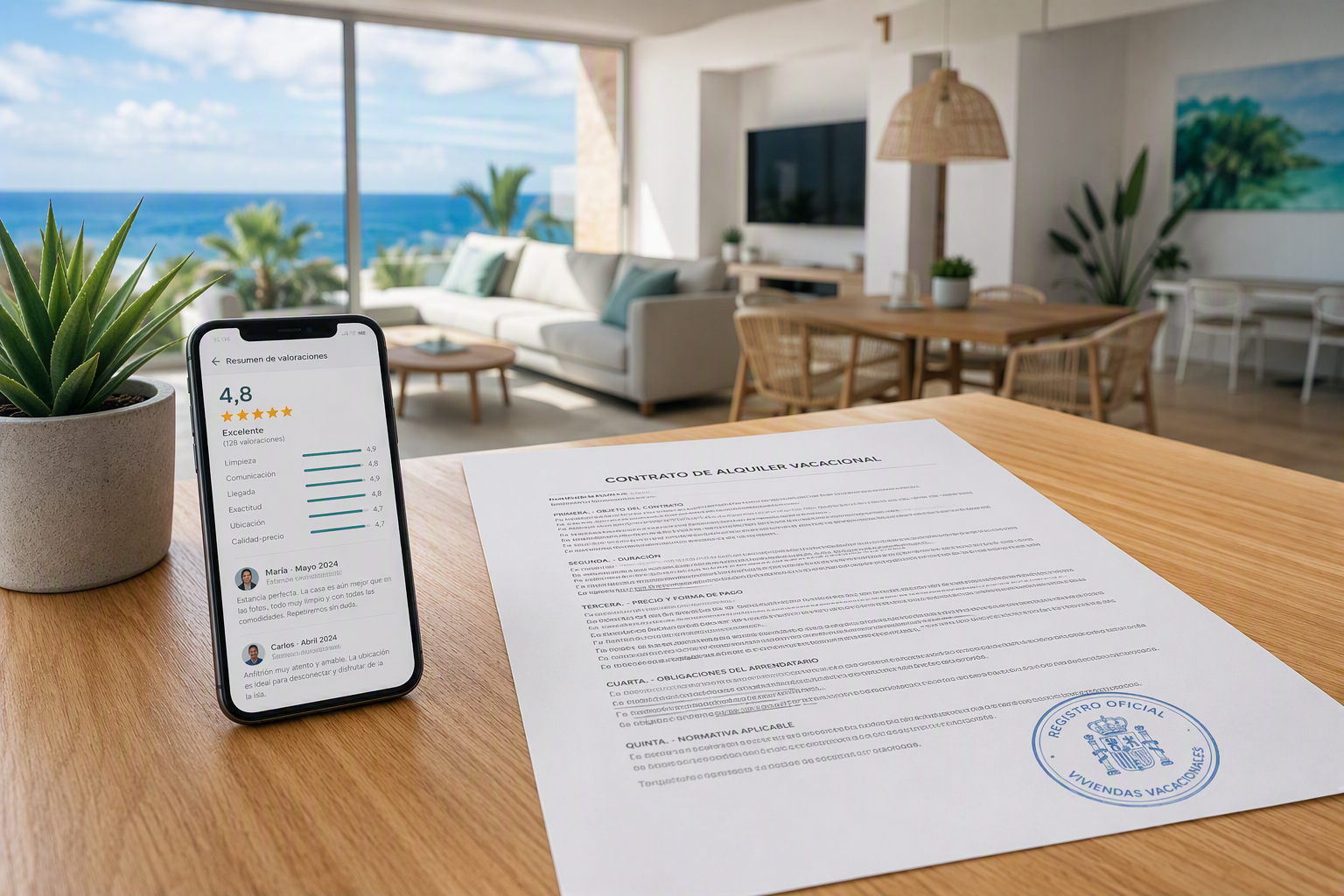
The Dark Side of Paradise: The Rise of Holiday Rental Extortion in the Canary Islands
The holiday rental sector in the Canary Islands is experiencing a period of extreme tension. Alongside constant regulatory changes, tax adjustments, and social debates surrounding tourism models, a deeply worrying criminal trend has emerged: premeditated and widespread extortion by certain groups of tourists targeting owners of holiday homes (known locally as Viviendas Vacacionales or VV). This practice, carried out mainly by foreign guests (with a notable frequency of German-speaking tourists, though not limited to them), is no longer a collection of isolated incidents. Instead, it has evolved into a perfectly structured, organized modus operandi aimed at direct financial fraud.
The strategy is always repeated with mathematical precision. From the moment of their arrival, or sometimes even before setting foot in the property, these tenants begin lodging formal, written complaints about matters that make absolutely no logical or practical sense. The ultimate goal of these systematically planned complaints is not to resolve a legitimate habitability or maintenance issue. Rather, it is to build a fictitious, documented file of "incidents" in order to demand, once the stay is over, a mandatory refund of up to 50% of the booking price.
This predatory behavior has raised alarm bells among industry associations, local property management companies, and the Canarian judiciary. These entities are already coordinating actions at both national and European Union levels to halt an economic drain that damages not only the destination's international reputation but also the financial stability of thousands of local families who rely on tourist accommodation to make a living.
The Shift from Isolated Incidents to Organized Tourist Fraud
To understand the gravity of the situation, one must look at how the holiday rental landscape in the Canary Islands has shifted. For years, disputes between hosts and guests were resolved through open communication, minor compensation, or the quick intervention of maintenance staff. However, the professionalization of guest scams has turned what used to be rare customer service disputes into a systematic attack on landlords.
Today, these extortion schemes are often discussed, refined, and shared in private online forums, social media groups, and specialized travel blogs in northern Europe. In these digital spaces, unscrupulous travelers share "hacks" and step-by-step guides on how to stay for free or at half price in the Canary Islands by exploiting the pro-consumer policies of major Online Travel Agencies (OTAs) such as Airbnb, Booking.com, and VRBO.
Why Private Landlords are the Main Targets
Extortionists rarely target large, multinational hotel chains. Hotels have on-site legal teams, 24/7 security, reception desks that can immediately verify claims, and substantial financial reserves to withstand disputes. Private holiday home owners and small local agencies, on the other hand, are perceived as highly vulnerable. Fraudulent guests know that:
- Individual hosts rely heavily on cash flow: A single major refund or booking cancellation can ruin a private host's monthly budget.
- Digital reputation is life or death: For a private listing, a single 1-star review can drop its search visibility by 50% or more, resulting in thousands of euros in lost future bookings.
- Hosts lack legal resources: Many individual owners do not know their legal rights, do not speak the guest's native language fluently, and feel intimidated by threats of legal action or platform bans.
Anatomy of a False Claim: The Calculated Modus Operandi
The planning of these extortions begins long before the flight lands in Tenerife, Gran Canaria, Lanzarote, or Fuerteventura. Guests carefully select properties managed by private individuals. Once the booking is secured, the plan is executed in several critical, highly calculated stages.
1. Absurd Complaints Outside the Owner's Responsibility
Tourists initiate a steady stream of written complaints through the official channels of the booking platforms. These complaints focus on items that were never included in the original listing, or on weather, geographical, and environmental factors that are entirely beyond human control. Among the most common claims recorded by affected owners in the archipelago are:
- Lack of auxiliary furniture: Demanding extra wardrobes, chests of drawers, or highly specific furniture in the rooms that did not appear in the listing's photographs or description.
- Absence of minor accessories: Angrily complaining about the lack of a bedside lamp, highly specific kitchen utensils, or exclusive tableware, such as a specialized holder for eating a soft-boiled egg at breakfast.
- Public parking issues: Formally protesting and demanding compensation because they cannot find free parking spaces in the public streets surrounding the building, even when the listing explicitly states that parking is public and not guaranteed.
- Weather and climate factors: Expressing deep dissatisfaction because the ambient temperature of the islands is not as warm as they expected for their trip, or because of natural wind patterns in coastal areas.
- Lack of basic medical and common-sense warnings: Formally complaining that the owner did not explicitly warn them in the house rules about the possibility of getting sunburned if they exposed themselves to the sun without protection, or that ocean water contains salt.
- Misunderstanding appliances: Claiming the accommodation is "uninhabitable" because they cannot understand the program panel of the washing machine or oven, despite the owner providing detailed manuals in several languages.
- Purely aesthetic and subjective issues: Demanding financial compensation because the color of the paint on the living room or bedroom walls is not to their personal taste, or because the view from a window is "depressing" despite matching the photos.
2. Fabricating Evidence and Introducing Artificial Pests
The darkest and most criminal part of this strategy occurs when absurd complaints are not enough to bend the owner to their will. Several affected owners have reported to the local police and industry associations that these tourists actively collect insects from outside the property, such as cockroaches, beetles, or native ants.
Subsequently, they place these insects on beds, clean kitchen worktops, or inside bathrooms to photograph them. These images are immediately sent to the booking platforms as "irrefutable evidence" that the holiday home is suffering from an unsanitary infestation. This forces the automated intervention of the support systems of these websites, which often side with the guest automatically, suspending the listing and issuing immediate refunds without verifying the source of the pests.
The Financial Weapon: Post-Stay Blackmail and the "50% Refund" Rule
This entire accumulation of messages, falsified photographs, and artificially engineered tension has a single, clear financial purpose: post-stay financial blackmail. The tourists enjoy their entire holiday in the archipelago, use the property's services, utilities, and facilities, and then, right at the moment of check-out or in the hours that follow, they issue their ultimatum.
Using the history of prior complaints they carefully planted over several days, they demand immediate financial compensation, which systematically hovers around 50% of the total booking cost. If the owner refuses to make this partial refund directly, the extortionists threaten to:
- Publish destructive one-star reviews that will ruin the property's ranking in tourist algorithms, making it virtually invisible to future travelers.
- Report the profile to the platform for safety or hygiene violations to achieve the preventive closure of the operating account, cutting off the host's income instantly.
- Initiate full chargeback claims through their credit card companies or banks using the photos of the planted insects, leaving the host with zero income and chargeback fees.
Many owners, gripped by the fear of losing their main source of income and seeing their digital reputation destroyed, end up giving in to the blackmail. This has created a dangerous snowball effect among groups of travelers who share these "saving strategies" in private forums and social media in their home countries, viewing Canarian homeowners as easy targets.
The Real-World Impact: Financial Strain and Property Vandalism
The situation has escalated to such an extent that the landlord community in the Canary Islands has decided to go on the offensive. Faced with the helplessness they often experience due to the rigid, automated policies of large multinational rental companies, the owners' response is being structured on two very clear fronts: immediate eviction and criminal prosecution.
Immediate Eviction from Day One
Accumulated experience has allowed holiday home managers to detect the behavioral pattern of these extortionists almost instantly. Currently, when a guest begins to make unreasonable, aggressive, and technically unfounded complaints during the first few hours of their stay, the policy adopted by a growing number of owners is the immediate cancellation of the accommodation contract and the swift eviction of the tourist from the property.
This measure puts an immediate stop to the fraudster's ability to enjoy the facilities while fabricating a false claim case over one or two weeks. By cutting the stay short right from the start, the financial impact is minimized, and the physical integrity of the property is protected. It prevents the guests from having the time to collect insects, damage appliances, or build a massive portfolio of fake complaints.
The Backlash: Coercion, Threats, and Vandalism
The decision to stand up to these holiday criminals has unfortunately uncovered the more violent side of the plot. Owners who refuse to yield to refunds or who carry out preventive evictions have begun to receive severe threats to their physical safety and professional reputation.
Furthermore, numerous cases of intentional damage to properties have been recorded before guests depart. When fraudsters realize their extortion scheme is failing, they often resort to petty vandalism: breaking expensive appliances, blocking pipes with wipes or cement, causing structural damage to walls and furniture, pouring bleach on textiles, and stealing valuable items like smart TVs, high-end coffee makers, or designer decor.
The Legal Fightback: Spanish Courts and European Union Cooperation
Far from sitting idly by, the archipelago's judiciary is taking action against what is legally classified as alleged ongoing offenses of fraud (estafa), coercion, and extortion. Given that the offenders are European Union citizens who return to their home countries after committing the fraud, the islands' justice system is activating international judicial cooperation mechanisms.
Applying the Spanish Penal Code to Tourist Extortion
Under Spanish law, demanding a refund under the threat of damaging a business's reputation or property can constitute the crime of extortion (Article 243 of the Penal Code) or coercion (Article 172). Furthermore, fabricating evidence to obtain a financial benefit (the refund) constitutes fraud (Article 248). These are not minor civil infractions; they are criminal offenses that carry prison sentences and significant fines.
The European Investigation Order (EIO): No Impunity Across Borders
Through close collaboration with the European Union Court of Justice bodies, Canarian investigating courts are processing European Investigation Orders (EIOs) and requests for formal notification of criminal complaints directly to the homes of these tourists in Germany, the UK, and other EU nations.
The goal of these judicial measures is clear: to prove that crossing an international border does not grant impunity to commit financial fraud and cause damage to private properties located on Spanish territory. The penalties faced by these tourists include:
- Severe financial fines and court costs.
- The obligation to compensate for material damage and loss of earnings of the affected properties.
- A criminal record applicable across European territory, which can severely impact their employment prospects and travel freedom.
- Potential arrest warrants if they return to Spain for future holidays.
The Ultimate Defense Guide: How to Protect Your Holiday Rental
If you are a holiday property owner in the Canary Islands, it is essential to professionalize your operational management as much as possible to neutralize these threats before they become an unsustainable financial problem. Prevention, technology, and the meticulous gathering of evidence are your best defensive weapons. To delve deeper into the care, security, and optimization of your property, you can read about how to maintain operational excellence on specialized portals such as Macufy.com, where current market dynamics and host strategies are analyzed.
Below are the critical protection measures you should implement immediately in your accommodation business to shield yourself from fraudulent guests:
1. Implement Dated, Metadata-Verified Photographic Audits
Never rely on old listing photos to prove the current condition of your property. You must establish a strict protocol where your cleaning staff takes high-definition photographs and videos of every single room, appliance, and corner of the property just hours before each guest's arrival.
Ensure these digital files contain incorruptible date and time metadata (EXIF data). If a guest claims a washing machine was broken upon arrival or that a mattress was stained, you will have irrefutable, timestamped proof of the exact condition of the property just hours before they checked in.
2. Execute Legally Binding Seasonal Rental Contracts
Do not rely solely on the terms of service of the booking platforms. Require all guests to sign a seasonal or holiday accommodation contract upon check-in, drafted in their native language or English. This contract should be signed digitally or physically and must include clauses such as:
- The 24-Hour Notification Rule: Specifying that any claim regarding cleanliness, maintenance, or missing items must be formally reported within the first 24 hours of occupancy. Any claim made after this period will be considered invalid.
- Right of Technical Inspection: Stating that if a guest reports a serious issue (such as a pest or broken appliance), the owner or manager reserves the right to enter the property with a technical professional within 12 hours to inspect and resolve the issue. Fraudulent guests hate this, as they cannot hide their fabricated evidence.
- Jurisdiction Clause: Explicitly stating that any legal disputes will be handled by the courts of the municipality where the property is located (e.g., Santa Cruz de Tenerife, Las Palmas de Gran Canaria), preventing them from trying to sue you in their home country.
3. Maintain an Official Pest Control Certification
To completely dismantle the "insect fabrication" scam, hire an approved, professional pest control company in the Canary Islands to perform regular preventive treatments. Keep these official certificates up to date and display them prominently in the property or have them ready to send.
If a tourist introduces fake insects to take a photo, your valid, official certificate issued by a registered sanitary professional will immediately dismantle the veracity of their claim before any court, insurance company, or OTA arbitration platform.
4. Leverage Smart Home Technology and Noise Sensors
Modern technology is a landlord's best friend. Installing non-invasive smart home devices can provide invaluable data to debunk false claims:
- Smart Locks: Electronic locks record the exact second a guest enters and exits the property. If a guest claims they were locked out or couldn't access the property for days, the lock logs will prove otherwise.
- Noise and Occupancy Sensors: Devices like Minut or NoiseAware measure decibel levels and the number of mobile devices in the home without violating privacy (they do not record audio). This prevents guests from falsely claiming they had a quiet stay if they actually hosted unauthorized parties, or vice versa.
- Smart Utility Meters: Monitoring electricity and water consumption can prove that appliances (like air conditioning or hot water heaters) were actively being used, debunking claims that these services were non-functional during the stay.
5. Keep All Communications Strictly On-Platform
One of the biggest mistakes hosts make is moving the conversation with a problematic guest to WhatsApp, WeChat, or phone calls. Extortionists prefer this because they can use a highly aggressive, coercive tone without the booking platform's support agents seeing it.
Always keep communications within the official chat of Airbnb, Booking.com, or VRBO. If a guest calls you, follow up immediately with a written message in the platform chat summarizing the conversation: "As discussed on our phone call just now, you mentioned that...". This creates an unalterable paper trail that platform agents can review during a dispute.
Navigating OTA Disputes: How to Handle Airbnb, Booking.com, and VRBO Support
When an extortion attempt begins, your interaction with the booking platform's customer support is critical. You must approach this professionally, unemotionally, and with structured evidence. Support agents handle hundreds of cases a day; they will side with whoever presents the clearest, most organized case.
If a guest initiates a fraudulent refund claim, follow this step-by-step resolution protocol:
- Do not panic or react aggressively: Keep your tone polite, professional, and objective in all communications. Avoid calling the guest a liar or fraudster directly in the chat; instead, let your evidence do the talking.
- Submit your evidence package immediately: Send the support agent your timestamped check-in photos, your official pest control certificate, the signed rental contract, and any smart lock logs that contradict the guest's story.
- Reference the platform's own policies: Point out if the guest violated policies regarding extortion (e.g., threatening a bad review in exchange for money is a direct violation of Airbnb's Extortion Policy).
- Request escalation: If the first-line support agent seems automated or unhelpful, politely but firmly request that the case be escalated to a senior manager or the specialized trust and safety team.
The Importance of Professional Property Management Systems
As the holiday rental market becomes more complex and legally demanding, managing everything manually is no longer viable. Utilizing professional property management tools is essential to safeguard your business. Platforms like Macufy.com provide landlords and property managers with the resources, insights, and structures needed to maintain operational excellence, protect properties, and navigate the turbulent waters of modern tourist accommodations.
Conclusion: Safeguarding the Future of Canarian Tourism
Tourism is, and will continue to be, the primary economic engine of the Canary Islands. The vast majority of visitors who travel to the archipelago every year do so honestly, eager to enjoy its unique culture, breathtaking volcanic landscapes, year-round warm climate, and the warm hospitality of its people.
However, the emergence of these organized, false-claim mafias and extortionist groups forces owners to abandon amateur management practices and legally shield themselves. Only through industry unity, systematic reporting of fraud to the police and courts, the adoption of smart home technology, and impeccable internal management will it be possible to eradicate a criminal practice that threatens the financial stability, peace of mind, and residential fabric of the Canary Islands. Protect your investment, professionalize your operations, and do not let fraudulent guests compromise the future of your holiday rental business.